How to Flame an Orange Peel (Without Burning Your Eyebrows)
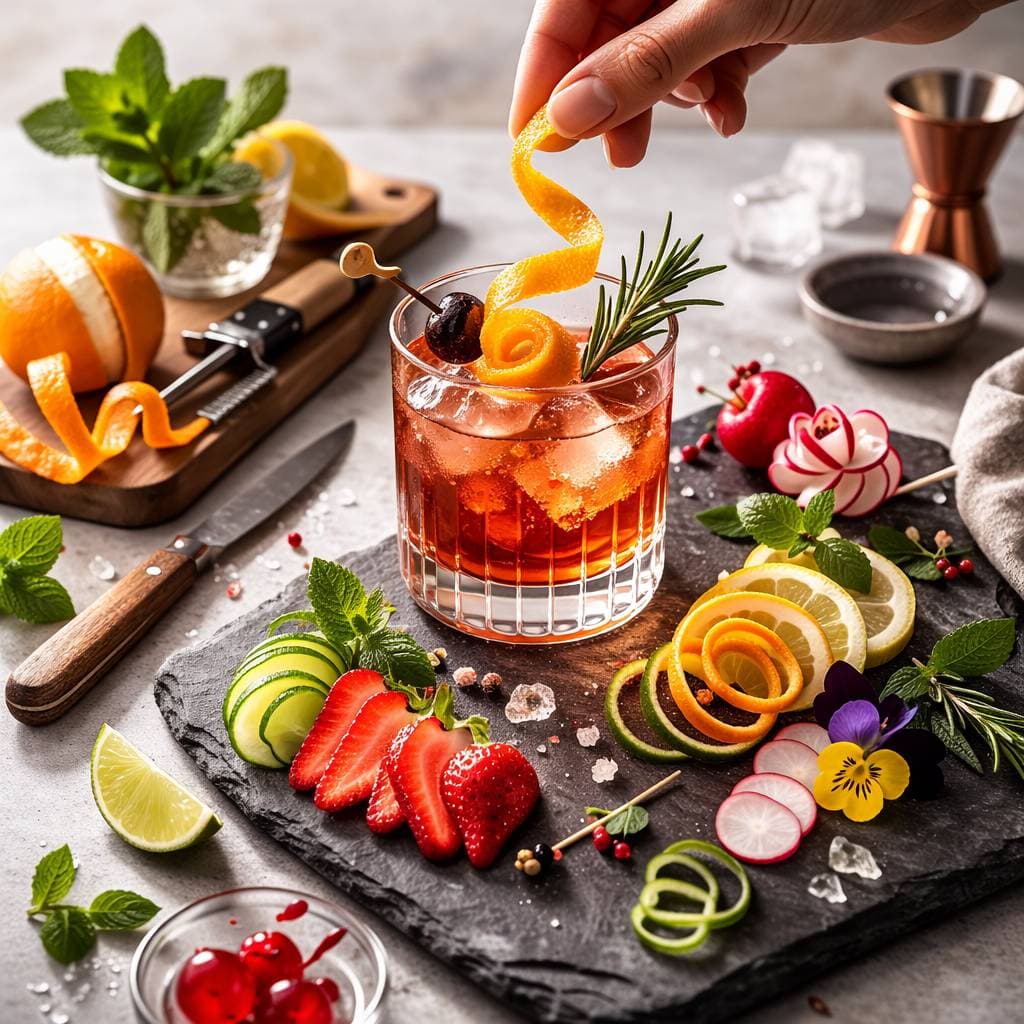
Flaming an orange peel caramelizes the citrus oils and adds a subtle smoky note to your cocktail. It looks impressive and takes 5 seconds β here's the technique.
Tips, techniques, and stories from the world of cocktails

Flaming an orange peel caramelizes the citrus oils and adds a subtle smoky note to your cocktail. It looks impressive and takes 5 seconds β here's the technique.

A rinse coats the inside of your glass with a thin layer of a potent spirit, adding subtle flavor and aroma without overpowering the drink. Learn the technique, the classic absinthe rinse, and when to use alternatives like mezcal or Chartreuse

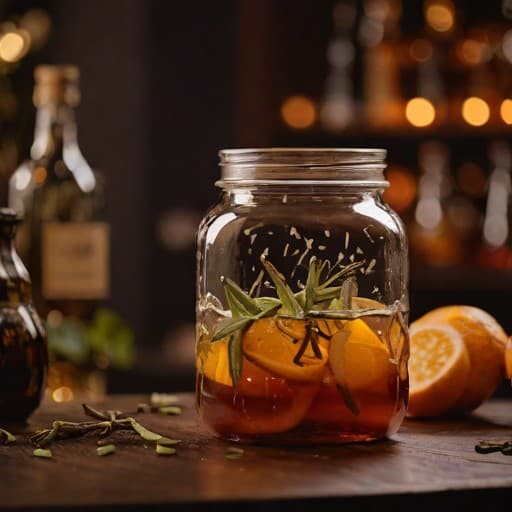
Infusing spirits at home is dead simple β put an ingredient in a jar of liquor and wait. The hard part is knowing how long to wait. This guide covers timing, popular infusions, straining, storage, and the mistakes that ruin a perfectly good bottle.

Most of the chilling and dilution happens in the first 10-12 seconds of shaking. After that, you hit diminishing returns β unless you are working with egg whites. Here is what actually happens inside the shaker and when extra time helps or hurts.

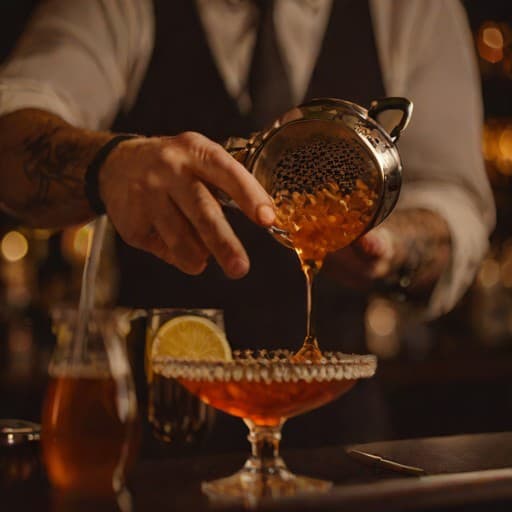
Double straining catches the pulp, seeds, and ice shards that a Hawthorne strainer misses. Some drinks need it β others don't. Here's how to tell.

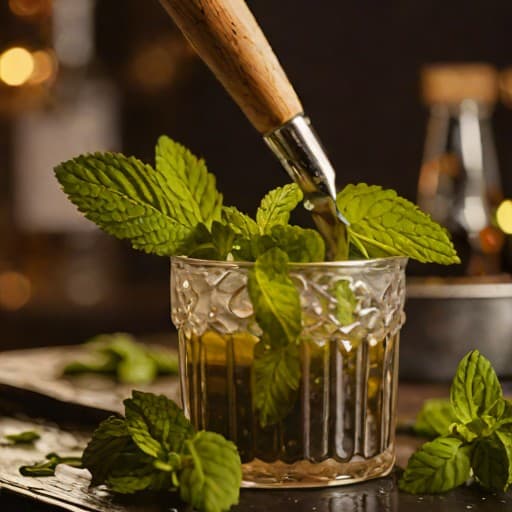
Muddling is about extracting flavors, not destroying ingredients. Most people muddle too hard β especially with herbs. Here's the right pressure for every ingredient.

A garnish isn't decoration β it's a technique. Learn how expressed oils, slapped herbs, and dehydrated wheels make your cocktails look and taste better.

A proper salt rim is half the glass, applied with a citrus wedge β not dunked in a saucer. Learn the right technique, explore alternatives like TajΓn and smoked salt, and know when a rim helps a drink and when it ruins one.

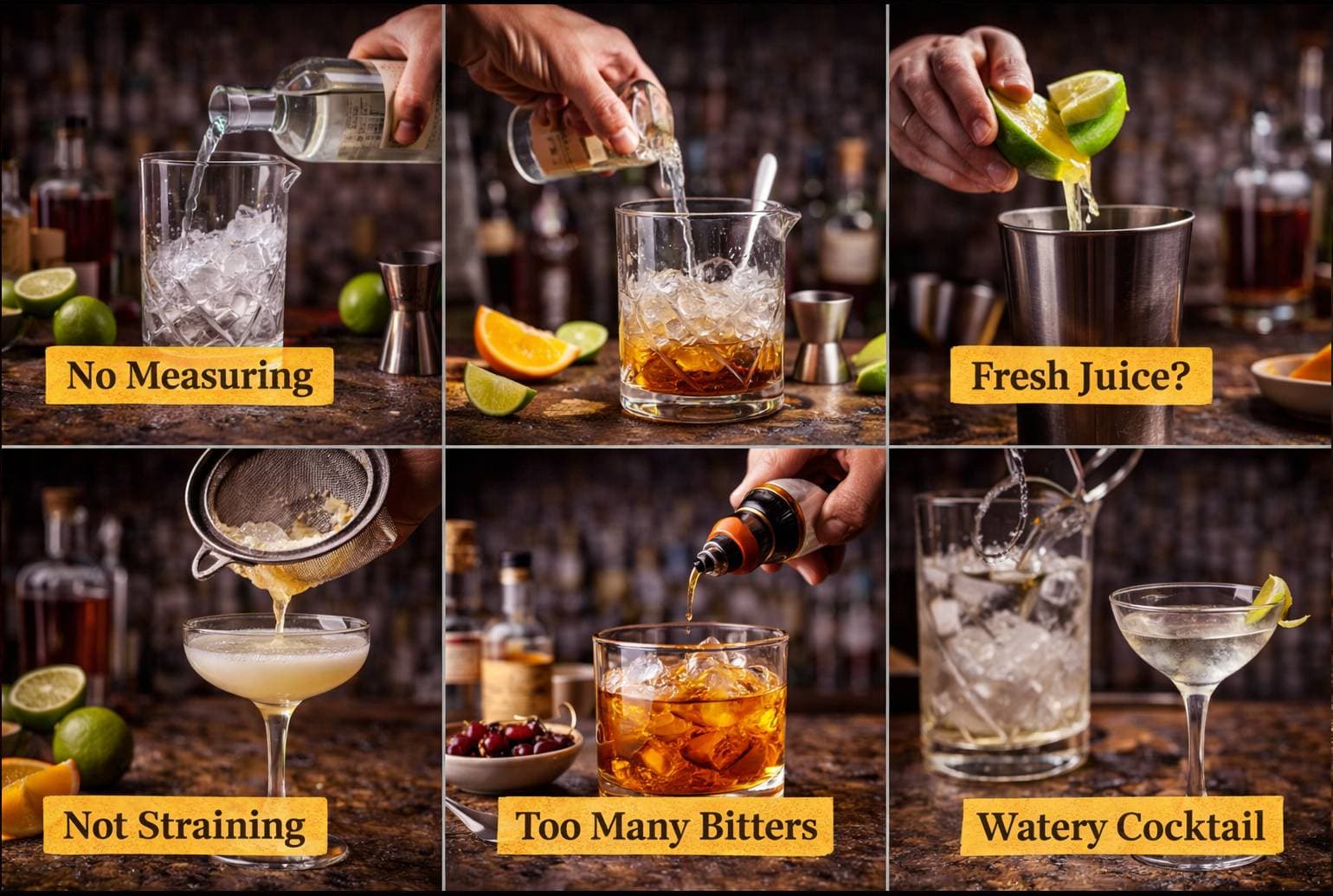
The jump from following recipes to making consistently good cocktails means fixing a few small errors that compound. Most beginners make the same mistakes. Here are the five that matter most and how to fix them.

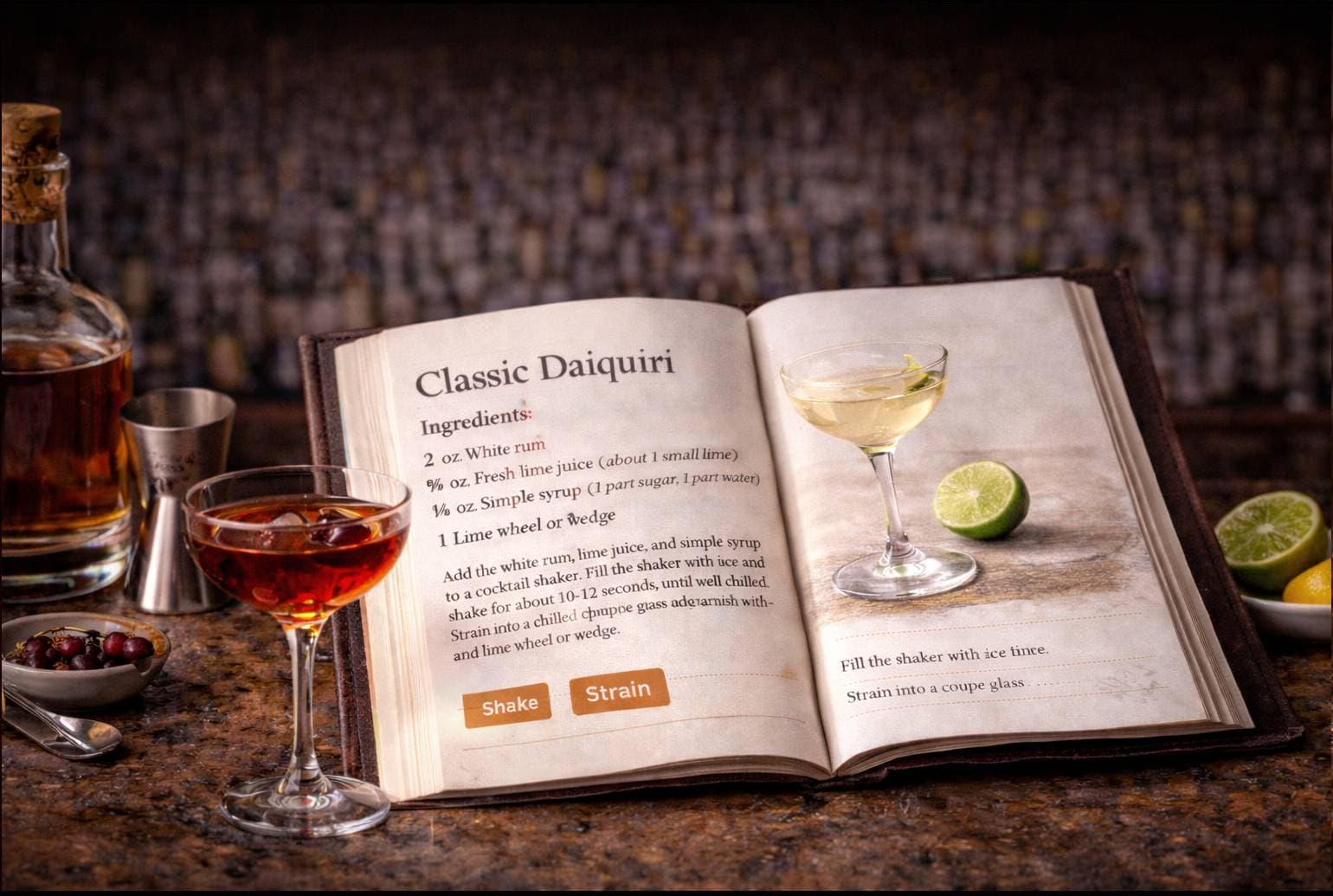
Cocktail terms like 'dry shake,' 'express oils,' and 'float' aren't casual descriptionsβthey're instructions that change how your drink turns out. Not knowing them is the fastest way to a bad cocktail. Here's what every instruction actually does.

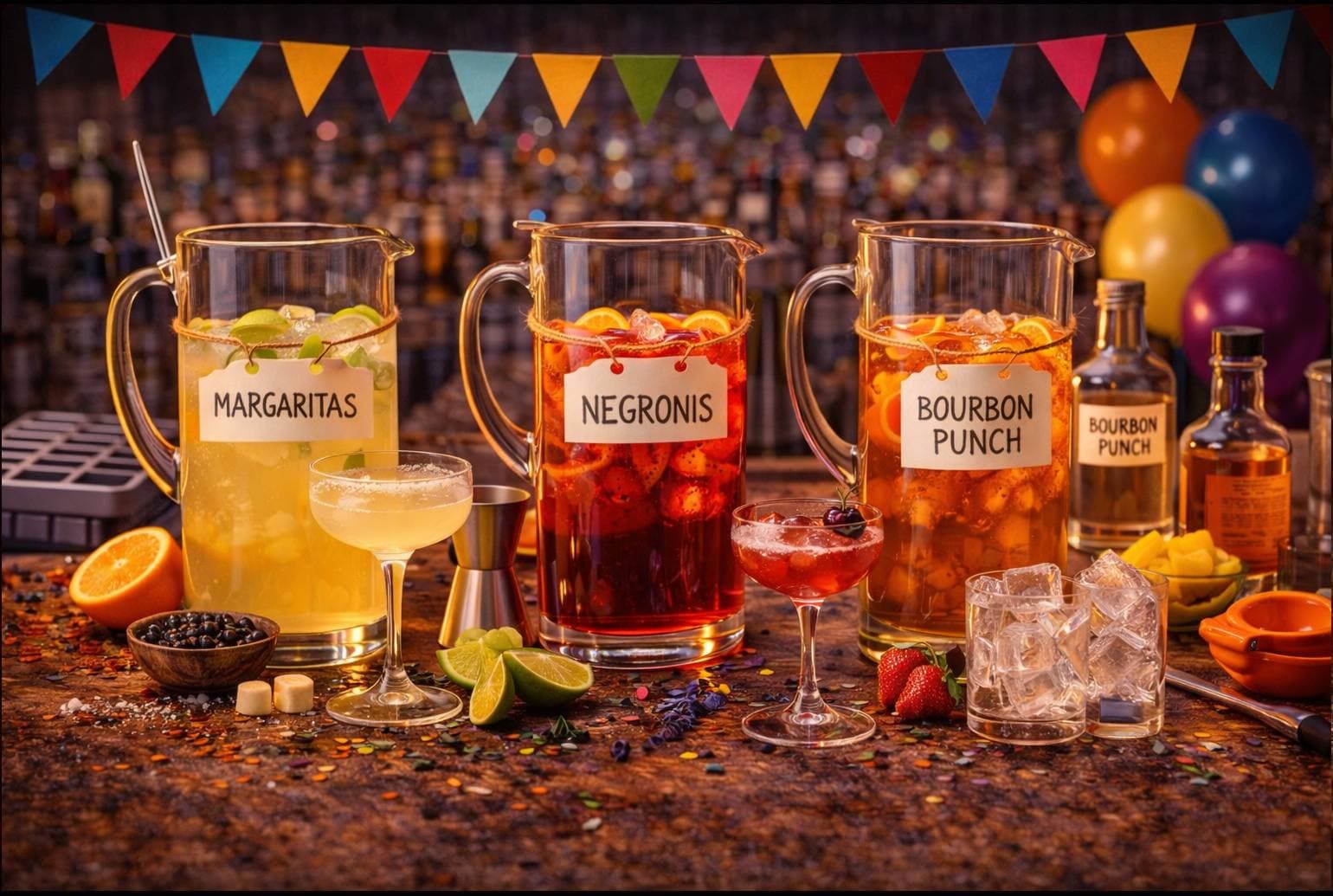
Making party cocktails isn't about shaking fasterβit's about changing your strategy. The difference between a host stuck behind the bar and one enjoying their own party comes down to advance prep and smart drink choices. Here's how to stay sane.

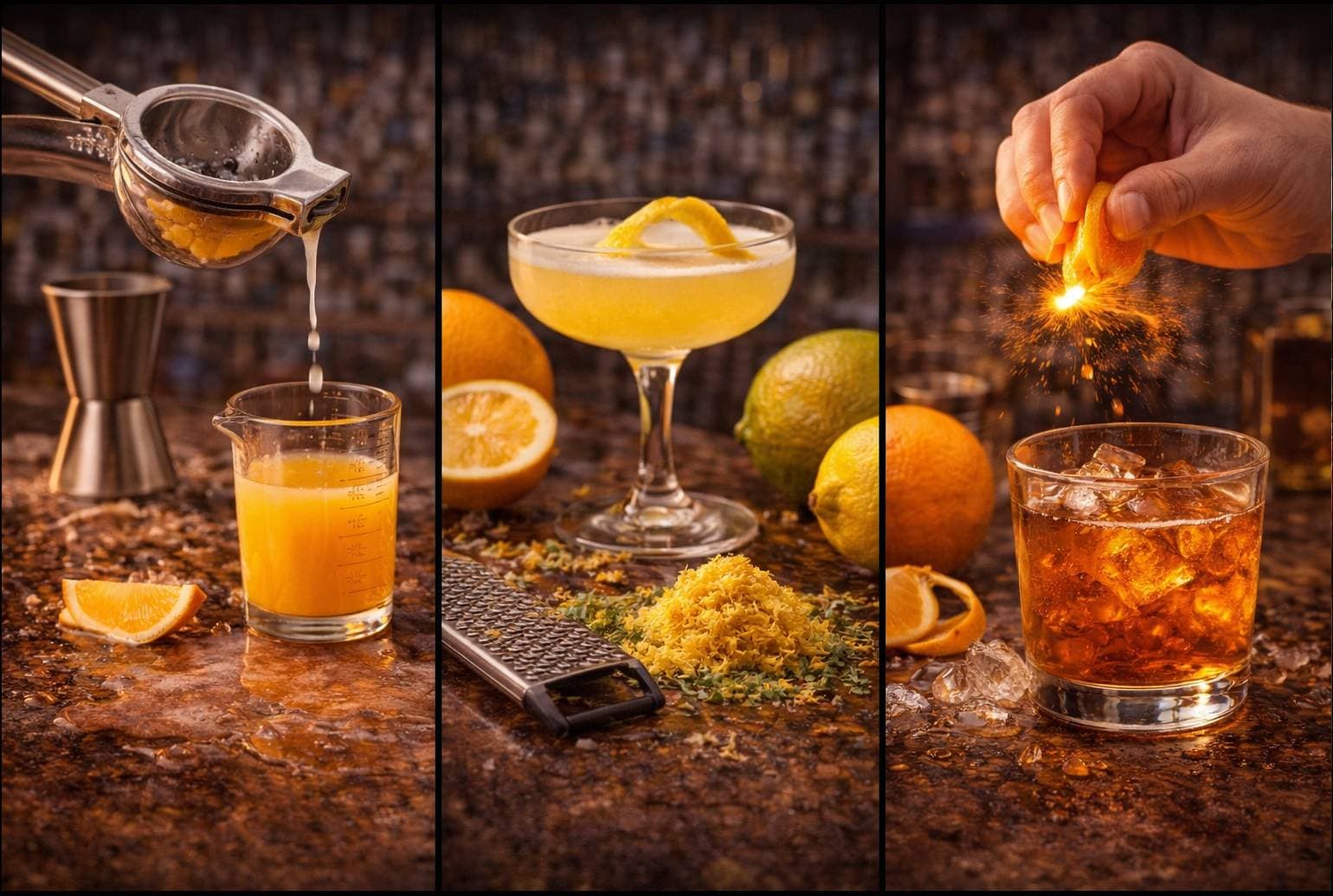
Citrus appears in more cocktail recipes than any other non-spirit ingredient. But it's really four ingredients β juice, zest, expressed oils, and whole peel β each contributing something different. Knowing when to use which separates a flat drink from one that smells as good as it tastes.