Los cítricos aparecen en más recetas de cócteles que cualquier otro ingrediente que no sea alcohol. Pero en realidad son cuatro ingredientes — zumo, ralladura, aceites expresados y cáscara entera — cada uno aportando algo diferente. Saber cuándo usar cada uno separa una bebida plana de una que huele tan bien como sabe.
Zumo de Cítricos — El Ácido
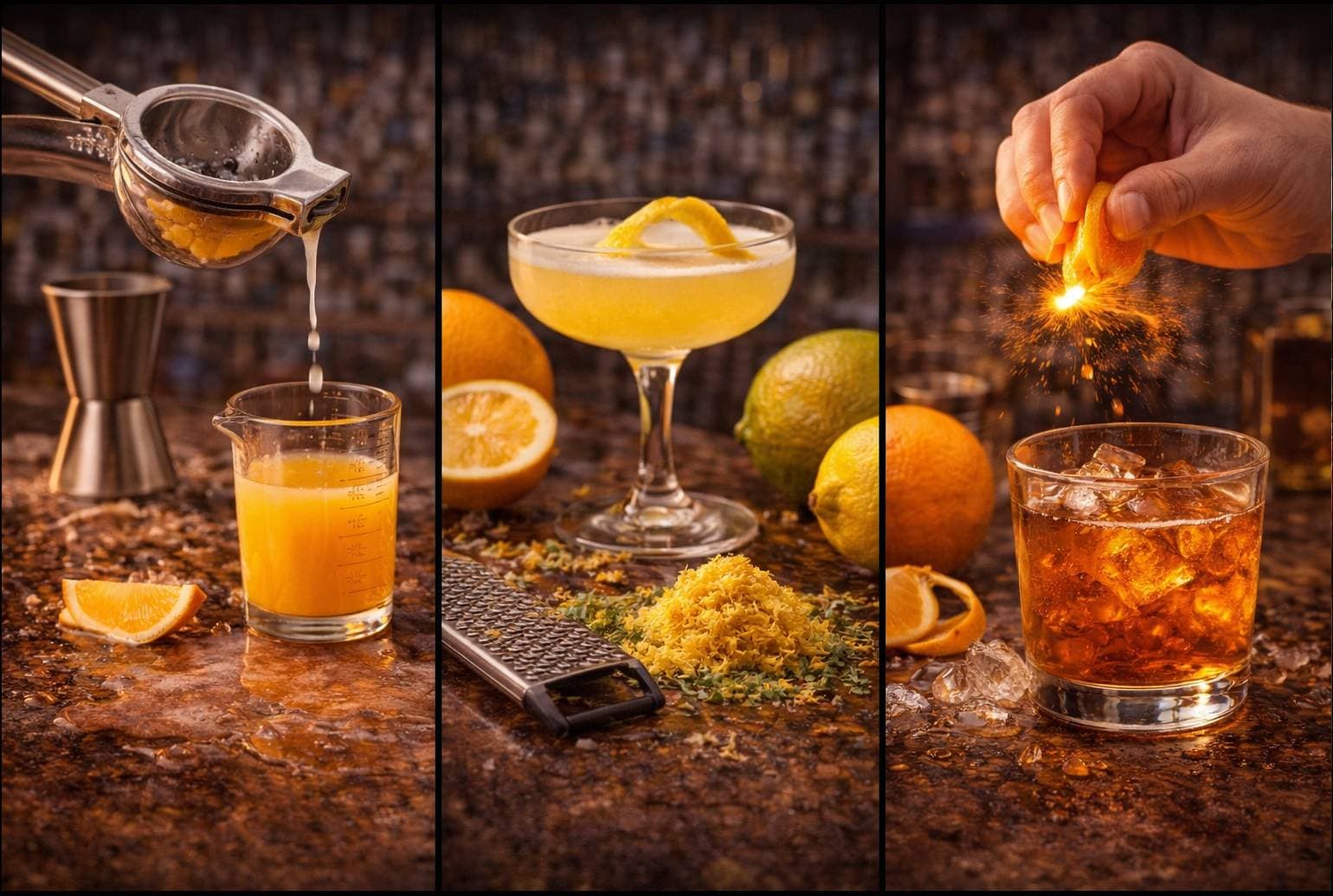
El zumo es el uso más obvio de los cítricos y al que las recetas recurren más frecuentemente. Zumo de lima fresco en un Daiquiri, zumo de limón fresco en un Whiskey Sour, zumo de naranja fresco en un Tequila Sunrise. El papel es sencillo: ácido.
El zumo de cítricos proporciona el componente ácido que equilibra la dulzura y suaviza el ardor del alcohol. Sin él, la mayoría de los cócteles saben unidimensionales — solo dulces y alcoholosos. El ácido da estructura a la bebida, de la misma manera que la sal da dimensión a la comida.
Lima vs. limón: Estos no son intercambiables a pesar de lo que sugieren algunas recetas. El zumo de lima es más punzante, más asertivo y ligeramente más amargo que el limón. El zumo de limón es más brillante, más redondo y un poco más dulce. Una Margarita hecha con limón en lugar de lima sabe notablemente diferente — no mal, pero diferente. La receta fue diseñada con uno en mente.
Zumo de naranja y pomelo: Estos son zumos de cítricos más dulces y con menor acidez que cumplen un papel diferente. Agregan cuerpo y carácter frutal más que acidez. El zumo de naranja en un Screwdriver o Blood & Sand contribuye sabor y volumen. El zumo de pomelo en una Paloma o Hemingway Daiquiri añade una complejidad agridulce que la lima y el limón no pueden replicar.
Los valores Brix importan para el embotellado: Si estás haciendo cócteles congelados por lotes, el zumo de cítricos afecta tu lectura de Brix. El zumo fresco de lima y limón tiene aproximadamente 7 Brix. El zumo de naranja tiene alrededor de 11. El zumo de piña tiene aproximadamente 14. Estos números influyen en si tu lote se congelará correctamente en una máquina. Para más información, consulta nuestra guía sobre Qué es el Brix y Cómo Verificarlo.
Fresco vs. Embotellado — No es Esnobismo
Este punto vale la pena abordarlo directamente: el zumo de cítricos recién exprimido sabe significativamente diferente al zumo embotellado, y la diferencia importa en los cócteles.
El zumo de lima embotellado (como Rose's) es un producto conservado con azúcar añadida, conservantes y un perfil de sabor que se aleja sustancialmente del fresco. Fue diseñado para la estabilidad en el estante, no para cócteles. Un Gimlet hecho con zumo de lima Rose's y un Gimlet hecho con zumo de lima fresco son esencialmente dos bebidas diferentes.
El zumo de cítricos frescos comienza a degradarse a las horas de exprimirlo. Los compuestos aromáticos volátiles que dan al zumo fresco su brillo se evaporan, y la oxidación opaca el sabor. Por esto los bares profesionales exprimen cítricos diariamente (a veces dos veces al día) y descartan lo que sobra.
Para uso doméstico, exprime lo que necesitas para la sesión. Una sola lima produce aproximadamente 1 oz de zumo. Un solo limón produce aproximadamente 1.5 oz. Eso es suficiente para una o dos bebidas. Si estás preparando lotes, exprime los cítricos al final — después de haber combinado todo lo demás — para maximizar la frescura en todo el lote.
Ralladura de Cítricos — El Aroma
La ralladura es la fina capa exterior coloreada de la cáscara de cítricos — la parte que está llena de aceites esenciales y compuestos aromáticos. Contiene casi nada de zumo y ningún ácido. Su papel en los cócteles es enteramente sobre aroma y sabor sutil.
Cuando rallas o pelas ralladura y la añades directamente a una bebida (o la machacas en una), estás contribuyendo aceites aromáticos que se registran en la nariz antes de que siquiera bebas. Estos aceites contienen compuestos como limoneno (aroma cítrico brillante y limpio) y linalool (floral, ligeramente dulce) que hacen que la bebida huela invitante.
Ralladura en el vaso vs. ralladura en la coctelera: Añadir una tira de ralladura a la coctelera o vaso de mezcla mientras preparas la bebida extrae más aceites a través de la agitación, pero también añade un ligero amargor de la propia cáscara. Añadirla a la bebida terminada (como adorno en espiral) proporciona aroma sin amargor.
El problema de la parte blanca: La capa blanca entre la ralladura y la pulpa se llama parte blanca. Es intensamente amarga. Cualquier técnica de rallado o pelado que corte en la parte blanca introduce amargor que no pertenece a la bebida. Un cuchillo de canal, pelador en Y, o Microplane todos cortan limpiamente a través de la ralladura sin llegar a la parte blanca — que es exactamente por qué estas herramientas importan. Consulta nuestro artículo sobre Bolsas Lewis, majadores y cuchillos de canal para más información sobre el cuchillo de canal.
Aceites Expresados — El Toque Final
Expresar aceite de cítricos es la técnica de sostener un pedazo de cáscara sobre la bebida, lado coloreado hacia abajo, y apretarla o retorcerla para rociar una fina neblina de aceite esencial sobre la superficie del cóctel. A veces puedes ver las gotas de aceite captar la luz.
Esto es diferente de añadir ralladura a la bebida. Los aceites expresados se asientan en la parte superior del líquido como una fina capa aromática. Lo primero que hueles cuando levantas el vaso es esencia de cítricos concentrada. Es la manera más potente de entregar aroma cítrico — más intenso que un adorno en espiral, más inmediato que ralladura machacada.
Cómo expresar aceites correctamente: Corta un pedazo de cáscara en forma de moneda (aproximadamente del tamaño de una moneda de veinticinco centavos) de la fruta. Sosténlo entre tu pulgar e índice, lado coloreado mirando hacia la bebida, aproximadamente 2 pulgadas sobre la superficie. Aprieta firmemente — verás una fina neblina rociar sobre la bebida. Luego o deja caer la cáscara en la bebida o deséchala.
Qué cítrico para qué bebida:
Una cáscara de naranja expresada sobre un Old Fashioned o un Negroni añade calidez y dulzura a la nariz. Los aceites de naranja complementan especialmente bien los licores marrones (bourbon, centeno, coñac) y licores amargos (Campari, Aperol).
Una cáscara de limón expresada sobre un Martini o un French 75 añade brillo y un aroma limpio y punzante. Los aceites de limón se emparejan bien con ginebra, vodka y licores claros.
Una cáscara de lima expresada sobre un Last Word o un Gimlet añade un aroma punzante y ligeramente resinoso. Los aceites de lima son más asertivos que el limón y pueden sobrepasar bebidas delicadas — úsalos intencionalmente.
Una cáscara de pomelo expresada sobre una Paloma o un Hemingway Daiquiri añade una cualidad floral amarga que es única entre los cítricos. Los aceites de pomelo funcionan bien con tequila y ron.
La Cáscara de Naranja Flameada
Esto es un truco de bar que también es genuinamente funcional. Sostén una moneda de cáscara de naranja entre tus dedos, enciende un fósforo, y aprieta la cáscara a través de la llama hacia la bebida. Los aceites de cítricos se encienden brevemente al pasar por la llama, caramelizándose ligeramente y creando un sabor sutil ahumado y tostado de naranja en la superficie del cóctel.
Se ve impresionante, pero la contribución de sabor es real — la breve caramelización cambia el carácter del aceite de brillante y dulce a cálido y ligeramente ahumado. Es un acabado clásico para un Old Fashioned y funciona bien con cualquier cóctel de licor marrón.
La técnica: La llama necesita estar entre la cáscara y la bebida, no debajo de la cáscara. Estás encendiendo la neblina de aceite mientras pasa, no prendiendo fuego a la cáscara. Usa un fósforo o encendedor — un fósforo te da una llama más grande y confiable. Practica sobre el fregadero primero.
Ruedas y Gajos de Cítricos — ¿Adorno o Ingrediente?
Un gajo de lima en el borde de un Gin & Tonic es tanto adorno como ingrediente. El huésped lo exprime en la bebida, añadiendo una pequeña cantidad de zumo fresco y algunos aceites de cáscara. La señal visual dice "los cítricos son parte de esta bebida".
Una rueda de limón flotando en un ponche o un Collins es puramente decorativa — añade atractivo visual y un aroma muy ligero de cítricos de los aceites, pero la contribución de zumo es insignificante.
La distinción importa para la precisión de la receta. Si una receta pide "un gajo de lima" como adorno, está asumiendo que algunos huéspedes lo exprimirán y algunos no. La bebida debería saber bien de cualquier manera. Si la receta lista cítricos en los ingredientes, el zumo es estructural — es parte del equilibrio, no opcional.
Cómo se Comportan los Cítricos en Cócteles por Lotes
Los cítricos son el ingrediente más desafiante para preparar por lotes debido a la oxidación. El zumo de lima fresco que sabe vibrante a las 7 PM sabe plano a las 10 PM. Para fiestas y eventos:
Exprime lo más tarde posible. Combina todos los otros ingredientes primero. Añade los cítricos al final, lo más cerca del momento de servir que puedas manejar.
Añade 10–15% más cítricos de lo que la receta escalada requiere. Esto compensa la pérdida de sabor durante las horas que se servirá el lote.
Considera el "súper zumo". El súper zumo es una técnica donde licuas cáscaras de cítricos con ácido cítrico y málico, lo dejas reposar varias horas para extraer aceites, luego cuelas y añades el zumo fresco. Produce aproximadamente 8 veces más zumo por fruta y es más estable con el tiempo que el zumo fresco directo. Se está volviendo estándar en bares de cócteles de alto volumen exactamente por esta razón.
Para lotes de máquina congelados: El zumo de cítricos afecta tanto el sabor como el Brix. Cada onza de zumo de lima o limón contribuye aproximadamente 7 Brix al lote. Esto influye en si tu mezcla se congelará correctamente. Nuestras recetas por lotes consideran esto en sus formulaciones.
La Referencia Rápida
| Forma | Lo Que Contribuye | Cuándo Usarla |
|---|---|---|
| Zumo fresco | Acidez, sabor ácido, estructura | En la receta misma — el ácido que equilibra la dulzura |
| Ralladura (rallada o pelada) | Aceites aromáticos, sabor cítrico sutil | Machacada en la bebida o añadida durante la mezcla |
| Aceites expresados | Aroma concentrado en la superficie | Como técnica de acabado antes de servir |
| Cáscara flameada | Aroma cítrico tostado, ligeramente ahumado | Sobre cócteles de licor marrón (Old Fashioned, Manhattan) |
| Adorno de rueda o gajo | Atractivo visual, exprimido opcional de zumo | Como adorno de borde — decorativo con función opcional |
¿Buscas recetas que muestren diferentes usos de cítricos? Explora nuestras recetas de cócteles — Daiquiris y Margaritas para técnica de zumo, Martinis y Old Fashioneds para acabado de aceite expresado, y Mojitos para cítricos machacados.