Cocktail terms like 'dry shake,' 'express oils,' and 'float' aren't casual descriptions—they're instructions that change how your drink turns out. Not knowing them is the fastest way to a bad cocktail. Here's what every instruction actually does.
Shaking and Stirring
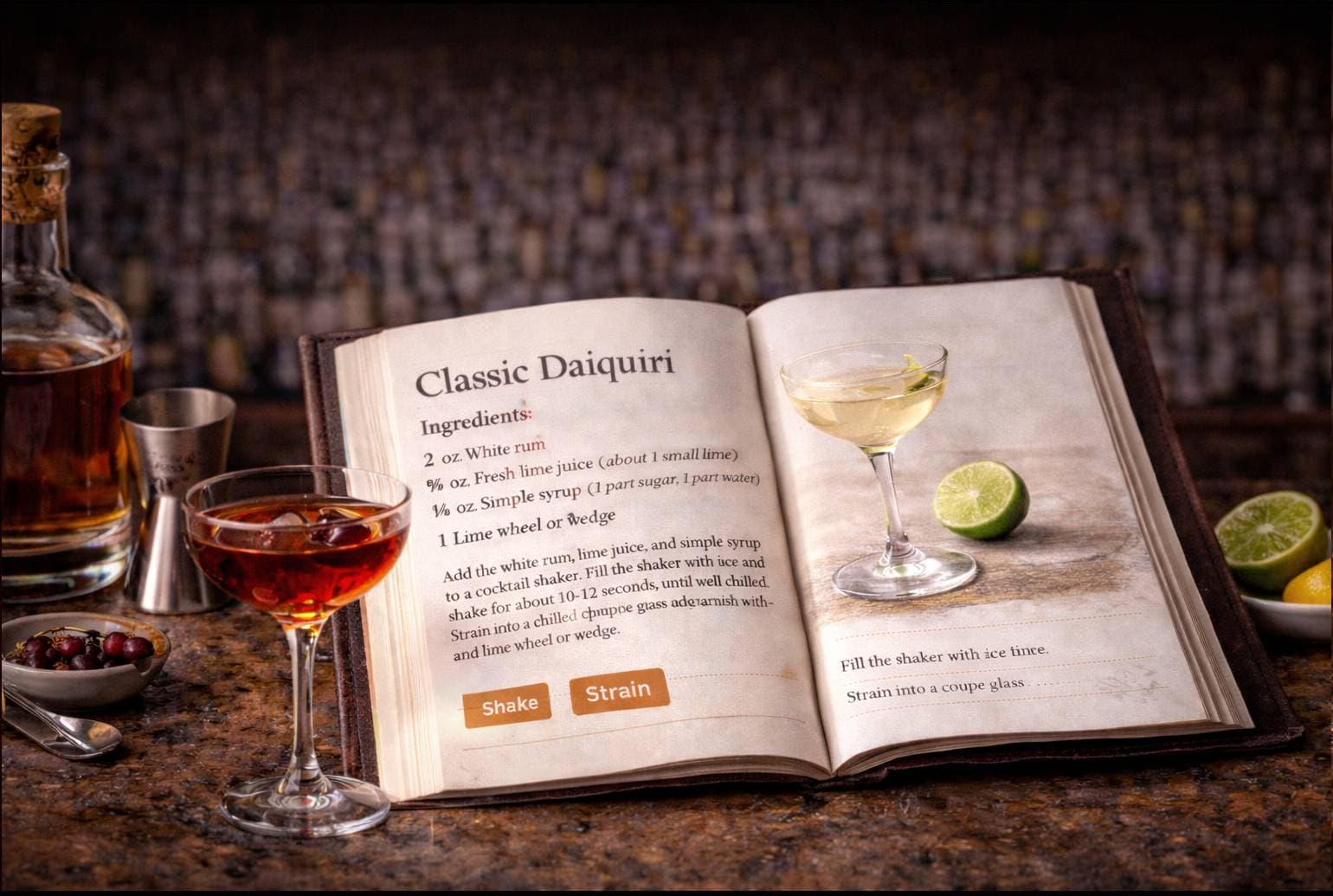
"Shake and strain" means: combine all ingredients in a cocktail shaker with ice, shake vigorously for 10–15 seconds until the outside of the shaker is frosty, then strain through a Hawthorne strainer into a glass.
Shaking is violent and fast. It chills the drink aggressively, it aerates it (incorporates tiny air bubbles, important for drinks with citrus juice or egg white), and it breaks ice into small pieces, which melts and dilutes the drink roughly 25–30%. For more on how this works, see our article on the science of dilution.
Use shaking for drinks with citrus juice, cream, egg white, or any ingredient that benefits from aeration and emulsification. Margaritas, Daiquiris, Whiskey Sours, Pisco Sours, Sour cocktails in general.
"Stir and strain" (or just "stir") means: combine all ingredients in a mixing glass with ice, stir gently for 30–40 seconds until the glass is cold and slightly frosty, then strain through a Hawthorne strainer into a glass.
Stirring is gentle. It chills the drink more slowly than shaking, it preserves clarity (no aeration, no cloudiness from ice chips), and it produces roughly 35% dilution compared to 25–30% from shaking. For drinks that are primarily spirit-forward, the slower chill and higher dilution is actually desirable — it lets the flavors open up.
Use stirring for spirit-forward cocktails with little to no citrus or modifiers. Martinis, Negronis, Manhattans, Old Fashioneds that are stirred (not all are).
The distinction matters. A Daiquiri shaken is bright and frothy. A Daiquiri stirred is flat and one-dimensional. A Martini stirred is smooth and silky. A Martini shaken is watery and bruised (the aggressive shaking ruptures ice crystals and dilutes it too much).
Building and Batching
"Build in glass" (or "built") means: add ingredients directly to the serving glass in the order listed, no shaking or stirring required.
This is used for simple drinks where ingredients are meant to stay separated or where the preparation is so straightforward that mixing vessel isn't necessary. Gin & Tonic (gin, tonic, ice, lime), Negroni (occasionally listed as "build," though it's traditionally stirred), Spritz (sparkling wine, Aperol, soda).
The Dry Shake
"Dry shake" means: combine ingredients in a shaker without ice first, shake vigorously for about 5 seconds, then add ice and shake again for the normal duration (10–15 seconds), then strain.
This technique is used specifically for drinks containing egg white or citrus juice. The first shake (without ice) incorporates air and emulsifies the egg white before the liquid gets cold. When you add ice and shake again, the drink chills while already being partially aerated.
The result is a thicker, creamier foam than you'd get from a single shake. It's essential for Whiskey Sours with egg white, Pisco Sours, and any other sour drink where the foam is part of the presentation.
Muddling
"Muddle" means: place ingredients (usually herbs, fruit, or sugar) in the bottom of the mixing glass, then firmly press down with a muddler (the flat-bottomed tool) to crush them and release their oils and flavors.
The key word is "firmly." Gentle pressing doesn't work — you need to actually crush the ingredient. For mint in a Mojito, you're releasing the volatile oils that give the drink its aroma. For sugar in an Old Fashioned, you're dissolving the sugar and combining it with the spices and fruit.
How much you muddle matters. Over-muddling (more than a couple firm presses) ruptures the plant cells excessively and releases bitter compounds, especially from the stem. A few firm presses is enough. For herbs like mint, the leaves should still be mostly intact — you're breaking cells, not pulverizing.
Double Straining (or Hawthorne + Julep Straining)
"Strain" typically means: use a Hawthorne strainer (the spring-loaded strainer that fits into the shaker or mixing glass). It catches large ice pieces and keeps most of the drink in the glass.
"Double strain" means: use a Hawthorne strainer in the shaker, then pour through a fine mesh strainer into the glass. The fine mesh catches small ice chips and pulp particles.
Double straining is used for drinks where clarity is critical (Daiquiris, Martinis) or where ice shards and pulp would distract from the presentation. The Julep strainer — a small, flat strainer that looks like a bar spoon with a wide bowl — is sometimes used as the secondary strainer for a more elegant pour.
Expressing Oils
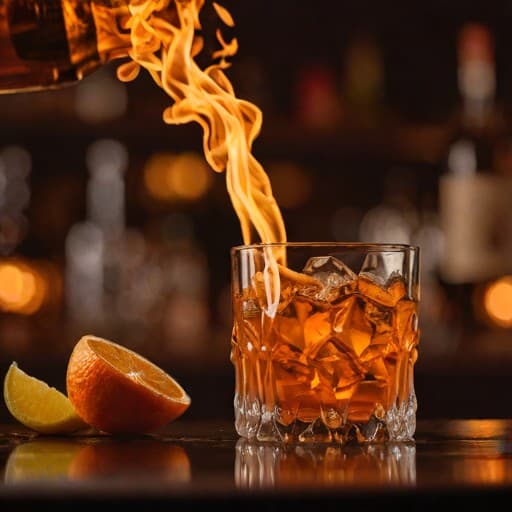
"Express oils over the drink" or "express a [citrus] peel" means: cut a coin of citrus peel (about the size of a quarter), hold it colored side down above the drink (about 2 inches away), and squeeze firmly so a fine mist of essential oil sprays across the surface. Then either drop the peel in or discard it.
Expressed oils are aromatic, not juice. The peel itself should be discarded (or garnish) — you're not squeezing juice into the drink, you're releasing volatile oils. Those oils sit on top of the drink and provide an intense aroma that registers the moment you bring the glass to your mouth.
This is the difference between a drink that smells good and a drink that smells amazing. Expressed oils change the entire aroma profile.
Rinsing (Absinthe Rinse, Vermouth Rinse)
"Rinse the glass with [ingredient]" means: add a small amount of the ingredient (usually absinthe, vermouth, or a bitter liqueur) to the serving glass, rotate it so the liquid coats the inside surface, then discard the excess.
The classic example is the Sazerac, which calls for a rinse of absinthe. The absinthe doesn't contribute meaningful volume to the drink — it contributes aroma. Your nose registers the anise scent as you sip, which changes your perception of the drink itself.
Use only a small amount — roughly 0.25 oz is plenty. More than that and you're adding flavor rather than aroma.
Floating
"Float [ingredient] on top" means: slowly pour the ingredient over the back of a bar spoon so it sits on the surface of the drink instead of sinking and mixing.
This is used for ingredients that are heavier than what's beneath them (like a dark rum on top of light rum) or for visual presentation (a float of cream on a dark liqueur). The ingredient doesn't fully integrate — it creates a separate layer.
The technique requires a steady hand and a bar spoon. Pour the ingredient very slowly onto the back of the spoon, which is resting just above the surface of the drink. The spoon breaks the fall and lets the liquid spread across the top instead of plunging through.
Dashes, Barspoons, and Measurements
"Dash" is the smallest standard measure in cocktails — roughly 1/8 teaspoon, or 5 drops from a standard bottle dasher. It's approximate, not precise. A dash of bitters is much less than 1/4 teaspoon.
If you're being precise, use a jigger or a measuring spoon. If you're estimating, a dash is meant to be small.
"Barspoon" is roughly 1/6 oz, or about 5 ml. It's the amount that fits in the bowl of a bar spoon (the long, twisted spoon used for stirring). Most recipes don't call for barspoons anymore — they list measurements in oz or ml — but older recipes sometimes do. If a recipe says "1 barspoon of simple syrup," that's about 5 ml.
Standard measurements:
- 1 oz = 30 ml (standard drink size, common in recipes)
- 0.5 oz = 15 ml (half-ounce, common modifier)
- 0.25 oz = 7.5 ml (quarter-ounce, used for liqueurs and bitters)
- 1 dash = ~5 drops = ~1/8 tsp
Professional recipes use oz or ml. Home recipes sometimes use tablespoons or teaspoons, which is less precise but workable.
"Up," "Neat," "On the Rocks"
"Up" means: served in a coupe, martini, or similar stemmed glass with no ice. The drink itself was chilled (shaken or stirred with ice), then strained into the ice-free glass.
"Martini up," "Daiquiri up," "anything up" means a cold drink in a glass without ice.
"Neat" means: served at room temperature with no ice and no mixing. This is used specifically for spirits — you're pouring whiskey, scotch, brandy, or similar straight into a glass without chilling or diluting it.
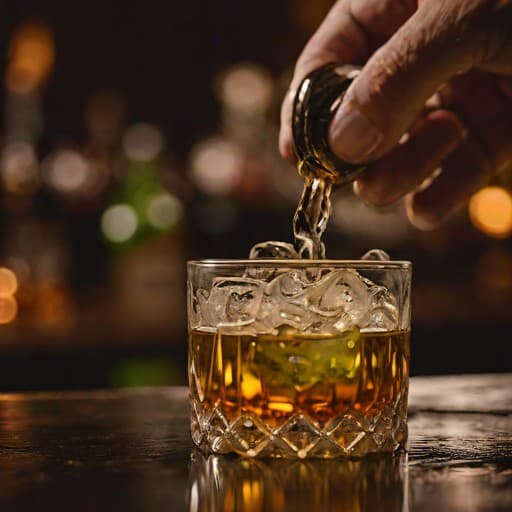
"On the rocks" means: served over ice in the glass. The drink is chilled, then poured over fresh ice in the glass, and the ice continues to chill it as it sits.
The distinction matters for temperature and presentation. "Up" is the coldest (chilled in advance, no further dilution). "On the rocks" is cold but warming (ice continues to melt, the drink slightly dilutes over time). "Neat" is room temperature and unaltered.
Other Common Terms
"Chill the glass": Place the drinking glass in the freezer for at least 15 minutes, or fill it with ice for 30 seconds then dump the ice, before pouring the drink.
A chilled glass keeps the drink cold longer and signals to the guest that this is a properly executed cocktail.
"Demerara syrup" (or "simple syrup," "honey syrup," etc.): Use the type of syrup specified. Demerara is made with demerara sugar and has a slightly richer flavor than white-sugar simple syrup. Make it in advance by heating equal parts sugar and water until dissolved, then cooling.
"Absinthe rinse," "vermouth rinse": See "Rinsing" above. Coat the glass, discard excess.
"Top with [ingredient]": Fill the remaining space in the glass with that ingredient (usually soda water or a sparkling wine).
Quick Reference: Technique at a Glance
| Term | What It Means | When to Use It |
|---|---|---|
| Shake and strain | Shaker with ice, vigorous shaking, strain | Citrus drinks, sours, any drink needing aeration |
| Stir and strain | Mixing glass with ice, gentle stirring, strain | Spirit-forward drinks, Martinis, Negronis |
| Build in glass | Add ingredients directly to glass, no shaking | Simple drinks like G&T, Spritz |
| Dry shake | Shake without ice first, then with ice | Drinks with egg white or cream |
| Muddle | Crush ingredients in the mixing glass | Mojitos, Old Fashioneds, any muddled drink |
| Double strain | Use Hawthorne strainer plus fine mesh strainer | For clarity and removing small ice chips |
| Express oils | Squeeze citrus peel to spray oils on drink | Finishing technique for aroma |
| Rinse | Coat glass with ingredient, discard excess | Absinthe rinse (Sazerac), vermouth rinse |
| Float | Pour ingredient slowly over bar spoon to layer it | For visual presentation or ingredient layering |
| Up | Chilled in shaker/mixing glass, served without ice | Martinis, Daiquiris, Sours (chilled, no ice) |
| Neat | Spirit poured straight, no ice or mixing | For spirits like whiskey, brandy, scotch |
| On the rocks | Served over ice in the glass | Most drinks, especially built drinks |
Want to practice these techniques? Browse our recipe collection — each recipe includes full instructions with these terms clearly defined.