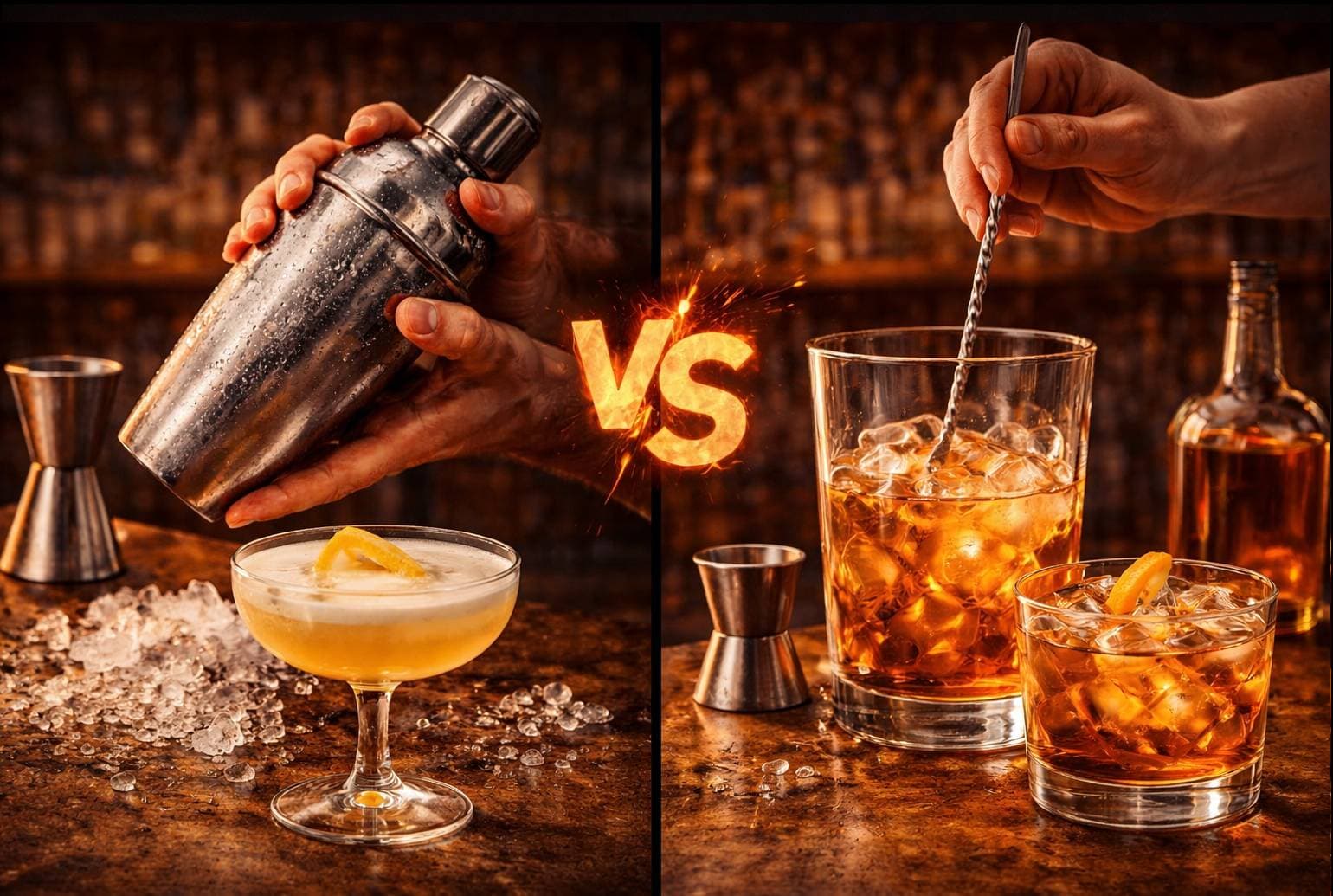
Pregúntale a un bartender por qué agita algunas bebidas y remueve otras, y usualmente escucharás algo sobre textura o tradición. Aunque eso es cierto....
Se pierde la razón más fundamental: agitar y remover producen diferentes cantidades de dilución, diferentes temperaturas y diferentes texturas — y la receta fue diseñada para una u otra técnica.
Cambia la técnica y cambias la bebida.
Qué Hace Realmente la Dilución
La dilución no es un defecto en la preparación de cócteles — es un ingrediente. Cuando el hielo se derrite en una bebida durante el agitado o removido, el agua hace tres cosas:
Reduce la intensidad percibida del alcohol. Una porción de 2 oz de bourbon de 80 grados es 40% alcohol. Después de agitar con hielo, el volumen total aumenta a aproximadamente 2.5–2.6 oz debido al agua derretida, bajando el ABV efectivo a alrededor de 30–32%. Por esto es que un cóctel bien preparado sabe más suave que beber el destilado puro — literalmente está menos concentrado.
Libera sabores. Las moléculas de agua interactúan con los compuestos aromáticos en los destilados, liberando moléculas de sabor volátiles que estaban bloqueadas en concentraciones más altas. Esta es la misma razón por la que los entusiastas del whiskey agregan unas gotas de agua a su trago — el agua hace los sabores más accesibles. En un cóctel, la dilución del hielo hace esto automáticamente.
Equilibra dulzura y acidez. El azúcar y los cítricos se vuelven menos intensos al diluirse. Un Daiquiri apropiadamente diluido sabe brillante y equilibrado. Uno sin diluir sabe como combustible para cohetes y concentrado de lima.
Qué Pasa Cuando Agitas
Agitar es violento. El hielo golpea contra las paredes de la coctelera, se rompe en pedazos más pequeños, y se derrite rápidamente debido al área de superficie dramáticamente aumentada. En un agitado estándar de 10–15 segundos:
La temperatura baja a aproximadamente 23–25°F (-4 a -5°C). Esto es más frío que lo que logra remover, porque el contacto agresivo hielo-líquido transfiere calor más rápido.
La dilución alcanza 25–30% del volumen total. Una bebida que comienza con 4 oz de ingredientes combinados termina con aproximadamente 5–5.2 oz después de agitar. Esa onza extra o más es agua del hielo derretido.
Se incorpora aire. Agitar fuerza pequeñas burbujas de aire en el líquido, creando una textura espumosa y ligeramente opaca. Esto es especialmente notable en bebidas con jugo de cítricos o clara de huevo — las proteínas y ácidos atrapan aire y crean espuma.
Fragmentos de hielo terminan en la bebida. Incluso cuando cuelas a través de un colador Hawthorne, pequeños fragmentos de hielo pasan. Se derriten rápidamente en el vaso, agregando una pequeña cantidad de dilución adicional y manteniendo la bebida fría durante los primeros sorbos.
Agitar es la técnica correcta para cócteles que contienen jugo de cítricos, clara de huevo, crema, u otros ingredientes opacos. La violencia del agitado emulsifica estos ingredientes — mezclando componentes a base de aceite y agua que no se combinarían con removido suave. Un Whiskey Sour necesita ser agitado porque el jugo de limón y el destilado no se integrarán apropiadamente de otra manera.
Qué Pasa Cuando Remueves
Remover es suave y controlado. Una cuchara de bar rota el hielo alrededor del interior de un vaso mezclador en un movimiento suave y continuo. En un removido estándar de 20–30 segundos:
La temperatura baja a aproximadamente 28–30°F (-1 a -2°C). Aún muy frío, pero unos grados más cálido que agitar porque el contacto hielo-líquido es menos agresivo.
La dilución alcanza 20–25% del volumen total. Menos agua derretida que agitar, porque el hielo permanece en pedazos más grandes con menos área de superficie expuesta.
El líquido permanece claro. Sin incorporación de aire significa que la bebida permanece transparente y sedosa. Por esto es que un Martini apropiadamente removido parece vidrio — es cristalino sin nubosidad.
La textura es suave y viscosa. Sin burbujas de aire interrumpiendo la sensación en boca, una bebida removida tiene una calidad más densa y aterciopelada en la lengua. Esta es la textura que quieres para cócteles con predominio de destilados.
Remover es la técnica correcta para cócteles hechos enteramente de destilados y licores — Manhattans, Negronis, Martinis, Old Fashioneds. Estas bebidas se tratan de claridad, suavidad, y la interacción de sabores de destilados. Agitarlos los nublaría, los sobre-diluiría, e introduciría una textura que pelea contra su carácter.
La Diferencia de Temperatura Importa
Esos pocos grados entre agitar (23–25°F) y remover (28–30°F) hacen una diferencia más grande de la que esperarías.
Las bebidas más frías suprimen la percepción de dulzura. Por esto es que una Frozen Margarita necesita más azúcar que una Margarita en las rocas — la temperatura más fría atenúa la dulzura, así que tienes que compensar. También es por esto que un Martini removido a 28°F sabe diferente a uno removido a 25°F — la versión más fría sabe más seca.
Para cócteles de máquina de bebidas congeladas, la temperatura de servicio es aún más baja — alrededor de 20–26°F dependiendo de la máquina. Esto es parte de por qué las recetas de lotes congelados tienen mayor contenido de azúcar (13–18 Brix) del que esperarías de la versión individual. La temperatura fría suprime la dulzura, y el azúcar extra compensa mientras también controla la textura de congelado.
Cómo Se Conecta Esto con Cócteles de Lote
Cuando haces un cóctel de lote — ya sea para una jarra, una ponchera, o una máquina de bebidas congeladas — no hay paso de agitado o removido al momento de servir. Esto significa que necesitas considerar la dilución que habría ocurrido durante la preparación.
Para versiones de lote de cócteles agitados, agrega agua igual a aproximadamente 25% del volumen total del lote. Para cócteles removidos, agrega aproximadamente 20%. Esto replica el derretimiento del hielo que ocurriría durante la preparación individual.
Para lotes de máquinas congeladoras, la máquina misma proporciona algo de dilución a través del proceso de congelado y batido, pero típicamente menos de lo que agregaría agitar. Nuestras recetas de lotes consideran esto — las proporciones están ajustadas para condiciones de máquina, no preparación de barra.
Para una exploración más profunda del escalado de lotes, ve: Matemáticas de Cócteles de Lote — Escalar una Receta Sin Arruinar el Equilibrio.
Las "Reglas" y Cuándo Romperlas
La regla clásica — "agita bebidas con cítricos, remueve bebidas sin" — funciona aproximadamente 90% del tiempo. Pero hay algunas excepciones intencionales:
El Ramos Gin Fizz se agita por un minuto completo (a veces más) para crear una espuma extrema de clara de huevo, crema y cítricos. El agitado extendido produce mucha más dilución y aireación que un agitado estándar — y ese es el punto. La bebida es esencialmente un mousse de cóctel.
El Espresso Martini se agita a pesar de no tener cítricos, porque la acción de agitado crea la espuma crema característica en la parte superior de los aceites del café y azúcar.
Un Martini "maltratado" es un Martini agitado — estilo James Bond. La objeción purista es que agitar sobre-diluye y nubla la bebida. La realidad práctica es que algunas personas prefieren la versión más fría, ligeramente más diluida y más accesible. No hay respuesta incorrecta — solo bebidas diferentes.
La Conclusión Práctica
Agitar y remover no son intercambiables así como hornear y freír no son intercambiables. Cada técnica produce una temperatura específica, nivel de dilución, y textura para la cual la receta fue diseñada. Entender esto te hace mejor siguiendo recetas, mejor improvisando las tuyas propias, y mejor solucionando problemas cuando una bebida no sabe bien.
Si una bebida sabe muy fuerte, probablemente está sub-diluida. Si sabe aguada y plana, está sobre-diluida. Saber cuánta agua debería agregar agitar o remover te da el marco para diagnosticar y arreglar el problema.
¿Listo para poner estas técnicas en práctica? Navega nuestras recetas de cócteles para bebidas que especifican el método de preparación correcto, o prueba nuestro Buscador de Ingredientes para encontrar recetas con lo que tienes a la mano.