Le muddling consiste à extraire les saveurs, pas à détruire les ingrédients. La plupart des gens utilisent trop de force — surtout avec les herbes. Voici la bonne pression pour chaque ingrédient.
Le muddling semble simple. Mettre des trucs dans un verre, les écraser avec un bâton. Mais le nombre de Mojitos ruinés par un muddling agressif — transformant la menthe fraîche en un désordre vert amer et déchiqueté — suggère que cette technique mérite plus d'attention qu'elle n'en reçoit. Le muddling consiste en l'extraction, pas la destruction, et la bonne quantité de force dépend entièrement de ce que vous écrasez.
Ce Que Fait le Muddling
Le but du muddling est de libérer les composés aromatiques des ingrédients frais. Pour les herbes, cela signifie meurtrir délicatement les feuilles pour libérer les huiles aromatiques des cellules. Pour les fruits, cela signifie décomposer la chair pour libérer le jus. Pour les cubes de sucre, cela signifie dissoudre le sucre à l'aide de liquide et de friction.
Chaque ingrédient a une structure différente et libère sa saveur différemment. Une feuille de menthe stocke ses huiles dans des cellules de surface fragiles. Un quartier de citron vert stocke son jus dans des cellules de pulpe aux parois épaisses. La quantité de force qui est correcte pour l'un est mauvaise pour l'autre.
Herbes : Pression Douce Uniquement
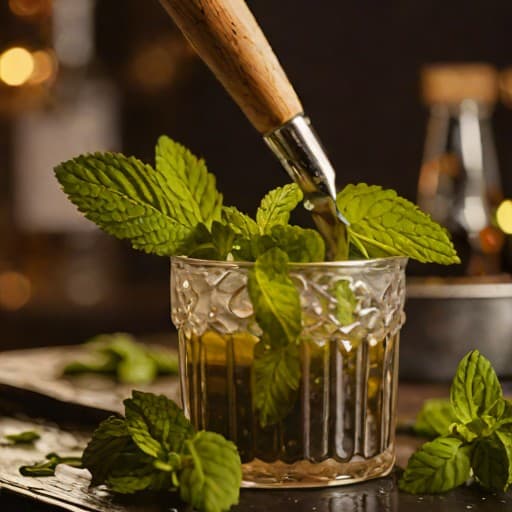
La menthe, le basilic, la coriandre et autres herbes tendres nécessitent une pression douce — quelques pressions fermes, pas un mouvement de broyage ou de torsion. Vous voulez meurtrir les feuilles suffisamment pour rompre les cellules contenant de l'huile sur la surface de la feuille. Ces huiles sont ce qui rend le cocktail aromatique.
Ce que vous ne voulez PAS, c'est déchiqueter les feuilles, les déchirer, ou les broyer en pâte. Quand vous détruisez la structure de la feuille, vous libérez la chlorophylle et les tanins des parois cellulaires et des nervures de la feuille. La chlorophylle a un goût amer et végétal. Les tanins ont un goût astringent et sec. Un Mojito à la menthe correctement mudlé a un goût frais et aromatique. Un sur-mudlé a le goût de boire des tontes de gazon.
Technique : Placez les herbes au fond du shaker ou du verre. Appuyez avec l'extrémité plate du pilon et tournez délicatement — 3 à 5 pressions, pas plus. Vous devriez pouvoir sentir les huiles libérées immédiatement. Si les feuilles sont encore largement intactes avec quelques meurtrissures visibles, vous avez bien fait. Si les feuilles sont déchirées en confettis, vous êtes allé trop loin.
Un test utile : Après avoir mudlé la menthe, regardez les feuilles. Si vous pouvez encore les identifier comme des feuilles de menthe, bien. Si elles ressemblent à de la laitue déchiquetée, c'est trop.
Agrumes : Pression Modérée
Les quartiers de citron vert, les quartiers de citron et les tranches d'orange nécessitent plus de force que les herbes mais bénéficient encore de retenue. L'objectif est d'extraire le jus de la pulpe ET de libérer les huiles de l'écorce (les agrumes font beaucoup de travail dans les cocktails — voir notre guide sur le rôle des agrumes pour comprendre pourquoi). Mais si vous broyez l'albédo (la couche blanche entre le zeste et la pulpe), vous extrayez des composés amers qui rendent la boisson astringente.
Technique pour la Caipirinha : Coupez le citron vert en quartiers. Placez dans le verre avec le sucre. Pressez chaque quartier fermement 3-4 fois, en faisant tourner le pilon pour presser différentes surfaces. Vous voulez comprimer le fruit suffisamment pour libérer la plupart du jus tout en pressant l'écorce pour libérer les huiles. Ne tordez pas et ne broyez pas — cela déchiquette l'albédo.
Astuce : Coupez vos quartiers de citron vert de façon à retirer le cœur central d'albédo. Cela réduit significativement l'amertume. Coupez le citron vert en deux, puis coupez chaque moitié en 3 quartiers, en retirant la membrane blanche centrale de chacun.
Fruits : Pression Ferme
Les baies, le concombre, la pastèque et les fruits à noyau nécessitent une pression ferme pour décomposer la chair et libérer le jus. Ces ingrédients sont plus tolérants que les herbes ou les agrumes — vous avez peu de chances d'extraire des saveurs désagréables en pressant fort. Le principal risque est de créer trop de pulpe, qui peut boucher une passoire.
Technique : Pressez fermement et tournez. Pour les baies, 4-6 pressions fermes les décomposeront adéquatement. Pour le concombre, pressez jusqu'à ce que les tranches soient écrasées et aient libéré leur liquide. Vous n'avez pas besoin de réduire le fruit en purée — vous avez juste besoin que le jus et les composés aromatiques soient libérés dans le liquide.
Cubes de Sucre : Dissoudre, Ne Pas Écraser
Les cubes de sucre dans un Old Fashioned sont mudlés avec quelques traits de bitter et parfois une éclaboussure d'eau. L'objectif est de dissoudre le sucre en une consistance semblable à du sirop, pas de l'écraser en morceaux granulaires qui restent au fond du verre.
Technique : Placez le cube de sucre dans le verre. Ajoutez 2-3 traits de bitter et une éclaboussure (environ une cuillère à café) d'eau ou de soda. Pressez le cube avec le pilon, puis tournez et remuez pour dissoudre le sucre dans le liquide. Continuez jusqu'à ce qu'aucun cristal visible ne reste. Cela peut prendre 30-45 secondes de pression et de remue-ménage patients.
Types de Pilons
Pilon en bois (non verni) : Le classique. Bonne prise, poids approprié, et l'extrémité plate fonctionne bien pour toutes les techniques. Assurez-vous qu'il soit non verni — le vernis peut s'écailler dans vos boissons. Lavez et séchez soigneusement après chaque utilisation.
Pilon en plastique/nylon : Plus hygiénique et plus facile à nettoyer. Beaucoup ont des extrémités texturées pour une meilleure prise sur les fruits. Moins élégant mais pratique.
Pilon en métal : Durable et facile à désinfecter. Peut rayer la verrerie si utilisé agressivement. Le poids facilite le sur-mudling des herbes.
Pour un usage domestique, un simple pilon en bois avec une extrémité plate (pas une extrémité crantée) est le meilleur choix polyvalent. Les pilons crantés sont conçus pour écraser les fruits et déchiquetteront les herbes. Si vous mudlez des herbes fréquemment, un pilon à extrémité plate vous donne plus de contrôle. Pour un aperçu complet des pilons et autres accessoires essentiels, voir notre guide sur les sacs Lewis, pilons et couteaux à canal.
Erreurs Communes
Sur-mudling des herbes. L'erreur de mudling la plus commune — et l'une des principales erreurs que font les débutants. Trois pressions douces. C'est tout. Plus n'est pas mieux.
Ne pas mudler l'écorce d'agrumes. Quand vous mudlez des quartiers de citron vert, les huiles de l'écorce sont aussi importantes que le jus. Assurez-vous de presser l'écorce contre le verre, pas seulement de presser la chair.
Mudler dans le mauvais récipient. Mudlez dans un tin de mélange solide ou un verre rocks — pas dans un verre à parois fines qui pourrait se fissurer sous la pression. Un tin de Boston shaker est idéal pour mudler avant de shaker.
Oublier de double-filtrer. Après avoir mudlé quoi que ce soit — herbes, fruits, agrumes — double-filtrez à travers une passoire à mailles fines pour attraper la pulpe, les graines et les fragments de feuilles. Une boisson propre paraît et goûte mieux qu'une pleine de débris flottants.