Made by monks from a secret 130-herb recipe since 1737, Chartreuse is the most unique liqueur in any cocktail bar. Here's what it is, why it costs so much, and how to use it.
There is no substitute for Chartreuse. People have been trying to replicate it for nearly three centuries and nobody has come close. It is made by Carthusian monks in the French Alps using a recipe containing 130 botanicals, and only two monks know the full formula at any given time. That sounds like marketing copy, but it is actually true, and it matters because the result is a liqueur unlike anything else in the spirits world.
If you have tasted Chartreuse, you remember it. If you haven't, prepare yourself for something that is simultaneously herbal, sweet, spicy, floral, vegetal, and minty — and somehow harmonious despite containing multitudes. It is one of those ingredients that makes bartenders' eyes light up and accountants wince, because a bottle now costs north of $60 and it keeps getting harder to find.
The History
In 1605, the Carthusian monks at the Grande Chartreuse monastery near Grenoble, France, received a manuscript detailing an "elixir of long life." The recipe was so complex that it took over a century for the monks to refine it into something producible. In 1737, they began making what is now known as Elixir Végétal de la Grande-Chartreuse — a 138-proof herbal concentrate that is still produced today and sold in tiny bottles.
The Green Chartreuse we use in cocktails came in 1764. Yellow Chartreuse followed in 1838. The monks were expelled from France during anticlerical laws in 1903 and continued production in Tarragona, Spain, before returning to France in 1929. Through wars, exile, and political upheaval, only the monks have made Chartreuse. It has never been licensed or outsourced.
Today, production happens at a distillery in Aiguenoire, France, but the botanical preparation — the actual mixing of the 130 herbs, plants, and flowers — still takes place inside the monastery. The monks macerate the botanicals in grape alcohol, distill the mixture, then age it in oak casks. Green Chartreuse is aged for approximately five years. The process is slow, capacity is limited, and the monks have no particular interest in scaling up. They make what they make.
Green vs. Yellow
Green Chartreuse (55% ABV / 110 proof) is the one cocktail bartenders reach for. It is intensely herbal, vegetal, and complex. The flavor hits in waves: first a sweet, almost candy-like herbal rush, then deeper notes of pine, anise, mint, and warm spice, finishing long and slightly peppery. The high proof means it carries through in cocktails without getting buried.
Yellow Chartreuse (40% ABV / 80 proof) is milder, sweeter, and more honeyed. The botanical profile is gentler — more saffron and honey, less aggressive herbal punch. It is lovely sipped neat or over ice and works in cocktails where you want Chartreuse character without the volume turned up to eleven. The Alaska cocktail (gin and Yellow Chartreuse) is the classic application.
Elixir Végétal (69% ABV / 138 proof) is the original preparation, sold in small 100ml bottles. It is meant to be taken in small doses — a few drops on sugar, in hot water, or as a digestive. Too intense for most cocktail applications, though a dash can add complexity.
VEP (Vieillissement Exceptionnellement Prolongé) is extra-aged Chartreuse, available in both green and yellow. Significantly more expensive (often $100+) and smoother. Worth trying neat but generally overkill for cocktails.
Why It's So Expensive Now
Chartreuse has always been moderately expensive — a complex, artisanally produced liqueur from a monastery with limited output was never going to be cheap. But prices have spiked dramatically since 2021, driven by several converging factors.
First, the cocktail renaissance made Chartreuse essential. The Last Word went from an obscure Prohibition-era recipe to one of the most ordered cocktails in craft bars worldwide. Every serious cocktail bar now stocks Green Chartreuse, and demand outstripped supply.
Second, in 2021, the monks announced they would voluntarily limit production. They stated that they wished to prioritize their monastic life over commercial demands. Whether this was a genuine spiritual decision or supply chain-related is debated, but the effect was real: allocations to distributors were cut.
Third, the resulting scarcity created hoarding behavior. Bars and collectors bought whatever they could find, further straining supply. Prices at retail went from roughly $35-40 per bottle to $55-75 depending on your market, with some stores charging even more.
The situation has stabilized somewhat, but Chartreuse remains harder to find and more expensive than it was five years ago. Buy it when you see it at a reasonable price.
Essential Chartreuse Cocktails
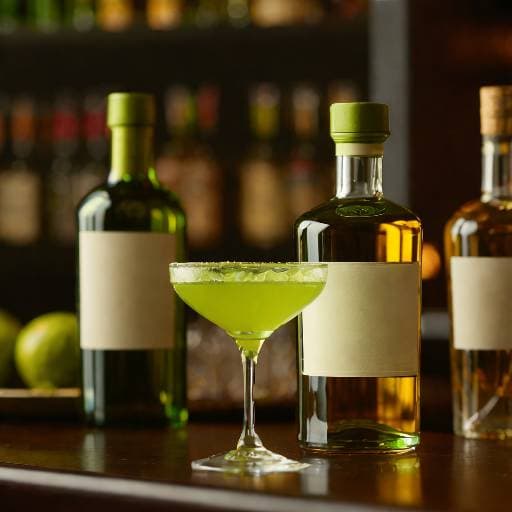
Last Word — Equal parts gin, Green Chartreuse, maraschino liqueur, and fresh lime juice. Shaken and strained. This Prohibition-era cocktail was rediscovered by bartender Murray Stenson at the Zig Zag Café in Seattle around 2004 and has since become a modern classic. The equal-parts format makes it easy to remember, and the interplay of herbal Chartreuse, funky maraschino, botanical gin, and bright lime is extraordinary. It should not be this good given how simple the recipe is.
Bijou — Equal parts gin, Green Chartreuse, and sweet vermouth, with a dash of orange bitters. Stirred and strained. An old recipe from the 1890s — "bijou" means "jewel" in French, and each ingredient was meant to represent a gemstone (gin for diamond, Chartreuse for emerald, vermouth for ruby). Rich, herbal, and complex.
Chartreuse Swizzle — 1.5 ounces Green Chartreuse, 0.75 ounce pineapple juice, 0.5 ounce lime juice, 0.25 ounce falernum. Built in a pilsner glass over crushed ice and swizzled. Created by Marco Dionysos. The tropical fruit and falernum spice make the Chartreuse surprisingly refreshing.
Naked and Famous — Equal parts mezcal, Yellow Chartreuse, Aperol, and lime juice. The smoky-herbal-bitter cousin of the Last Word, created by Joaquín Simó. Uses Yellow Chartreuse, which lets the mezcal smoke and Aperol bitterness come through.
Tipperary — Equal parts Irish whiskey, Green Chartreuse, and sweet vermouth. Stirred. The Chartreuse adds herbal backbone to the smooth Irish whiskey.
Substitutes (Sort Of)
Nothing truly replicates Chartreuse. But if you cannot find or afford it, here are the closest alternatives:
Strega — An Italian herbal liqueur with saffron and mint. It captures some of Chartreuse's herbal sweetness but lacks the depth and complexity. Works in a pinch for swizzles and tiki-adjacent drinks.
Génépy — An alpine herbal liqueur from the same region as Chartreuse, made from Alpine wormwood. Dolin Génépy le Chamois is the most common brand. It is lighter and less complex than Chartreuse but shares some DNA. Works as a substitute in drinks where Chartreuse is a modifier rather than a star.
Becherovka — A Czech herbal liqueur with strong cinnamon and clove notes. Not a close match, but it fills a similar "complex herbal liqueur" role in some cocktail contexts.
None of these will make a proper Last Word. If you are making Last Words, you need the real thing.
How to Use Chartreuse at Home
Start small. Green Chartreuse at 110 proof is potent, and a heavy pour will dominate anything you put it in. In most cocktails, 0.5 to 0.75 ounce is plenty. Equal-parts recipes like the Last Word work because the other ingredients are strong enough to stand up to it — lime acid, maraschino funk, juniper-forward gin.
Store your Chartreuse upright in a cool, dark place. Like most high-proof spirits, it lasts effectively forever once opened. The color may fade slightly with prolonged light exposure, so keep it out of direct sunlight.
Given the price, make every pour count. Chartreuse is not a spirit you should be casually splashing into experiments. Know your recipe, measure carefully, and respect the monks' work. They have been perfecting this for almost 300 years. The least you can do is use a jigger.