Vermouth is misunderstood and mistreated—left open for months, bought in the wrong type, and dismissed as unimportant. The fix is simple: use the right type for your drink and store it properly once opened. Get both right and your cocktails transform.
What Is Vermouth?
Vermouth is fortified, aromatized wine. It starts as white or red wine, gets fortified with neutral spirit (bringing it to 15–18% ABV), then gets infused with botanicals — herbs, spices, citrus peel, roots, and other plant material. The specific botanicals vary by producer and create the flavor profile.
Key point: Vermouth is wine, not a spirit. This distinction is everything for storage and shelf life. Wine oxidizes. Once a vermouth bottle is opened, oxidation begins, and the product slowly degrades — even in the refrigerator.
The Three Main Types
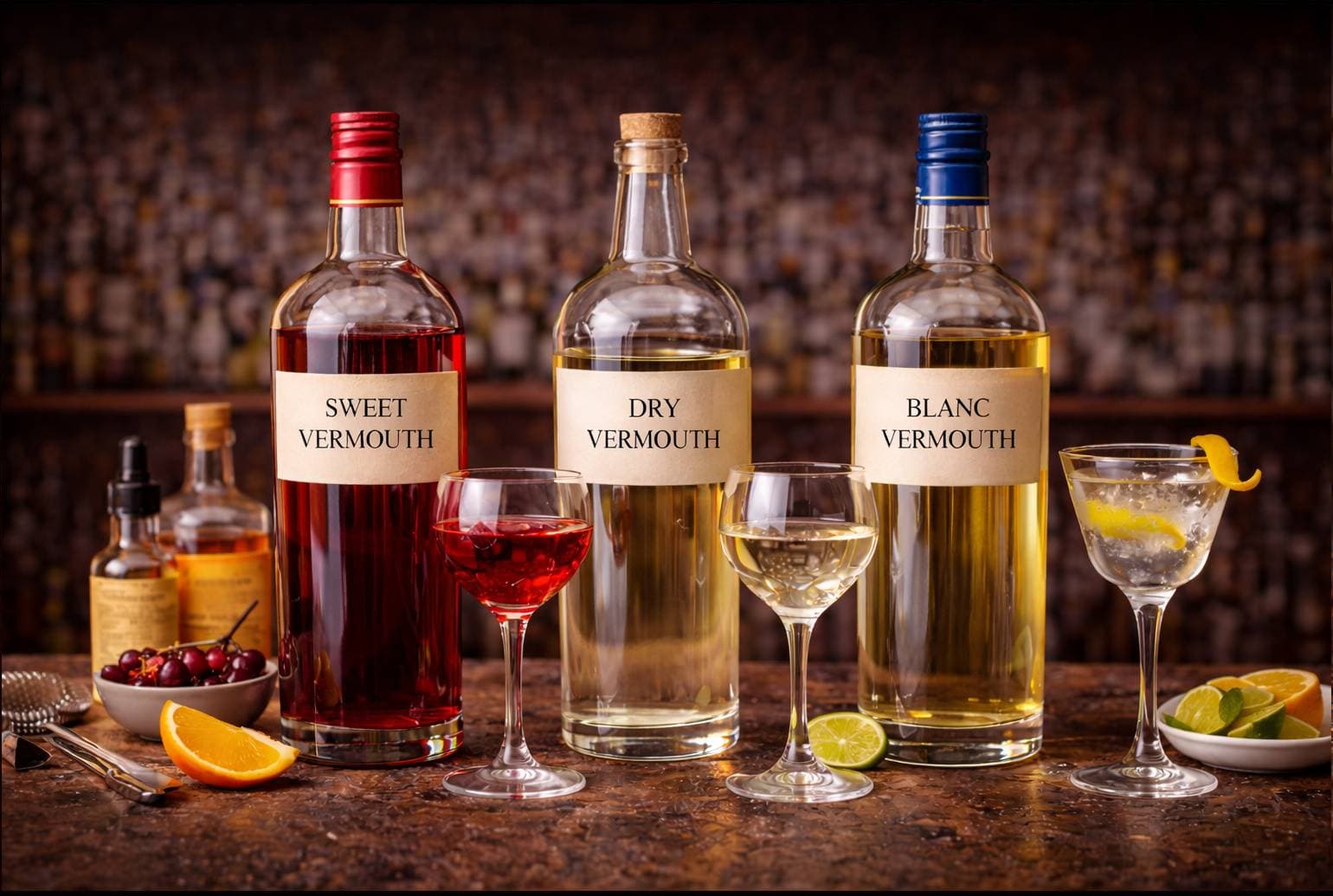
Sweet Vermouth (Rosso / Vermouth Rosso)
Color: Deep red, sometimes nearly mahogany. The color comes from red wine base and sometimes added caramel color.
Flavor profile: Sweet, with rich spice notes (cinnamon, clove, vanilla), dried fruit, and herbal complexity. There's bitterness in the background, but sweetness dominates. It's meant to be inviting and approachable.
ABV: Typically 15–17% ABV
Residual sugar / Brix: Approximately 15 Brix (15% sugar by weight). This is notably sweet — sweeter than many liqueurs.
Where it's used:
- Manhattan (whiskey, sweet vermouth, bitters, cherry garnish) — The essential drink for sweet vermouth. The vermouth provides sweetness, warmth, and herbal depth. Without good sweet vermouth, a Manhattan tastes hollow.
- Negroni (gin, Campari, sweet vermouth) — The vermouth balances the bitter Campari. The red wine base and spice notes add roundness.
- Martinez (gin, sweet vermouth, bitters, cherry liqueur) — The classic precursor to the Martini, using sweet vermouth.
- Rob Roy (Scotch, sweet vermouth, bitters) — The Scotch version of a Manhattan.
- As an aperitif — Vermouth on the rocks with a splash of soda and a citrus twist is a classic drink unto itself.
Quality brands:
- Dolin (French, from the Alps) — Light, herbal, less heavy than Italian sweet vermouths. Delicate and balanced.
- Carpano Antica Formula (Italian) — Rich, vanilla-forward, slightly syrupy. Complex and popular in bars worldwide.
- Cocchi di Torino (Italian) — Spiced, warm, sophisticated. Often preferred by bartenders who want vermouth to be a main character, not background.
- Noilly Prat Sweet (French, though Noilly Prat is famous for dry) — Elegant, balanced, not as heavy as some Italian versions.
Dry Vermouth (Vermouth Secco / French Dry)
Color: Pale yellow to golden. Lighter and more delicate looking than sweet vermouth.
Flavor profile: Dry and herbal, with subtle spice, anise, and citrus notes. There's minimal sweetness — the botanicals are what you taste. It's sophisticated and meant to be a supporting player, not the star.
ABV: Typically 18–19% ABV. Note that dry vermouth is actually higher proof than sweet vermouth, which seems backwards until you realize it's because there's less sugar content and more alcohol is needed to achieve the desired flavor extraction and preservation.
Residual sugar / Brix: Approximately 4 Brix (about 4% sugar by weight). This is notably dry — drier than many dry wines.
Where it's used:
- Martini (gin or vodka, dry vermouth, optional bitters, olive or lemon twist) — The essential drink for dry vermouth. The small amount of dry vermouth provides herbal complexity and silkiness without sweetness. A Martini with stale or oxidized dry vermouth tastes thin and hollow. A Martini with fresh dry vermouth tastes balanced and sophisticated.
- Manhattan variant: The Perfect Manhattan (whiskey, sweet vermouth, dry vermouth, bitters) — Uses both types, balancing sweetness with dryness.
- Vesper (gin, vodka, dry vermouth, lemon peel) — A dry, spirit-forward variation that relies on vermouth providing herbal sophistication.
- Dry cocktails — Any recipe that calls for dry vermouth expects that herbal, minimally-sweet character.
Quality brands:
- Dolin Dry (French, from the Alps) — Light, herbal, elegant. The go-to choice for bartenders who want their vermouth to shine without overpowering.
- Noilly Prat Original French Dry — The classic, the standard. Complex, herbal, with subtle citrus and anise. Many bartenders consider this the reference point for all dry vermouths.
- Noilly Prat Dry (American bottling) — Slightly different from the French version due to aging differences, but still excellent.
- Martini & Rossi Dry — More accessible, budget-friendly option that still works well for Martinis and other dry cocktails.
Blanc / Bianco Vermouth
Color: Pale golden or colorless. It looks like white wine.
Flavor profile: Between sweet and dry. There's some residual sweetness (noticeable if you taste it neat), but it's balanced with herbal and spice notes. It's lighter and more delicate than sweet vermouth, more approachable than dry vermouth.
ABV: Typically 16–18% ABV
Residual sugar / Brix: Approximately 8–10 Brix. Noticeably sweeter than dry vermouth, but less sweet than sweet vermouth.
Where it's used:
- Vesper — The original recipe (gin, vodka, Lillet Blanc) used Lillet Blanc, not dry vermouth. If you're making an authentic Vesper, blanc vermouth is the choice.
- Aperitifs — Blanc vermouth on the rocks with soda and citrus is approachable and refreshing.
- Cocktail variations — Some modern bartenders use blanc vermouth in drinks that traditionally call for sweet or dry, as a middle-ground option.
Quality brands:
- Dolin Blanc — Light, herbal, balanced. The go-to option if you want a vermouth that sits between sweet and dry.
- Lillet Blanc — Technically a quinquina (similar to vermouth but with added cinchona bark), not a vermouth, but widely used in cocktails. Light, floral, slightly fruity.
- Carpano Antica Formula Bianco — The blanc version of Carpano, offering some of the richness of the classic red but in a lighter format.
The Storage Crisis
Here's where most home bartenders go wrong: they treat vermouth like a spirit.
Vermouth is wine. Once the bottle is opened, oxygen begins oxidizing the product. The botanicals' fresh character fades. The drink tastes dull and flat.
Timeline: Vermouth lasts 1–2 months refrigerated after opening. Some sources claim longer, but quality noticeably declines after 4–6 weeks, and most vermouth is noticeably oxidized and unpleasant by the two-month mark.
The problem: Most home bartenders don't refrigerate their vermouth, or they refrigerate it after it's been sitting open for weeks. By the time they use it, the product has oxidized significantly.
Storage protocol:
- Refrigerate immediately after opening. Don't wait, don't leave it on the shelf for "just one cocktail," refrigerate it right now.
- Keep it sealed and upright in the coldest part of your refrigerator (not the door where temperatures fluctuate).
- Label it with the opening date. This is crucial — you can't trust your memory about when you opened it.
- After 1.5 months, throw it out and buy fresh, even if it looks fine. You can't see oxidation, but you can taste it.
Buy small bottles: If you don't use vermouth regularly, buy 375ml bottles instead of 750ml. Vermouth is inexpensive — a fresh 375ml bottle costs $8–15 depending on brand. You'll always have fresher product, and the price difference is negligible. The taste difference is significant.
The impact on cocktails: A Manhattan made with fresh dry vermouth tastes bright, herbal, and balanced. The same Manhattan made with vermouth that's been open for six months tastes dull, slightly vinegary, and flat. The other ingredients are the same. The only difference is vermouth freshness.
Choosing the Right Type
If you're making:
- Martini → Dry vermouth
- Manhattan → Sweet vermouth
- Negroni → Sweet vermouth
- Dry martini variation → Dry vermouth
- Stirred spirit-forward cocktail → Depends on the drink's flavor profile. Check the recipe.
- Aperitif → Blanc or sweet, depending on preference
If you're stocking a home bar:
Build starting with dry vermouth. More cocktails call for dry than for sweet (Martinis are more common than Manhattans in most bars). Add sweet vermouth as your second choice. Blanc vermouth is optional — it's a nice-to-have for variety, not essential.
Quality and Brand Selection
Budget option (~$10–15):
- Martini & Rossi Dry (works fine for Martinis, acceptable)
- Martini & Rossi Sweet (budget sweet option, acceptable)
Mid-range option (~$20–30):
- Dolin Dry (French, light, elegant, excellent)
- Dolin Sweet (French, delicate, balanced, excellent)
- Noilly Prat Dry (classic, complex, the reference point)
- Cocchi di Torino Sweet (Italian, spiced, sophisticated)
Premium option (~$30–40):
- Carpano Antica Formula (Italian, rich, complex, iconic)
- Carpano Antica Formula Bianco (the blanc version, lighter but still complex)
- Noilly Prat Extra Dry (even drier, for bartenders who want minimal vermouth influence)
For Martinis specifically: Dolin Dry or Noilly Prat Dry are the safest choices. Both are light enough to let the gin shine while providing herbal sophistication.
For Manhattans specifically: Carpano Antica Formula or Cocchi di Torino Sweet are excellent. Both are rich enough to be main characters in the drink without being cloying.
Vermouth in Batching
If you're making batch cocktails (Martinis, Manhattans, Negronis in gallon quantities), vermouth requires special care.
The issue: Vermouth oxidizes slowly but steadily. A batch made with fresh vermouth will taste noticeably better when served immediately than the same batch served 2 hours later. Over 4+ hours, the oxidation becomes obvious.
For batches:
- Combine all other ingredients (spirits, bitters, etc.) first.
- Add the vermouth last, as close to serving time as possible.
- If you're batching more than 1–2 hours in advance, consider waiting to add the vermouth until service begins.
- For long events (4+ hours), remake batches every 2 hours to keep the vermouth fresh.
This matters more for Martinis (where vermouth character is essential) than for Manhattans (where vermouth is just one component among many).
Vermouth Substitutes and Variations
Can I use something else instead of vermouth?
Not really. Vermouth's combination of wine base, fortification, and herbal character is specific. You could substitute a different fortified wine (like Lillet), but it won't taste the same, and most recipes specify vermouth for a reason.
What if my vermouth tastes off?
If your vermouth smells vinegary, tastes flat, or seems dull, it's oxidized. Throw it out and buy fresh. The cost of a new bottle is cheaper than ruining a cocktail.
Quick Reference: Vermouth Types
| Type | Brix | ABV | Character | Best For | Storage |
|---|---|---|---|---|---|
| Sweet (Rosso) | ~15 | 15–17% | Rich spice, dried fruit, vanilla | Manhattans, Negronis, aperitifs | Refrigerate, 1–2 months |
| Dry | ~4 | 18–19% | Herbal, delicate, minimal sweetness | Martinis, dry cocktails | Refrigerate, 1–2 months |
| Blanc (Bianco) | ~8–10 | 16–18% | Balanced, lighter, herbal-sweet | Vespers, aperitifs | Refrigerate, 1–2 months |
The Bottom Line
Vermouth is a crucial ingredient that's widely misunderstood and mistreated. Here's what you need to know:
- Vermouth is wine and must be refrigerated after opening.
- It lasts 1–2 months refrigerated, then goes bad.
- Fresh vermouth tastes dramatically better than oxidized vermouth.
- Buy small bottles (375ml) unless you use vermouth regularly.
- Use dry vermouth in Martinis, sweet in Manhattans.
- Quality matters — fresh Dolin or Noilly Prat are affordable and noticeably better than stale expensive vermouth.
If your cocktails have been tasting flat, the problem might not be your technique or your other ingredients. It might be vermouth that's been sitting open on your shelf for six months. Replace it with fresh, refrigerated vermouth, and taste the difference immediately.
Browse our cocktail recipes to find Martinis, Manhattans, Negronis, and other vermouth-forward drinks. Use the Ingredient Matcher to find recipes based on the type of vermouth you have at home. See our article on How to Store Open Bottles for more on vermouth storage alongside other home bar ingredients.