Amaro is Italy's family of bitter herbal liqueurs — ranging from gentle and citrusy to aggressively medicinal. Here's how to navigate the category and use them in cocktails.
You have probably encountered amaro without realizing it. If you have ever had a Negroni, the Campari in that drink is technically an amaro. If someone handed you a shot of Fernet-Branca after a heavy meal in an Italian restaurant, that was amaro too. The category is enormous, wildly varied, and central to Italian drinking culture — yet most people outside of Italy treat it as a single thing rather than the sprawling family it actually is.
The word "amaro" simply means "bitter" in Italian. Plural: amari. Every amaro is a bittersweet herbal liqueur made by macerating or distilling botanicals — roots, bark, flowers, citrus peel, herbs, spices — in a base spirit, then sweetening the result. Beyond that shared DNA, the range is staggering. Some amari taste like cola and orange peel. Others taste like a pine forest. A few taste like someone dissolved a mentholated cough drop in grain alcohol, and people love them for it.
How Amaro Is Made
The production process varies by producer, but the general framework is consistent. A neutral grape spirit or grain spirit serves as the base. Dried and fresh botanicals are added — anywhere from a handful to several dozen ingredients. The mixture macerates for days to weeks, extracting flavor. Some producers redistill part of the maceration for a cleaner extraction. Sugar or sugar syrup is added, and the final product is diluted to bottling proof, typically between 16% and 40% ABV.
Every producer guards their recipe. Averna's botanical blend includes over 30 ingredients. Fernet-Branca's recipe is allegedly known by a single family member at any given time. This secrecy is part of the tradition — amari were originally developed as medicinal preparations by monks, herbalists, and pharmacists across Italy, and proprietary formulas were valuable intellectual property.
The result is a liqueur where bitterness and sweetness coexist. The sugar doesn't cancel the bitter — it frames it, the way salt frames flavor in food. If you're interested in how bitterness works as a flavor tool more broadly, our guide to bitters covers the cocktail side of that equation. A well-made amaro hits multiple parts of your palate: bitter first, sweet in the middle, herbal and lingering on the finish.
The Major Styles and Bottles You Should Know
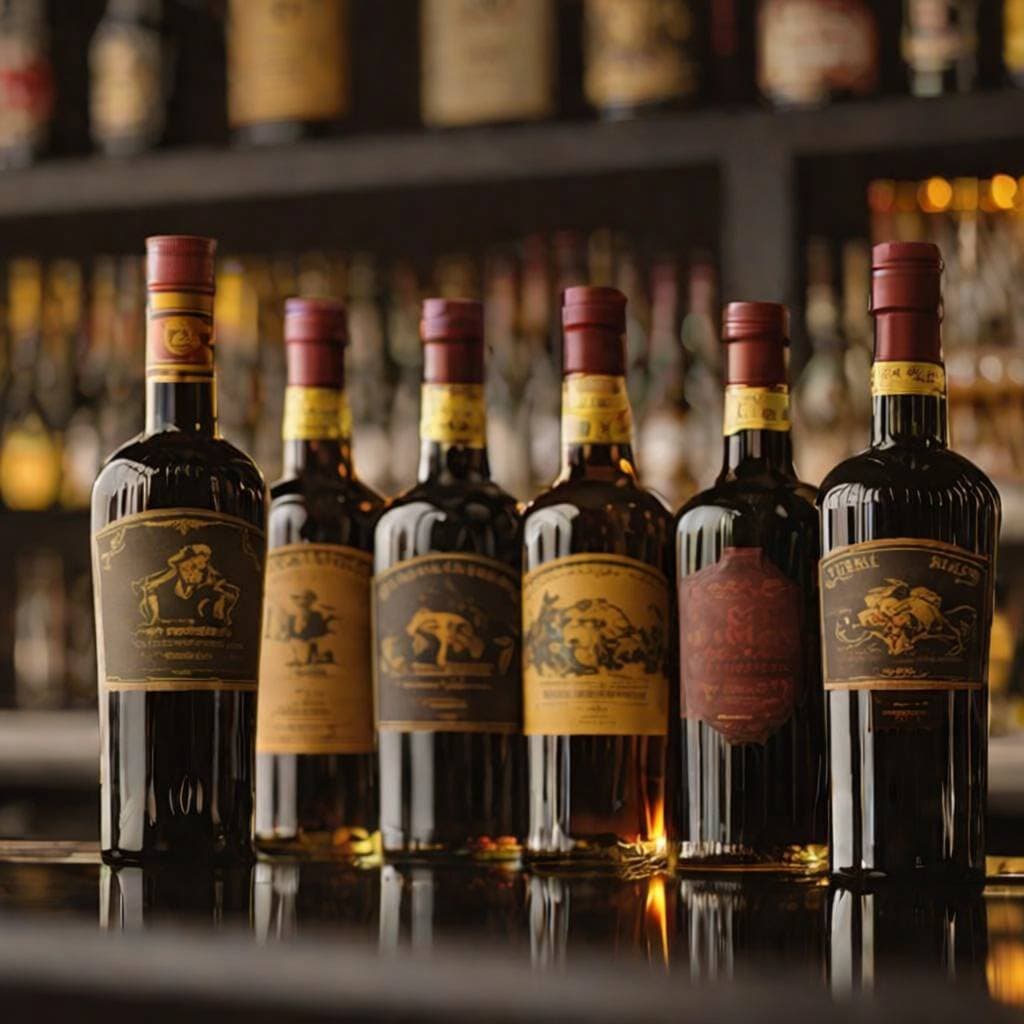
Amari exist on a spectrum from light and approachable to dark and punishing. Here are the key reference points.
Light and Citrusy
Aperol (11% ABV) is the gateway. Bright orange, bittersweet, with dominant orange and rhubarb flavors. It is mild enough that most people don't even register it as bitter. The Aperol Spritz has made it one of the best-selling spirits in the world.
Montenegro (23% ABV) is the bartender's darling. It has a balanced, almost vanilla-tinged bitterness with orange peel and warm baking spice notes. Extremely versatile — good neat, on the rocks, or in cocktails. If you buy one amaro for your home bar, make it this one.
Medium-Bodied and Herbal
Averna (29% ABV) comes from Sicily and tastes like dark citrus, cola, and dried herbs. It is thicker and richer than Montenegro, with a roasted quality. Classic served over ice with an orange slice.
Nonino Quintessentia (35% ABV) is grappa-based, which gives it a different texture — lighter, more elegant, with notes of honey, orange, and gentian. It became famous as the amaro in the Paper Plane cocktail. It is also one of the more expensive options.
Lucano (28% ABV) sits between Averna and Montenegro — herbal, slightly minty, with a dry finish. A solid everyday amaro that doesn't get as much attention as it deserves.
Dark and Aggressive
Fernet-Branca (39% ABV) is the most polarizing amaro. Intensely menthol and eucalyptus forward, with bitter herbs and a medicinal quality that makes newcomers recoil. Bartenders in the U.S. drink it as an industry handshake shot. It is an acquired taste, but once acquired, nothing else scratches the same itch.
Ramazzotti (30% ABV) is less aggressive than Fernet but still firmly bitter, with gentian root, orange peel, and a pleasant dry cocoa note on the finish. Good entry point for working toward Fernet territory.
Campari (24% ABV) is technically an amaro, though it is usually categorized separately. Intensely bitter, vividly red, with grapefruit peel and herbal notes. Essential for Negronis, Boulevardiers, and Americanos. (For more on how it compares to its gentler cousin, see our Aperol vs. Campari breakdown.)
Alpine and Minty
Braulio (21% ABV) is an alpine amaro from the Italian Alps. Pine, juniper, gentian, and wormwood give it a distinctly mountain-air quality — like hiking through an evergreen forest. Excellent on the rocks after a meal.
How to Drink Amaro
Neat or on the rocks. This is the traditional Italian approach. Pour 1.5–2 ounces after dinner as a digestivo. Add a single large ice cube if you want it slightly diluted. An orange slice or lemon twist is the standard garnish. Montenegro, Averna, and Nonino all work beautifully this way.
With soda. Amaro and soda water over ice is a low-ABV Italian staple. Light amari like Aperol and Montenegro open up nicely with carbonation. Use a ratio of about 1:2 amaro to soda.
In cocktails. This is where amaro gets exciting for home bartenders.
Essential Amaro Cocktails
Negroni — Equal parts gin, sweet vermouth, and Campari. The cocktail that launched a thousand amaro conversions.
Paper Plane — Equal parts bourbon, Aperol, Amaro Nonino, and fresh lemon juice. Created by Sam Ross, this modern classic is perfectly balanced — bitter, sweet, sour, and boozy in equal measure. It is the cocktail that put Nonino on every back bar in America.
Black Manhattan — Rye whiskey and Averna in place of sweet vermouth, with a dash of Angostura bitters. Darker, more complex, and more bitter than the original Manhattan. Use a 2:1 ratio of rye to Averna.
Fernet and Coke — Argentina's national drink. Two ounces of Fernet-Branca topped with Coca-Cola over ice. It sounds improbable, but the menthol and herbs of Fernet play remarkably well with cola's sweetness and spice. Use Mexican Coke with real sugar if you can find it.
Montenegro Sour — Two ounces of Montenegro, 0.75 ounce lemon juice, 0.5 ounce simple syrup, shaken with egg white. The Montenegro provides enough complexity that this reads as a full cocktail rather than a sour with a modifier.
Amaro Spritz — Any medium-bodied amaro (Montenegro, Averna, Nonino), prosecco, and a splash of soda over ice. The format works with almost any amaro and produces a different drink each time.
Substituting Between Amari
Amari are not freely interchangeable. The flavor profiles are too different. A recipe calling for Nonino will not taste the same with Fernet-Branca — that should be obvious, but less extreme swaps trip people up too.
General guidelines: substitute within the same weight class. If a recipe calls for Montenegro, you can use Meletti or Amaro Ciociaro. If it calls for Averna, try Ramazzotti or Lucano. If it calls for Fernet-Branca, you can try Fernet Leopold or Branca Menta — but nothing else truly replicates that specific menthol-bomb profile.
For Nonino, the closest substitute is Amaro di Angostura, which has a similar weight and orange-forward profile at a lower price point. It will not be identical, but it works in a Paper Plane.
Building Your Amaro Collection
Start with one. Montenegro is the most versatile. It works neat, in cocktails, and as a modifier. Once you understand that bottle, branch out based on what you enjoy.
A solid three-bottle collection for a home bar: Montenegro (your everyday amaro), Campari (essential for Negronis and spritzes), and either Averna (if you lean toward dark and rich) or Nonino (if you lean toward elegant and citrusy).
Add Fernet-Branca when you're ready. You'll know when you're ready because you'll start craving something more aggressive after dinner, and nothing else in the cabinet will satisfy it. That's the Fernet moment. Everyone gets there eventually.