Bitters are the most affordable, highest-impact upgrade for your home bar. Learn what they are, how to use them, and which bottles to buy first.
Bitters are the secret weapon of cocktail bartending. A single shake of Angostura bitters added to an Old Fashioned transforms it from a simple sugar-and-spirit drink into something balanced and complex. Yet many home bartenders treat bitters as optional garnish rather than a fundamental ingredient.
Understanding what bitters are, how to use them, and which ones to stock is one of the cheapest and most impactful investments you can make in your home bar.
What Are Bitters?
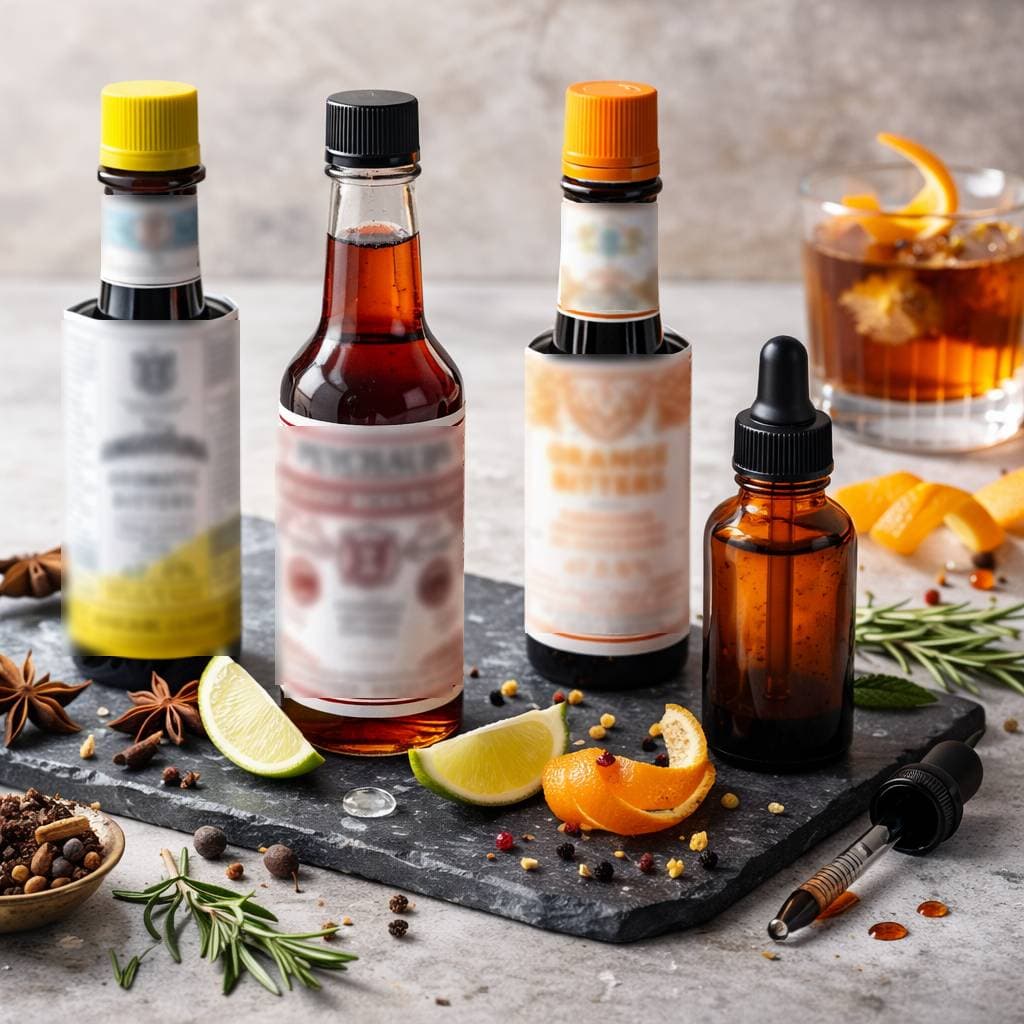
Bitters are highly concentrated flavoring agents made by steeping botanicals, spices, and sometimes citrus peel in high-proof alcohol. They're not drinkable on their own — they're too intense, too bitter, too sharp. They're designed to be used in tiny amounts to shift the flavor profile of a cocktail.
Key characteristics:
- Alcohol content: Typically 35–45% ABV. This is crucial — the high alcohol preserves the product and allows it to extract and preserve the flavors of the botanicals.
- Usage: A single "dash" is what comes out of the bottle's dasher-top opening in one shake (approximately 1/8 teaspoon, or about 0.6 ml). That's all you need.
- Flavor impact: A dash contributes roughly 0.5 oz of liquid to an ~2 oz cocktail, which seems like nothing. But because the flavor is so concentrated, that small amount dramatically shifts the drink's character.
The alcohol contribution from a dash of bitters is negligible — 1/8 teaspoon of 40% ABV bitters adds less than 0.02% ABV to a cocktail. The flavor contribution is everything.
Storage and Shelf Life
This is the easy part: bitters last for years.
Because of their high alcohol content, bitters resist oxidation, spoilage, and microbial growth. A bottle of Angostura bitters you bought five years ago tastes identical to a fresh bottle. Ten years? Still fine.
Storage: Cool, dark place (the same cupboard where you keep your spirits). No refrigeration needed. Keep the cap tight to minimize air exposure, but bitters aren't fussy about storage conditions the way vermouth is. (For a full breakdown of what lasts, what doesn't, and what to toss, see How to Store Open Bottles.)
Practical reality: Many home bartenders have one bottle of Angostura bitters they've owned for 5–10 years. It's still perfect. Buy it once, use it forever.
The Big Three
These are the bitters that appear in classic cocktails and form the foundation of any home bar.
Angostura (Angostura Aromatic Bitters)
Flavor profile: Warm, complex spice blend. You'll detect cinnamon, clove, nutmeg, and allspice with hints of citrus. It's warm and slightly sweet, not aggressively bitter despite the name.
Where it shows up: Old Fashioneds, Manhattans, Sazeracs (though Sazeracs traditionally use Peychaud's), aromatic cocktails, tiki drinks, and many modern variations.
Character: Angostura adds depth and warmth. It rounds out brown spirits (bourbon, rye, brandy) and brings out vanilla and caramel notes. In a simple Old Fashioned, it transforms the drink from sweet sugar-and-spirit into something balanced and sophisticated.
Usage: 2–3 dashes in a typical Old Fashioned or Manhattan (2 oz total).
Peychaud's Bitters
Flavor profile: Lighter and more delicate than Angostura, with pronounced anise (think black licorice), clove, and mint. It's less warm spice, more herbal-floral.
Where it shows up: Sazeracs (essential — it's what makes a Sazerac a Sazerac, not just a rye whiskey drink with sugar and bitters), Creole cocktails, and drinks that need a lighter touch.
Character: Peychaud's brings anise and herbal complexity without the warmth of Angostura. It's the bitters choice when you want sophistication without heaviness.
Usage: 2–3 dashes in a Sazerac or 1–2 dashes in drinks where you want a subtle herbal note.
Orange Bitters
Flavor profile: Citrus and spice — bright orange peel, dry spice notes, and subtle warmth. Not as heavy as Angostura, not as herbal as Peychaud's. It's a different category.
Where it shows up: Martinis (a dash of orange bitters adds dimension to the botanicals), Sidecars, gin cocktails, and any drink where you want a subtle citrus lift without diluting the drink by adding actual juice.
Character: Orange bitters bridge the gap between spirit-forward cocktails and citrus-forward ones. A dash in a Martini doesn't make it a citrus drink — it just adds a subtle orange note that complements the gin's botanicals.
Usage: 1–2 dashes, sometimes just one. Orange bitters are less aggressive than Angostura or Peychaud's.
Beyond the Big Three
Once you've got Angostura, Peychaud's, and orange bitters, you're covered for 90% of classic cocktails. But the world of bitters is expanding, and experimentation is cheap.
Chocolate Bitters
Flavor: Rich chocolate, cocoa powder, subtle vanilla. Not sweet — it's bitter cocoa, not chocolate candy.
Use: Old Fashioneds with dark spirits, rum cocktails, tiki drinks. Adds depth to spirit-forward drinks.
Mole Bitters
Flavor: Complex spice blend (cinnamon, anise, clove, cocoa, chili) reminiscent of Mexican mole sauce. It's sophisticated and warming.
Use: Tequila and mezcal cocktails, spice-forward drinks, stirred cocktails that need warmth without relying on standard Angostura.
Celery Bitters
Flavor: Savory, herbal, slightly spicy. Vegetable notes without tasting like a salad.
Use: Tomato-based cocktails (Bloody Marys), savory aperitifs, or dry martini variations where you want a savory edge.
Lavender Bitters
Flavor: Floral, delicate, slightly herbal. Not perfume-like — more subtle.
Use: Gin cocktails, sours, light shaken drinks where you want floral complexity without heaviness.
Walnut Bitters, Grapefruit Bitters, Plum Bitters, Chocolate Mole Bitters
These and dozens of other specialty bitters exist because the market is creative. Most are good, a few are gimmicky. If you see a bottle that sounds interesting, it's inexpensive enough to buy and experiment.
How to Use Bitters — The Technique
A dash is the standard measurement. It's what comes out of the bottle's dasher-top opening (the notched cap) in a single quick shake.
- For optical refractometers, you might think in terms of "a small sprinkle," but the dasher-top design is more precise than that. One shake = one dash.
- A dash is approximately 0.6 ml, or roughly 1/8 teaspoon.
- Most cocktail recipes that call for bitters call for 1–3 dashes.
Where to add them:
- In stirred cocktails (Old Fashioned, Manhattan): Add the bitters to the mixing glass along with the spirit and sweetener. Stir everything together so the bitters integrate fully.
- In shaken cocktails: Add the bitters to the shaker with everything else. Shaking distributes them throughout the drink.
- In built cocktails (spirit and mixer poured over ice): Add the bitters last, then stir briefly to integrate them.
How much is too much?
Bitters are potent. Using more than called for can overpower a drink — you'll taste only the bitters, not the subtle contribution they're supposed to make. Start with what the recipe calls for. If you want more depth, add one more dash and taste. You can always add more, but you can't take it out.
Why Bitters Matter
Here's the reason bitters deserve a place in every home bar:
Impact: A well-made cocktail with bitters tastes noticeably better than the same cocktail without them. The bitters add complexity, balance, and depth. The difference isn't subtle.
Versatility: Angostura works in dozens of cocktails. Once you buy it, you're set for most classic cocktails.
Accessibility: Bitters are found in every liquor store, most supermarkets in the liquor aisle, and countless online retailers. They're readily available.
Experimentation: Once you've mastered the classics (Angostura, Peychaud's, orange), trying a new bottle of specialty bitters opens new flavor possibilities.
Home Bar Priority
If you're building a home bar from scratch and have a limited budget, here's the order:
- Angostura Aromatic Bitters — This is essential. Buy it first.
- A quality spirit (bourbon, rye, or gin) — You can't make cocktails without this.
- Peychaud's Bitters — Once you have Angostura, add this for variety.
- Simple syrup — Essential for most cocktails.
- Orange bitters — Rounds out your core bitters selection.
From there, specialty bitters are optional but fun. The big three (Angostura, Peychaud's, orange) will handle 90% of cocktail recipes you encounter.
The Dash Explained
Because this comes up constantly: a "dash" is measured by the dasher-top bottle design, not by your intuition. When someone says "a dash of bitters," they mean one shake of the bottle — one short, sharp shake that releases liquid through the notch in the cap.
This is approximately 1/8 teaspoon, but you don't need to measure it precisely. (For more on cocktail measurements and technique terms, see How to Read a Cocktail Recipe.) The bottle design does the work. Shake once = one dash. Shake twice = two dashes. It's that straightforward.
Quick Reference: The Essential Bitters
| Bitters | Flavor Profile | Best For |
|---|---|---|
| Angostura | Warm spice (cinnamon, clove, nutmeg) | Old Fashioneds, Manhattans, brown spirits |
| Peychaud's | Light, herbal, anise | Sazeracs, lighter cocktails |
| Orange | Citrus and spice | Martinis, gin drinks, sours |
| Chocolate | Rich cocoa, vanilla | Dark spirit drinks, Old Fashioneds |
| Celery | Savory, herbal | Bloody Marys, savory cocktails |
| Lavender | Floral, delicate | Gin cocktails, sours |
The Bottom Line
Bitters are the most affordable, longest-lasting, and highest-impact ingredient upgrade for any home bar. One bottle of Angostura Aromatic Bitters will transform your cocktails and outlast the bar itself. Buy it. Use it. Thank yourself for years to come.
Browse our cocktail recipes to see which drinks use which bitters — filter by ingredient or by bitters type. Try a classic Old Fashioned with Angostura, a Sazerac with Peychaud's, and a Martini with orange bitters to experience the difference. Use the Ingredient Matcher to find recipes based on the bitters you have at home.