La suavidad del whiskey irlandés no es una debilidad en los cócteles, es un superpoder. La triple destilación y el carácter del pot still lo convierten en la categoría de whiskey más mezclable.
El whiskey irlandés tiene un problema de imagen en el mundo de la coctelería. Se percibe como el whiskey suave y fácil de beber — el que pides cuando no quieres pensar mucho, el que bebe tu amigo que "no le gusta el whiskey". Los bartenders alcanzan el bourbon cuando quieren dulzura y cuerpo, centeno cuando quieren especias y mordida, scotch cuando quieren complejidad. El whiskey irlandés se pasa por alto por ser demasiado suave, demasiado simple, demasiado educado.
Esa percepción está equivocada. La suavidad del whiskey irlandés no es la ausencia de sabor — es un tipo diferente de sabor que resulta funcionar excepcionalmente bien en cócteles. La tradición del pot still, la triple destilación, la ausencia general de humo de turba — estos producen un destilado que es versátil de maneras que el bourbon y el centeno no pueden igualar.
Lo Que Hace Diferente al Whiskey Irlandés
La triple destilación es la técnica irlandesa distintiva (aunque no universal — algunos destiladores irlandeses destilan dos veces). Pasar el destilado por el alambique tres veces en lugar de dos produce un destilado más ligero y suave con menos congéneres ásperos. El intercambio es que pierdes algunos de los compuestos de sabor más pesados que dan al bourbon y al scotch su carácter agresivo. Lo que queda es limpio, elegante y notablemente fácil de mezclar con otros ingredientes.
El pot still whiskey es la contribución única de Irlanda al mundo del whiskey. El single pot still Irish whiskey (el estilo tradicional) usa una mezcla de cebada malteada y sin maltear, destilada en alambiques de cobre pot still. La cebada sin maltear contribuye con un carácter distintivo cremoso, especiado y ligeramente oleoso que no encontrarás en bourbon, centeno o scotch. Redbreast y Green Spot son los whiskeys irlandeses pot still de referencia. Si nunca has probado uno, empieza ahí — reformulará tu entendimiento de lo que puede ser el whiskey irlandés.
El grain whiskey es más ligero y neutral, hecho en alambiques de columna a partir de maíz o trigo. La mayoría de los whiskeys irlandeses mezclados (Jameson, Tullamore D.E.W., Bushmills Original) combinan pot still y grain whiskey. El componente grain proporciona suavidad y el componente pot still proporciona carácter.
Sin humo de turba en la mayoría del whiskey irlandés. Hay excepciones (Connemara tiene turba), pero la abrumadora mayoría del whiskey irlandés usa cebada sin turba. Esto significa que el whiskey irlandés no compite con otros sabores como lo hace el scotch de Islay — coopera.
Cócteles Clásicos con Whiskey Irlandés
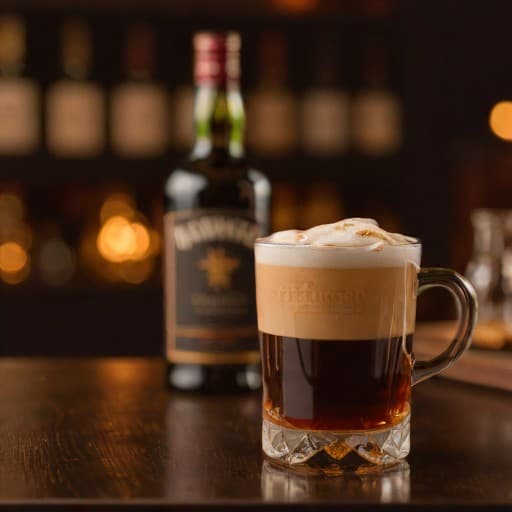
Irish Coffee — El cóctel de whiskey irlandés más famoso y una de las bebidas más perfectas jamás inventadas. Café caliente fresco, 1.5 onzas de whiskey irlandés, 1 cucharadita de azúcar moreno o demerara, revuelto hasta que el azúcar se disuelva, luego coronado con crema ligeramente batida (no puntos firmes — crema vertible batida solo hasta que espese). La crema flota encima y bebes el café-whiskey caliente a través de la crema fría. El contraste de temperatura y textura es lo que lo hace trascendente. Usa Jameson o Powers Gold Label. Usa buen café. No uses crema batida de lata.
Tipperary — Partes iguales de whiskey irlandés, Green Chartreuse y vermut dulce. Revuelto, colado, decorado con una cáscara de naranja. Este clásico pre-Prohibición lleva el nombre del condado irlandés, y el whiskey irlandés suave es la base perfecta para el agresivo Chartreuse herbal — no compite, deja que el Chartreuse se exprese mientras proporciona estructura y calidez.
Cameron's Kick — Partes iguales de whiskey irlandés y scotch, 0.5 onza de jugo de limón, 0.5 onza de orgeat. Agitado. Un cóctel fascinante que usa la suavidad del whiskey irlandés contra la asertividad del scotch, con la dulzura nuez del orgeat uniendo ambos. Demuestra cómo el whiskey irlandés puede jugar un papel de apoyo.
Emerald — Dos onzas de whiskey irlandés, una onza de vermut dulce, dos gotas de bitter de naranja. Revuelto. El Manhattan irlandés, esencialmente. La cremosidad del whiskey funciona hermosamente con el vermut dulce de una manera que es distinta tanto de los Manhattans de bourbon como de los Rob Roys de scotch.
Gold Rush — Dos onzas de whiskey irlandés, 0.75 onza de jugo de limón fresco, 0.75 onza de jarabe de miel. Agitado. Técnicamente este cóctel fue creado con bourbon, pero muchos bartenders argumentan que la versión de whiskey irlandés es superior — la miel y el limón cantan más claramente sin el roble pesado y la vainilla del bourbon compitiendo por atención.
Aplicaciones Modernas
La naturaleza cooperativa del whiskey irlandés lo hace ideal para cócteles donde quieres calidez de whiskey sin dominancia de whiskey. Algunas aplicaciones donde sobresale:
Whiskey Sours — El whiskey irlandés hace un sour más equilibrado y menos agresivo que el bourbon o centeno. El cítrico y el endulzante no tienen que luchar a través de capas de roble y carbón. Para sours con clara de huevo, el whiskey suave deja que la textura sedosa tome el centro del escenario.
Highballs — Whiskey irlandés y ginger ale es un clásico por una razón. Jameson y ginger es la bebida no oficial de la cultura pub de Irlanda. La ligereza del whiskey significa que se estira bien con mezcladores sin volverse aguado.
Cócteles de base dividida — Usa whiskey irlandés junto a un destilado más asertivo. Mitad irlandés, mitad centeno en un Manhattan añade suavidad sin perder especias. Mitad irlandés, mitad mezcal en un sour crea una interacción fascinante entre crema y humo.
Cócteles de café y chocolate — El whiskey irlandés ama ambos. Espresso martini con whiskey irlandés en lugar de vodka añade profundidad sin la pesadez del bourbon. Whiskey irlandés con creme de cacao y crema hace una bebida decadente para después de la cena.
Botellas para Mezclar
Mezcla diaria: Jameson. El estándar. Suave, accesible, funciona en todo. Hay una razón por la que es el whiskey irlandés más vendido del mundo.
Un paso arriba: Powers Gold Label. Una mezcla pot still con más carácter y especias que Jameson. El favorito de los bartenders por una razón — tiene suficiente personalidad para llevar un cóctel sin abrumar nada.
Mezcla premium: Redbreast 12. Single pot still, añejado 12 años. Cremoso, afrutado, especiado, complejo. Este es un whiskey para saborear que también hace cócteles extraordinarios. Un Tipperary o Old Fashioned de Redbreast es una bebida de ocasión especial.
Opción económica: Tullamore D.E.W. Ligeramente más ligero que Jameson, triple destilado, con un carácter dulce de miel agradable. Funciona bien en highballs y sours.
Para algo diferente: Green Spot. Single pot still, añejado en barricas ex-bourbon y ex-jerez. Más fruta y especias que Redbreast, con una nota de manzana verde que es distintiva. Excelente en cócteles revueltos.
Empieza con Jameson o Powers para mezclar. Si te encuentras alcanzando el whiskey irlandés más seguido, invierte en una botella de Redbreast — cambiará tu relación con la categoría.