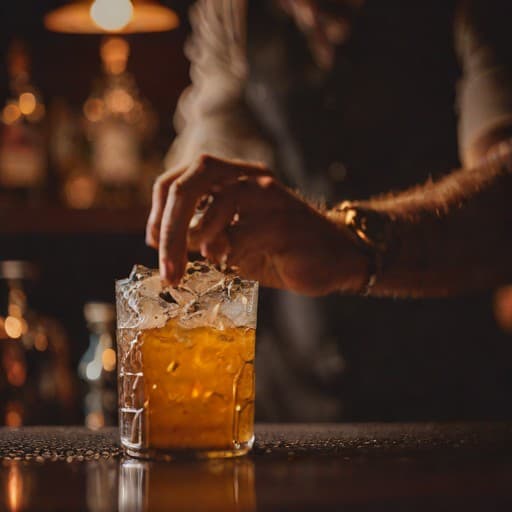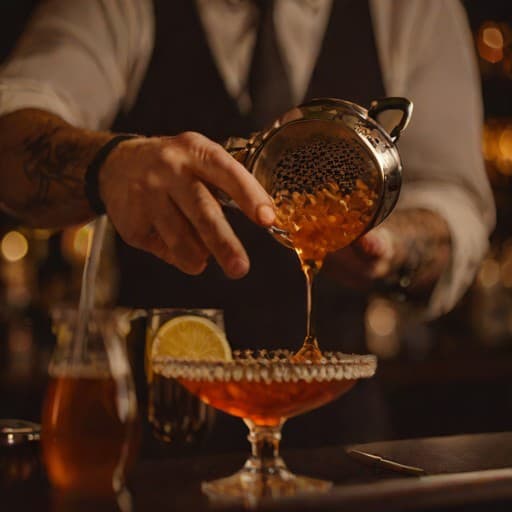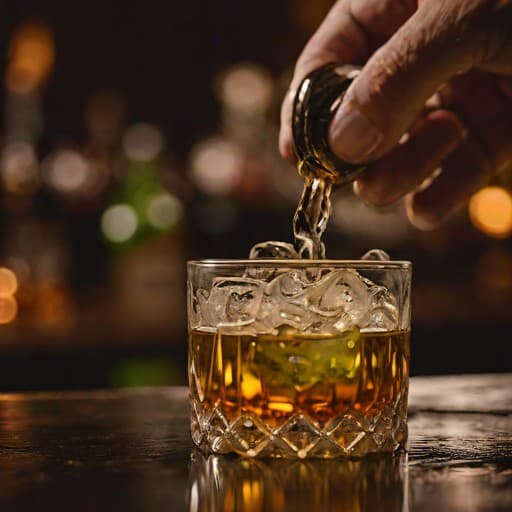
A rinse coats the inside of your glass with a thin layer of a potent spirit, adding subtle flavor and aroma without overpowering the drink. Learn the technique, the classic absinthe rinse, and when to use alternatives like mezcal or Chartreuse
You are reading a cocktail recipe — maybe a Sazerac — and one of the steps says "rinse a chilled rocks glass with absinthe." If you have never encountered this instruction before, it sounds strange. You are not adding absinthe to the drink. You are not measuring it into a jigger. You are coating the inside of the glass with absinthe and then throwing most of it away. It seems wasteful and fussy, like something a bartender does to look impressive. It is not. A rinse is one of the simplest techniques in cocktail making, and it does something that no other method can replicate: it places a spirit's aroma and flavor at the threshold of perception, present but not dominant, like a whisper underneath the main conversation of the drink.
What a Rinse Actually Is
A rinse is exactly what it sounds like. You pour a small amount of a spirit — typically a quarter ounce or less — into the serving glass, swirl it around to coat the entire interior surface, and then dump out whatever doesn't cling to the glass. What remains is a thin, nearly invisible film of liquid coating the walls and bottom.
When you pour the finished cocktail into that rinsed glass, the spirit film dissolves into the drink slowly and unevenly. The first sip has the most pronounced rinse flavor. As you continue drinking, it fades. This creates a subtle, shifting aromatic experience that you cannot achieve by simply adding a tiny amount of the same spirit directly to the cocktail.
The difference between rinsing and adding is important. If you pour a quarter ounce of absinthe into a Sazerac and stir it in with everything else, the absinthe distributes evenly throughout the drink. Every sip tastes the same. When you rinse instead, the absinthe concentrates at the glass surface and on the nose — the first thing you smell is anise, and the flavor gently weaves in and out across the drinking experience. That unevenness is the point.
The Classic: Absinthe Rinse in a Sazerac
The Sazerac is the drink that made the absinthe rinse famous, and it is the best place to understand why the technique exists.
A Sazerac is rye whiskey (or cognac, in the original New Orleans tradition), a sugar cube, Peychaud's bitters, and a lemon peel — stirred and served in a chilled rocks glass with no ice. It is a spirit-forward drink where every element is carefully balanced, and absinthe is the invisible thread that ties the whole thing together.
Here is the standard technique: Take a chilled rocks glass. Pour roughly a quarter ounce of absinthe into it — or use an atomizer and give the inside of the glass three or four spritzes. Swirl the glass so the absinthe coats the interior walls completely. Turn the glass upside down and let the excess drain out (some bartenders pour the excess into a separate glass to sip while they finish making the drink — a bartender's treat). Now build the cocktail in a mixing glass, stir with ice, and strain into the rinsed glass.
The result is a drink where the herbal, anise character of absinthe is present on the nose and in the background of the flavor without competing with the rye and bitters for attention. If you added that same quarter ounce directly to the mixing glass, the absinthe would be too prominent in every sip and would flatten the bitters' complexity. The rinse keeps it where it belongs — on the edge of perception.
Why Rinsing Works Better Than Adding
The mechanics of why a rinse behaves differently from a measured addition come down to two factors: concentration gradient and aroma.
Concentration gradient means the rinse spirit is not evenly distributed. It clings to the glass in a film that dissolves gradually into the cocktail. The liquid closest to the glass wall has the highest concentration of the rinse spirit. The center of the drink has the lowest. As you sip and the liquid level drops, new surfaces of the glass wall are exposed, and the rinse continues dissolving. This is why the aroma and flavor shift subtly across the life of the drink.
Aroma delivery is the other key factor. When you lift a rinsed glass to your mouth, the first thing your nose encounters is the volatile aromatic compounds evaporating off the glass wall above the liquid line. Absinthe is intensely aromatic — star anise, fennel, wormwood — and those compounds vaporize readily at room temperature. The rinse puts those aromas right at the rim of the glass, exactly where your nose will be. Adding absinthe directly to the cocktail means those aromas are trapped in the liquid, released only as you sip. The rinse creates an aromatic halo around the drink that a measured addition simply cannot replicate.
This combination — uneven flavor distribution and concentrated aroma delivery — is what makes a rinse a distinct technique rather than just a fancy way of adding a tiny amount of something.
Other Spirits That Make Excellent Rinses
Absinthe is the most common rinse spirit, but it is not the only one. Any bold, aromatic spirit can be used as a rinse to add a subtle layer to a cocktail. The key is that the spirit needs to be intense enough that a quarter ounce (or less) leaves a perceptible impression.
Mezcal. A mezcal rinse adds smoke to a cocktail without committing to mezcal as a base spirit. Try rinsing a rocks glass with a smoky mezcal like Del Maguey Vida before pouring in a stirred tequila cocktail — an Old Fashioned variation with reposado tequila, agave syrup, and mole bitters becomes something entirely different with that ghost of smoke in the background. You can also rinse the glass for a Margarita if you want a hint of smoke without swapping out the base spirit entirely.
Islay scotch. The peated, medicinal character of an Islay single malt like Laphroaig 10 or Ardbeg 10 makes a powerful rinse. A Penicillin cocktail sometimes uses an Islay float, but an Islay rinse on a blended scotch Old Fashioned creates a similar smoky dimension at lower cost and lower intensity. The peat smoke clings to the glass walls and greets you on the nose before you even sip.
Green Chartreuse. Chartreuse is one of the most complex liqueurs ever produced — 130 herbs and botanicals — and its herbal intensity makes it a natural rinse candidate. A Chartreuse rinse on a gin Martini adds an herbaceous, slightly sweet layer that echoes the botanicals in the gin. It is more subtle than adding Chartreuse to the mixing glass, which can overpower delicate gins.
Fernet-Branca. The bitter, mentholated character of Fernet makes it a surprisingly effective rinse for brown spirit cocktails. A Fernet rinse on a Manhattan adds a medicinal, minty edge that complements sweet vermouth without turning the drink into a Hanky Panky variation.
Maraschino liqueur. Luxardo Maraschino has a distinctive funky, cherry-pit character that can overwhelm a cocktail in larger amounts. A rinse lets you add that character at a whisper level — try it on the glass for a stirred gin cocktail where you want a hint of maraschino without the sweetness a full measure would bring.
Technique: Swirl vs. Atomizer
There are two standard methods for rinsing a glass, and each has its advantages.
The swirl method is the traditional approach. Pour approximately a quarter ounce of the rinse spirit into the glass. Pick up the glass and tilt it in a circular motion, rotating it so the liquid runs along the entire interior surface — bottom, sides, all the way up to the rim. Once the glass is fully coated, turn it upside down over the sink (or a separate glass) and let the excess drain out. What remains is a thin, wet coating.
The swirl method deposits a relatively heavy coating. More of the rinse spirit stays in the glass, so the flavor and aroma contribution is more pronounced. This is the right method when you want the rinse to be clearly perceptible — like the absinthe in a Sazerac.
The atomizer method uses a small spray bottle (available for a few dollars at any kitchen supply store) filled with the rinse spirit. Give the inside of the glass two to four spritzes, rotating to hit all surfaces. The atomizer deposits a much finer, more even coating than swirling, and significantly less liquid stays in the glass.
The atomizer is the right tool when you want the rinse to be extremely subtle — barely there, more of a scent than a flavor. It is also more efficient with expensive spirits. A single bottle of absinthe or Chartreuse will last for hundreds of atomizer rinses. Many professional bars keep atomizers loaded with three or four rinse spirits behind the bar for exactly this reason.
Either method works. The swirl gives you a heavier hand. The atomizer gives you a lighter touch. Match the method to how prominent you want the rinse to be.
Rinse vs. Float: Two Different Techniques
A rinse is sometimes confused with a float, but they serve different purposes and go in different positions.
A rinse coats the glass before the cocktail is poured in. The rinse spirit is underneath and around the drink, dissolving inward from the glass walls. It is most present at the start and fades over time. The rinse spirit makes first contact with your nose and the outside of the liquid.
A float is poured on top of the finished cocktail. A barspoon held just above the surface of the drink allows the spirit to spread across the top without mixing in. The float spirit sits as a distinct layer on the surface. It is most present on your first sip and can be quite intense because it hits your palate undiluted before the cocktail below it.
A float is louder than a rinse. If a rinse is a whisper, a float is a speaking voice. The Penicillin cocktail traditionally uses a float of Islay scotch — you taste the peat smoke clearly on the first sip, and it gradually mixes into the drink as you continue. If that same scotch were used as a rinse instead, the smoke would be more atmospheric and less directly in-your-face.
When deciding between the two: use a rinse when you want the spirit to be ambient and atmospheric. Use a float when you want it to announce itself. Some drinks benefit from one; some from the other. A few — like a luxurious variation of a Sazerac — could use both: an absinthe rinse and a Peychaud's float, layering complexity from the glass wall to the surface.
When to Skip the Rinse
Not every drink benefits from a rinsed glass. The technique works best in spirit-forward, stirred cocktails served without ice or with a single large cube — drinks where the glass surface stays in contact with the liquid and the aroma can concentrate above it.
Shaken, citrus-forward drinks served in a coupe or Nick & Nora glass can technically receive a rinse, but the aeration from shaking and the strong citrus aroma tend to overwhelm subtle rinse contributions. A rinse on a Daiquiri glass is not going to register for most drinkers.
Highballs and long drinks diluted with soda, tonic, or juice are similarly poor candidates. The large volume of mixer drowns out the thin film of rinse spirit, and the carbonation disrupts the aromatic layer.
The best rinse candidates are Sazeracs, Old Fashioneds, Manhattans, Martinis, and other short, strong drinks where you control dilution carefully and the drinker's nose is close to the glass surface. Start with the Sazerac — it is the definitive rinsed drink and the best teacher of what the technique can do.
Ready to put the rinse technique to work? Browse our cocktail recipes for drinks like the Sazerac that call for a rinsed glass, or try our Ingredient Matcher to find recipes you can make with what you have on hand.