O absinto não causa alucinações, não foi proibido pelas razões que você pensa, e pertence a mais coquetéis do que você imagina. Aqui está tudo que você realmente precisa saber.
Nenhuma bebida na história da coquetelaria carrega mais mitologia que o absinto. Era a bebida dos boêmios parisienses, a suposta causa da loucura, a substância proibida que seduzia artistas e destruía mentes. Exceto que quase nada disso é verdade — pelo menos não da forma que as histórias sugerem. A verdadeira história do absinto é mais interessante que os mitos, e a bebida em si é mais útil atrás de um bar do que a maioria das pessoas imagina.
Se você tem uma garrafa juntando poeira porque não sabe o que fazer com ela, ou se tem evitado o absinto porque pensa que é algum tipo de substância psicoativa perigosa, este é o artigo que esclarece os fatos.
O que o Absinto Realmente É
O absinto é uma bebida destilada de alto teor alcoólico (tipicamente 55-72% ABV, ou 110-144 proof) aromatizada principalmente com três botânicos: grande absinto (Artemisia absinthium), anis verde, e erva-doce. Estes três ingredientes formam o que é chamado de "trindade sagrada" da produção de absinto. Botânicos adicionais — hissopo, melissa, coentro, anis estrelado, e outros — completam o sabor dependendo do produtor e da receita.
O processo de produção importa. Absinto de qualidade é feito macerando os botânicos em um destilado neutro de alta graduação (geralmente à base de uva), depois redestilando a infusão em um alambique. Esta redestilação é crítica — ela refina os sabores, remove compostos ásperos, e produz um destilado suave e complexo em vez de uma tintura herbária áspera. Após a destilação, o destilado fica transparente. A cor verde (quando presente e natural) vem de uma maceração secundária com ervas adicionais — pequeno absinto, hissopo, e melissa — cuja clorofila dá ao destilado sua famosa tonalidade esmeralda. Esta etapa de coloração, chamada coloration, é o que distingue um absinto verte (verde) de um absinto blanche (branco/transparente).
Absinto barato pula a redestilação e a coloração natural. Em vez disso, mistura a frio óleos essenciais em destilado neutro e adiciona corante verde artificial. O resultado tem gosto áspero, medicinal e unidimensional. Se sua única experiência com absinto foi desagradável, há uma chance razoável de que você estava bebendo um destes produtos. A diferença entre um absinto propriamente destilado e um misturado a frio é enorme — comparável à diferença entre um gin London Dry e um gin de banheira feito despejando extrato de zimbro na vodka.
A História Real
A origem do absinto é menos romântica do que as lendas sugerem. Começou como uma tintura medicinal no final do século XVIII na região de Val-de-Travers na Suíça. Um médico francês chamado Pierre Ordinaire é tradicionalmente creditado com a popularização da receita, embora os detalhes sejam disputados. Nos anos 1790, as irmãs Henriod em Couvet, Suíça, estavam produzindo um elixir comercial de absinto, e em 1797, o Major Daniel-Henri Dubied comprou sua receita e abriu a primeira destilaria de absinto.
O genro de Dubied, Henri-Louis Pernod, expandiu a produção abrindo uma destilaria maior em Pontarlier, França, em 1805. A marca Pernod Fils tornou-se o nome definidor no absinto por mais de um século. Em meados de 1800, o absinto havia passado de remédio para ritual diário — particularmente na França, onde o final da tarde era chamado l'heure verte ("a hora verde"), quando os parisienses se reuniam em cafés para seu serviço de absinto.
O consumo de absinto explodiu na segunda metade do século XIX. Tropas francesas haviam recebido absinto durante as guerras argelinas dos anos 1840 como preventivo contra malária, e trouxeram o gosto para casa. Tornou-se a bebida de artistas, escritores e da classe trabalhadora. Van Gogh, Toulouse-Lautrec, Rimbaud, Verlaine, Oscar Wilde, e Hemingway foram todos associados a ele. O consumo anual na França chegou a 36 milhões de litros em 1910. Era genuinamente o destilado mais popular do país.
Esta popularidade, combinada com a poderosa indústria vinícola francesa — que estava se recuperando da devastadora epidemia de filoxera e desesperadamente queria o absinto fora do caminho — e um crescente movimento pela temperança, criaram as condições políticas para uma proibição.
A Proibição e Sua Reversão
O caso contra o absinto foi construído em ciência ruim, pânico moral e interesse econômico.
Em 1905, um fazendeiro suíço chamado Jean Lanfray assassinou sua família após um dia de bebedeira pesada. Ele havia consumido vinho, brandy, conhaque, creme de menta, e dois copos de absinto. A imprensa e defensores da temperança culparam especificamente o absinto, ignorando a quantidade impressionante de outros álcoois. O caso tornou-se um ponto de concentração para campanhas proibicionistas. A Suíça proibiu o absinto em 1910. A França seguiu em 1915. A maior parte da Europa se alinhou. Os Estados Unidos já o haviam efetivamente proibido em 1912.
A base científica para a proibição repousava em um químico chamado tujona, um composto encontrado no absinto. Em 1864, um pesquisador chamado Valentin Magnan havia conduzido experimentos mostrando que óleo puro de absinto causava convulsões em animais de laboratório. Disso, a narrativa saltou para: absinto no absinto causa loucura. O problema é que Magnan usou óleo concentrado de absinto — não absinto — e as doses não tinham relação com o que alguém consumiria bebendo o destilado. Era equivalente a concluir que café é letal porque injetar cafeína pura em um rato o mata.
As proibições duraram quase um século. Começaram a ser levantadas nos anos 1990 e 2000 conforme análise química moderna provou o que deveria ter sido óbvio desde o início. A União Europeia legalizou o absinto com um limite de tujona de 35 mg/kg. Os Estados Unidos seguiram em 2007, exigindo que o absinto contenha menos de 10 mg/kg de tujona (efetivamente "livre de tujona" pelos padrões de teste). A Suíça relegalizou seu próprio destilado nacional em 2005 — um século depois de enviá-lo para a clandestinidade.
O absinto moderno é legal, seguro, e não mais psicoativo que qualquer outro destilado em seu teor. A única coisa que fará você ver coisas após beber absinto é o fato de que tem 65% de álcool e você bebeu demais.
O Mito da Tujona: Vamos Matá-lo de Uma Vez Por Todas
A tujona merece sua própria seção porque o mito é notavelmente persistente.
Tujona é um terpeno encontrado em várias plantas, incluindo absinto, sálvia, e certos tipos de cedro. Em doses muito grandes — muito maiores do que qualquer humano consumiria bebendo absinto — pode causar espasmos musculares e convulsões. Este é o núcleo factual no centro do mito.
Aqui está a realidade: absinto vintage testado por laboratórios modernos contém aproximadamente a mesma quantidade de tujona que o absinto moderno. Estudos publicados no Journal of Agricultural and Food Chemistry analisaram garrafas lacradas de absinto pré-proibição dos séculos XIX e início do XX. Os níveis de tujona estavam bem dentro dos limites legais modernos. O absinto antigo e o novo são, quimicamente falando, essencialmente o mesmo produto.
Para experimentar qualquer efeito psicoativo da tujona, você precisaria consumir uma quantidade de absinto que o mataria por intoxicação alcoólica muito antes da tujona se tornar relevante. A matemática não é próxima. Você precisaria beber vários litros de absinto em uma única sessão para se aproximar de uma dose farmacologicamente ativa de tujona, e o álcool teria sido fatal várias garrafas antes.
O absinto não causa alucinações. Nunca causou. As histórias sobre fadas verdes e visões criativas foram resultado de álcool de alta graduação consumido em grandes quantidades, às vezes por pessoas com condições pré-existentes, em uma era com controle de qualidade mínimo e adulteração generalizada de destilados baratos. A "loucura" atribuída ao absinto era alcoolismo, ponto final.
O Louche: Como Servir Absinto Adequadamente
O serviço tradicional de absinto é um dos rituais mais bonitos em toda coquetelaria, e serve um propósito prático além da estética.
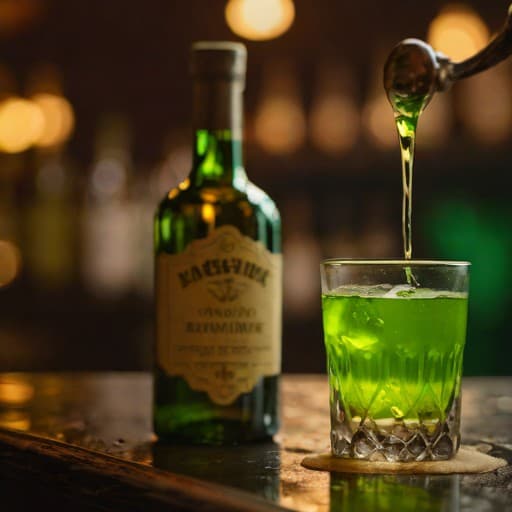
O louche (rima com "push") é o processo de lentamente adicionar água gelada ao absinto, fazendo o destilado transparente ficar turvo e opalescente. Isso acontece por causa dos óleos essenciais do anis e erva-doce — especificamente anetol — que são solúveis em álcool mas não em água. Conforme você dilui o absinto, a concentração de álcool diminui, os óleos saem de solução, e formam pequenas gotas que espalham a luz, criando uma suspensão leitosa e iridescente. Um bom louche produz uma gama de cores do jade pálido ao branco cremoso, e acontece gradualmente conforme cada gota de água atinge o destilado.
Aqui está o método adequado:
- Despeje 30 a 45ml de absinto em um copo de absinto ou um copo rocks.
- Coloque uma colher de absinto perfurada através da borda do copo. Coloque um cubo de açúcar na colher. O açúcar é opcional e questão de preferência — muitos puristas o pulam inteiramente, e alguns absintos ficam melhores sem ele.
- Lentamente pingue 90 a 150ml de água gelada sobre o cubo de açúcar (ou diretamente no absinto se pular o açúcar) usando uma fonte de absinto, uma jarra, ou simplesmente uma mão firme com um recipiente.
- Observe o louche se desenvolver. O destilado ficará turvo, os aromas florescerão, e a bebida se transformará de um destilado áspero de alta graduação em algo aromático, herbário e surpreendentemente bebível.
A proporção de água importa. A maioria dos absintos tem melhor sabor numa proporção de 3:1 a 5:1 água para absinto. Comece com 3:1, prove, e adicione mais água se necessário. Absinto sub-diluído é áspero e centrado no álcool. Absinto adequadamente diluído é floral, herbáceo e complexo — uma experiência completamente diferente.
Não acenda o cubo de açúcar. O "ritual do fogo" é uma invenção moderna, popularizada por produtores tchecos nos anos 1990 como um truque de marketing para vender produtos de baixa qualidade, artificialmente coloridos. Queima o álcool, carameliza o açúcar de forma descontrolada, e danifica os sabores botânicos delicados que um bom absinto é feito para mostrar. O serviço tradicional de absinto nunca envolveu fogo. Se alguém lhe disser para acender seu absinto, está lhe falando sobre uma campanha de marketing, não uma tradição.
Absinto em Coquetéis: Onde Realmente Brilha
Aqui é onde o absinto ganha seu lugar na sua prateleira do bar. Você não beberá absinto com louche todos os dias, mas pegará a garrafa constantemente se souber quais coquetéis pedem por ele. A percepção chave é que absinto em coquetéis é quase sempre usado em quantidades minúsculas — um enxágue, um dash, uma colher de bar. Em graduação total, domina tudo. Mas em pequenas quantidades, adiciona uma complexidade herbácea de anis que nenhum outro ingrediente fornece.
O Sazerac (Enxágue de Absinto)
O Sazerac é um dos coquetéis americanos mais antigos, e o absinto é essencial para ele — não como ingrediente principal, mas como enxágue aromático que reveste o interior do copo.
- Enxágue um copo rocks gelado com uma pequena quantidade de absinto (cerca de 7ml). Gire para revestir o interior, depois descarte o excesso.
- Em um copo misturador, mexa 60ml de whiskey de centeio, 7ml de xarope simples (ou um cubo de açúcar macerado), e 3 dashes de bitter Peychaud's com gelo.
- Coe no copo enxaguado com absinto (sem gelo no copo de servir).
- Expresse uma casca de limão sobre a superfície e descarte.
O enxágue de absinto é uma quantidade minúscula de líquido, mas transforma a bebida. Cada gole carrega um sussurro de anis e complexidade herbácea que eleva o centeio e Peychaud's a algo maior que a soma de suas partes. Sem o enxágue, um Sazerac é apenas um whiskey aromatizado. Com ele, a bebida está completa. Este coquetel sozinho justifica possuir uma garrafa de absinto.
Corpse Reviver #2
Este é um dos grandes coquetéis clássicos, e o absinto é inegociável.
- 22ml de gin
- 22ml de Cointreau
- 22ml de Lillet Blanc
- 22ml de suco de limão fresco
- 1 dash (ou enxágue) de absinto
Tudo é batido com gelo e coado em uma taça coupe. O absinto é usado em quantidade muito pequena — uma colher de bar ou um enxágue rápido — mas amarra os outros ingredientes com um fio herbáceo. Sem ele, a bebida tem gosto de um coquetel cítrico agradável. Com o absinto, há uma estrutura e profundidade que dá à bebida sua estrutura. A nota de anis deve ser perceptível mas não dominante — se você conseguir identificar especificamente o absinto, usou demais.
Death in the Afternoon
Este é o coquetel do Hemingway — um dos mais simples e eficazes coquetéis de absinto já criados.
- 30 a 45ml de absinto
- Complete com Champagne frio (cerca de 120-150ml)
Despeje o absinto em uma taça coupe ou flute, depois lentamente adicione o Champagne. O absinto faz louche conforme o vinho o dilui, criando uma bela bebida opalescente. É perigosamente fácil de beber, enganosamente forte, e surpreendentemente elegante. As instruções originais de Hemingway foram: "Despeje um jigger de absinto em uma taça de Champagne. Adicione Champagne gelado até atingir a turvação leitosa adequada. Beba três a cinco destes lentamente." O homem não era sutil, mas a bebida é excelente.
Mais Coquetéis que Usam Absinto
- Absinthe Frappe — 45ml de absinto, 15ml de xarope simples, servido sobre gelo triturado com um splash de água com gás. Um clássico de Nova Orleans dos anos 1870 que é um dos coquetéis mais refrescantes para clima quente no cânone.
- Chrysanthemum — vermute seco, Benedictine, e um enxágue de absinto. Um aperitivo leve e elegante que recompensa qualquer um disposto a experimentá-lo.
- Remember the Maine — 60ml de centeio, 22ml de vermute doce, 7ml de Cherry Heering, e uma colher de bar de absinto. Uma variação do Manhattan com profundidade real.
- Monkey Gland — gin, suco de laranja, grenadine, e um dash de absinto. Um clássico da Era da Proibição que é melhor do que parece no papel.
- Rattlesnake — centeio, limão, xarope simples, clara de ovo, e um dash de absinto. Uma variação de whiskey sour onde o absinto adiciona complexidade herbácea sob a tampa espumosa de clara de ovo.
O padrão é consistente: absinto é um tempero, não um destilado base. Seu papel é adicionar uma nota herbácea-anis que liga outros sabores e adiciona complexidade que você não consegue de nenhuma outra forma. Uma garrafa de absinto durará muito tempo porque você usa tão pouco por drink — uma garrafa de 750ml usada principalmente para enxágues e dashes pode facilmente durar um ano ou mais.
Marcas para Experimentar
O mercado de absinto se expandiu dramaticamente desde a relegalização. Aqui é onde começar.
Pernod Absinthe (68% ABV) é a versão moderna da marca historicamente dominante. É um absinto sólido e acessível com sabor de anis limpo e um bom louche. Não a garrafa mais complexa na prateleira, mas confiável e amplamente disponível. Uma boa garrafa inicial para alguém que quer fazer Sazeracs e Corpse Revivers.
St. George Absinthe Verte (60% ABV) é feito em Alameda, Califórnia, e é excelente. Tem um perfil mais herbáceo, menos centrado no anis que o absinto francês tradicional — anis estrelado, estragão, ervas do prado, e uma bela cor verde natural. Esta é a garrafa que converte céticos do absinto porque enfatiza a complexidade botânica sobre a nota de alcaçuz.
Leopold Bros. Absinthe Verte (65% ABV) de Denver é outra excelente opção americana. Bem equilibrado, com notas claras de absinto e anis, e funciona belamente em coquetéis. Um favorito de bartenders por boa razão.
Jade Liqueurs (várias expressões, 65-68% ABV) são produzidos na França por Ted Breaux, que passou anos analisando amostras de absinto pré-proibição para recriar receitas autênticas do século XIX. Jade 1901 e Jade Nouvelle-Orleans são considerados entre os melhores absintos disponíveis hoje. Estas são as garrafas para alguém que quer entender como o absinto pré-proibição realmente tinha gosto — ou para qualquer um que quer beber absinto com água e cubo de açúcar como evento principal.
Kubler Absinthe (53% ABV) é um absinto suíço blanche (transparente) com um perfil limpo, centrado no anis. É menos complexo que os absintos acima, mas é um produto honesto e bem feito e uma escolha prática para uso em coquetéis. O teor mais baixo o torna ligeiramente mais acessível para louche.
O que evitar: Absintos extremamente baratos que listam cores artificiais ou não especificam destilação no rótulo. Também evite qualquer coisa comercializada principalmente em torno de seu conteúdo de tujona ou seus supostos "efeitos" psicoativos. Estes são produtos de marketing construídos sobre o mito, não destilados de qualidade. Se o rótulo está tentando mais vender uma alucinação do que um perfil de sabor, coloque de volta na prateleira.
A Regra Rápida
Absinto é um destilado herbáceo de alta graduação, não uma substância psicoativa. Tem gosto de anis, erva-doce e absinto. É servido diluído com água fria (não aceso em fogo). E pertence ao seu arsenal de coquetéis principalmente como enxágue, dash, ou float — uma pequena quantidade que adiciona complexidade herbácea a dezenas de bebidas clássicas.
Compre uma garrafa. Use em um Sazerac. Faça um Corpse Reviver #2. Experimente um Death in the Afternoon se estiver se sentindo aventureiro. A garrafa durará meses, e cada drink em que colocá-la será melhor por isso.
Explore nossas receitas de coquetéis clássicos que apresentam absinto, ou use o Combinador de Ingredientes para encontrar o que pode fazer com as garrafas já na sua prateleira.