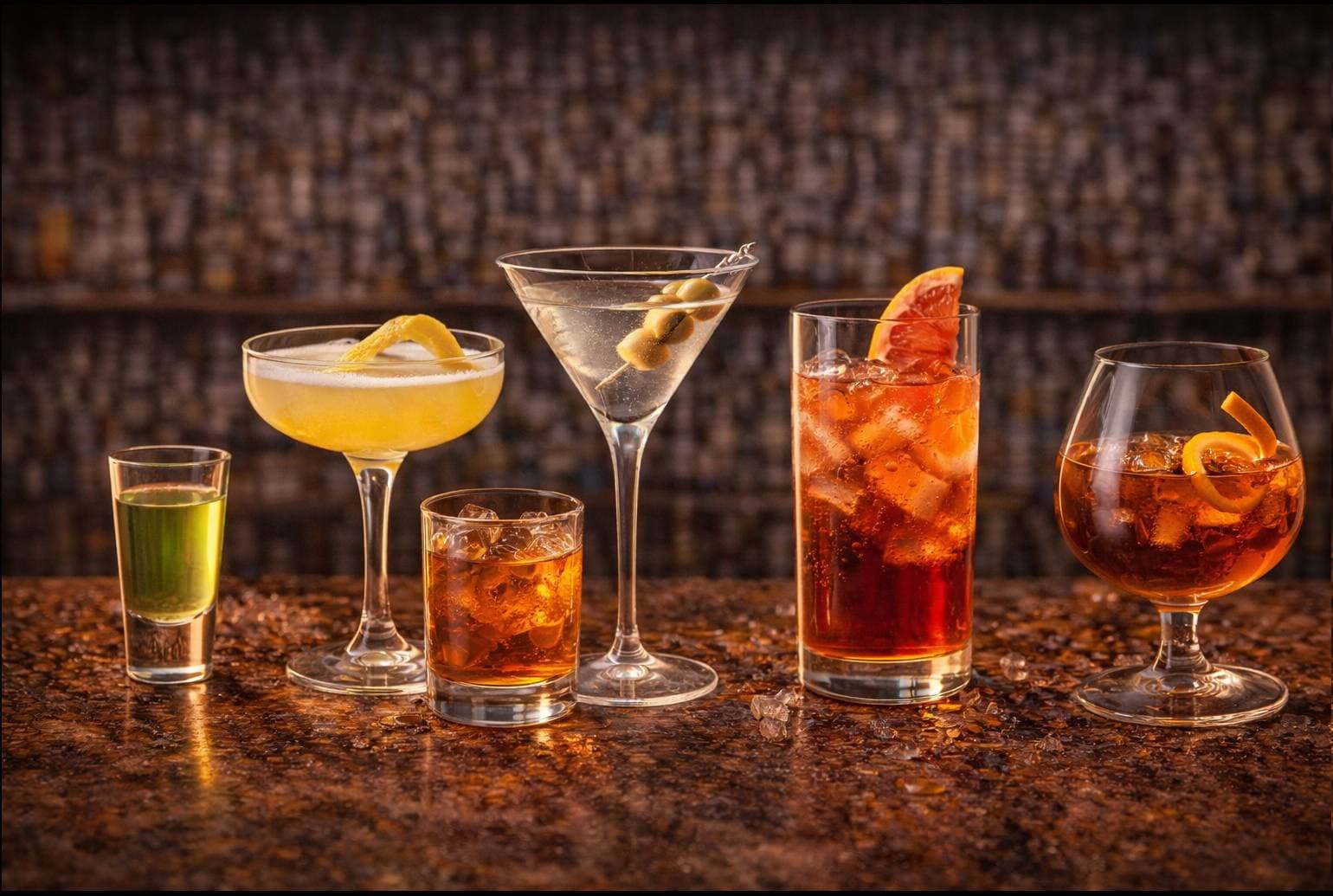
Gläser sind nicht nur Präsentation — die Glasform beeinflusst, wie ein Drink riecht, wie schnell er sich erwärmt, wie viel Eis hineinpasst und wie er auf Ihren Gaumen trifft. Das richtige Glas rettet keinen schlechten Cocktail, aber das falsche kann einen guten verschlechtern. Hier erfahren Sie, was jeder Typ bewirkt und welche Drinks hineingehören.
Das Rocks-Glas (Old Fashioned-Glas)
Fassungsvermögen: 180–300 ml Form: Kurz, breit, schwerer Boden
Das Rocks-Glas ist das Arbeitspferd der Hausbar. Es ist für Drinks konzipiert, die über Eis serviert werden — speziell für Drinks, die über einem großen Würfel oder einer Kugel serviert werden. Die weite Öffnung ermöglicht es Ihnen, den Drink zu riechen (während Sie nippen), und die niedrigen Wände halten Ihre Hand nah am Eis, was in Ordnung ist, da spirituosenlastige Drinks sich entwickeln sollen, während sie langsam verdünnen.
Verwenden für: Old Fashioned, Negroni, Whiskey Sour (on the rocks), Sazerac, Boulevardier, jede Spirituose pur oder on the rocks.
Warum es funktioniert: Der weite Rand liefert den Drink über die gesamte Breite Ihrer Zunge und gibt Ihnen das komplette Geschmacksprofil — süß, bitter, Spirituose — in jedem Schluck. Der schwere Boden hält das Glas mit einem großen Eiswürfel darin stabil.
Double Rocks-Glas (360–420 ml): Eine etwas höhere, breitere Version für Drinks mit mehr Volumen — eine Margarita on the rocks, einen Mai Tai oder jeden Drink, bei dem Sie Platz für Eis plus einen vollständigen Cocktail benötigen.
Die Coupe
Fassungsvermögen: 150–200 ml Form: Breite, flache Schale auf einem Stiel
Die Coupe hat das traditionelle V-förmige Martini-Glas in den meisten Craft-Cocktail-Bars ersetzt, und das aus gutem Grund. Die breitere Schale ist einfacher zu tragen ohne zu verschütten, die runde Form konzentriert Aromen besser als ein weites V, und der Stiel hält Ihre Hand vom Drink fern, sodass Körperwärme ihn nicht erwärmt.
Verwenden für: Daiquiri, Sidecar, Manhattan (up), Gimlet (up), Bee's Knees, Aviation, jeden geschüttelten oder gerührten Cocktail ohne Eis serviert.
Warum es funktioniert: Drinks, die "up" (ohne Eis) serviert werden, haben keine fortlaufende Verdünnung — was im Glas ist, ist das Endprodukt. Der Stiel verhindert, dass Ihre Hand den Drink während der 5–10 Minuten erwärmt, die Sie mit dem Nippen verbringen. Die Schalenform leitet Aromastoffe zu Ihrer Nase, während Sie trinken.
Größe ist wichtig: Eine 150–180 ml Coupe ist ideal für die meisten Cocktails. Eine 200–240 ml Coupe gibt Ihnen Platz für Drinks mit mehr Volumen (ein Clover Club mit Eiweiß-Schaum zum Beispiel). Vermeiden Sie übergroße Coupes (300+ ml) — sie lassen einen normal großen Cocktail im Glas verloren aussehen.
Das Martini-Glas (V-förmiges Cocktailglas)
Fassungsvermögen: 120–240 ml Form: Breite V-förmige Schale auf einem Stiel
Das ikonische konische Glas. Es ist dramatisch, elegant und zugegebenermaßen unpraktisch — der weite Rand macht es leicht zu verschütten, die offene Form lässt Aromastoffe schnell entweichen, und der scharfe Winkel bedeutet, dass der Drink zur Vorderseite des Glases rutscht, wenn Sie es neigen.
Verwenden für: Martini (wenn Sie den klassischen Look bevorzugen), Cosmopolitan, Espresso Martini.
Warum es bestehen bleibt: Ästhetik. Das Martini-Glas ist das visuell charakteristischste Cocktailglas, und einige Drinks — besonders der Martini selbst — sehen "richtig" in ihrem namensgebenden Glas aus, wie sie es in einer Coupe nicht tun. Das ist ein gültiger Grund. Cocktails handeln teilweise von der Erfahrung.
Die ehrliche Einschätzung: Wenn Sie zwischen dem Kauf von Coupes oder Martini-Gläsern wählen, sind Coupes vielseitiger und nachsichtiger. Aber wenn Sie das Aussehen eines Martini-Glases lieben und oft Martinis machen, kaufen Sie sie. Der Drink wird so oder so gleich schmecken.
Das Highball-Glas
Fassungsvermögen: 300–420 ml Form: Hoch, schmal, gerade Seiten
Das Highball ist ein hohes Glas, das für Drinks mit einem erheblichen Anteil an Mixer konzipiert ist — Soda, Tonic, Saft, Ginger Beer. Die schmale Form hält die Kohlensäure länger intakt (weniger Oberfläche für entweichende Bläschen) und stapelt Eis effizient, sodass der Drink von oben bis unten kalt bleibt.
Verwenden für: Gin & Tonic, Highball (Whiskey und Soda), Mojito, Paloma, Tom Collins, Dark & Stormy, jeden Drink, der hauptsächlich aus Mixer besteht.
Warum es funktioniert: Das hohe, schmale Profil bedeutet, dass Sie einen konsistenten Schluck von oben bis unten bekommen — die Spirituose, der Mixer und das Eis sind vertikal verteilt, anstatt in Schichten zu liegen. Das ist besonders wichtig für kohlensäurehaltige Drinks — ein Gin & Tonic in einem breiten Rocks-Glas wird schneller schal, weil die breitere Oberfläche Bläschen freigibt.
Collins-Glas vs. Highball: Ein Collins-Glas ist etwas höher und schmaler als ein Standard-Highball. Der Unterschied ist gering — die meisten Heim-Barkeeper verwenden sie austauschbar, und das ist in Ordnung.
Das Nick & Nora
Fassungsvermögen: 150–180 ml Form: Runde Schale auf einem Stiel, kleiner als eine Coupe
Das Nick & Nora ist ein kompaktes Stielglas, das in Craft-Bars zunehmend beliebt geworden ist. Es ist nach Nick und Nora Charles aus den The Thin Man Filmen benannt. Die runde Schale und das kleinere Fassungsvermögen machen es ideal für spirituosenlastige gerührte Drinks, die up serviert werden — Drinks, bei denen das Gießvolumen 90–120 ml beträgt und eine Coupe überdimensioniert wirken würde.
Verwenden für: Manhattan (up), Martinez, Bamboo, Chrysanthemum, jeden kleineren gerührten Cocktail.
Warum es funktioniert: Die kleine Schale konzentriert Aromastoffe. Die runde Form ist nahezu unmöglich zu verschütten (im Gegensatz zu einer Coupe oder einem Martini-Glas). Das 150–180 ml Fassungsvermögen ist perfekt dimensioniert für einen 90 ml gerührten Cocktail mit ordentlicher Verdünnung — der Drink füllt das Glas angemessen, ohne verloren auszusehen.
Der Kupferbecher
Fassungsvermögen: 360–480 ml Form: Zylindrisch mit Henkel
Kupferbecher werden mit genau einem Drink assoziiert: der Moscow Mule. Das Kupfer leitet Kälte extrem gut, sodass der Becher fast sofort eiskalt wird, wenn Sie Eis und den Drink hinzufügen. Der Henkel verhindert, dass Ihre Hand den Becher erwärmt.
Verwenden für: Moscow Mule, Kentucky Mule, Mexican Mule, jede "Mule"-Variation (Spirituose + Ginger Beer + Limette).
Die Kupfer-Debatte: Es gibt anhaltende Diskussionen darüber, ob kupferausgekleidete Becher (mit Edelstahl- oder Nickel-Innenseite) für die Lebensmittelsicherheit notwendig sind. Saure Drinks wie Mules (mit Limettensaft) können dazu führen, dass Kupfer in den Drink übergeht, wenn das Innere nicht ausgekleidet ist. Die meisten modernen Kupferbecher haben eine lebensmittelsichere Auskleidung. Wenn Ihrer keine hat, ist es wahrscheinlich in Ordnung für gelegentlichen Gebrauch, aber ein ausgekleideter Becher beseitigt die Frage vollständig.
Brauchen Sie sie? Nur wenn Sie regelmäßig Mules machen und sich um die vollständige Erfahrung kümmern. Ein Highball-Glas funktioniert für den Drink selbst einwandfrei.
Der Tiki-Becher
Fassungsvermögen: 360–600 ml Form: Verschiedene — Schädel, Tikis, Fässer, Vulkane
Tiki-Becher sind Gefäße für Präsentation und Erfahrung. Sie reichen von klassischen geschnitzten Gesichts-Designs bis zu kunstvollen Schädeln, Ananas und benutzerdefinierten Formen. Die Keramik-Konstruktion isoliert den Drink (hält ihn länger kalt als Glas), und das große Fassungsvermögen nimmt das zerkleinerte Eis und die mehrfachen Zutaten auf, die Tiki-Cocktails definieren.
Verwenden für: Zombie, Scorpion Bowl, Painkiller, Navy Grog, jeden ausgefallenen Tiki-Drink.
Brauchen Sie sie? Nur wenn Sie in die Tiki-Kultur einsteigen. Ein Double Rocks-Glas oder Highball funktioniert funktional. Aber Tiki handelt genauso von der Erfahrung wie vom Drink, und der richtige Becher lässt einen Zombie wie ein Ereignis anstatt nur wie einen Cocktail anfühlen.
Das Weinglas
Fassungsvermögen: 360–600 ml Form: Runde Schale auf einem Stiel, verschiedene Profile
Weingläser erscheinen gelegentlich in Cocktail-Rezepten — am bekanntesten der Aperol Spritz, der traditionell in einem großen Weinglas serviert wird. Die weite Schale hält Eis, die Spirituose und die Schaumkomponente (Prosecco) mit Platz für den Drink zum Atmen.
Verwenden für: Aperol Spritz, weinbasierte Cocktails, Sangria, jeden Drink, bei dem Sie eine großformatige Präsentation mit Aromastoffen wollen.
Das Schnapsglas
Fassungsvermögen: 30–60 ml Form: Klein, gerade Seiten
Schnapsgläser dienen zwei Zwecken in einer Hausbar: Schnäpse trinken (offensichtlich) und messen. Ein Standard-Schnapsglas fasst 45 ml — das gleiche wie ein Standard-Jigger. Während ein ordentlicher Jigger präziser ist (mit 7,5 ml Inkrement-Markierungen), funktioniert ein Schnapsglas als grobes Messwerkzeug im Notfall.
Was Sie tatsächlich zu Hause brauchen
Sie brauchen nicht jeden Glastyp. Hier ist ein praktischer Ausgangspunkt:
Die Grundausstattung (deckt 80% der Drinks ab):
- 4 Rocks-Gläser (Double Old Fashioned, 360 ml) — für alles on the rocks
- 4 Coupes (150–180 ml) — für alles up serviert
- 4 Highball-Gläser (360 ml) — für alles mit Mixer
Das sind 12 Gläser, die praktisch jeden Cocktail abdecken, den Sie machen werden. Fügen Sie Nick & Noras hinzu, wenn Sie viele Manhattans rühren, Kupferbecher, wenn Sie Mules lieben, und Tiki-Becher, wenn Sie in diesen Kaninchenbau gehen.
Was beim Kauf zu priorisieren ist: Gewicht und Balance sind wichtiger als die Marke. Ein Glas, das sich substanziell in Ihrer Hand anfühlt, flach auf einem Tisch sitzt und nicht leicht umkippt, ist mehr wert als ein Name auf der Schachtel. Dünne, leichtgewichtige Gläser brechen leicht, erwärmen Drinks schneller und fühlen sich billig in der Hand an.
Überprüfen Sie unsere Bar-Tools-Seite für spezifische Gläser-Empfehlungen.
Jedes Rezept auf MixologyRecipe spezifiziert den empfohlenen Glastyp. Durchsuchen Sie unsere Cocktail-Rezepte, um zu sehen, welches Glas jeder Drink verlangt, oder erkunden Sie unsere Kategorien, um Drinks nach Stil zu finden.