Las especias enteras dan a los cócteles un sabor más limpio y profundo que las especias molidas, sin la arenilla. Aquí te mostramos cómo infusionarlas en jarabes, licores y bebidas, con tiempos para cada especia
Las especias molidas están bien para hornear. En cócteles, son un problema. Agita canela molida en una bebida y obtienes un desastre turbio y arenoso con sedimento asentándose en el fondo del vaso. El sabor golpea fuerte e inmediato — sin sutileza, sin evolución — y luego pasas el último tercio de la bebida masticando polvo de especias. Las especias enteras resuelven todos estos problemas. Ofrecen una extracción más limpia, mayor complejidad y cero arenilla. Se ven mejor como guarnición. Y te dan control sobre la intensidad que las especias molidas simplemente no pueden igualar.
Ya sea que estés infusionando un jarabe, macerando un licor, o flotando una vaina de anís estrellado en un cóctel como guarnición, las especias enteras son la elección correcta. Aquí te mostramos exactamente cómo usarlas.
Por Qué Enteras, No Molidas
El caso a favor de las especias enteras en cócteles se reduce a tres cosas.
Extracción de sabor más limpia. Cuando infusionas una rama de canela entera en un jarabe o licor, los compuestos de sabor se liberan gradual y uniformemente. El resultado es matizado — obtienes la calidez y dulzura de la canela sin el mordisco crudo y polvoriento que produce la canela molida. Las especias molidas liberan todo su sabor de una vez, y ese sabor a menudo incluye taninos ásperos y compuestos amargos que permanecen bloqueados dentro de una especia entera durante una infusión controlada.
Sin arenilla, sin turbidez. Las especias molidas son polvo. El polvo no se disuelve en alcohol o agua — se suspende, luego se hunde. Incluso el filtrado con malla fina no puede eliminarlo todo. Las especias enteras infusionan su sabor en el líquido y luego se remueven limpiamente. Tu bebida permanece clara.
Intensidad controlable. Con una especia entera, tú decides cuánto tiempo permanece en contacto con el líquido. ¿Muy suave después de una hora? Déjala otra hora más. ¿Perfecta a las dos horas? Sácala. Las especias molidas no te dan tal control — en el momento que tocan el líquido, la extracción comienza a toda velocidad y no puedes ralentizarla.
Los Cuatro Métodos
Hay cuatro formas de obtener sabor de especias en un cóctel. Cada una sirve un propósito diferente.
1. Infusionar en jarabes. El método más común y más indulgente. Haz un jarabe simple o jarabe simple concentrado, añade especias enteras durante la fase de calentamiento, deja reposar y cuela. El azúcar templa la intensidad de la especia y el jarabe se integra perfectamente en bebidas agitadas o revueltas. Este es el método para jarabes de canela, jarabes de clavo y mezclas de múltiples especias. (Para técnicas detalladas de preparación de jarabes, ve jarabes saborizados en casa.)
2. Infusionar en licores. Coloca especias enteras directamente en una botella o frasco de licor, espera, cuela y embotella el resultado. Este método te da un licor especiado que puedes usar como base en cualquier cóctel — un bourbon infusionado con canela para Old Fashioneds, una ginebra infusionada con cardamomo para Martinis. El alcohol extrae sabor más agresivamente que el agua, así que los tiempos de infusión son más cortos y la sobre-extracción es un riesgo real. (Para la técnica completa, ve cómo infusionar licores.)
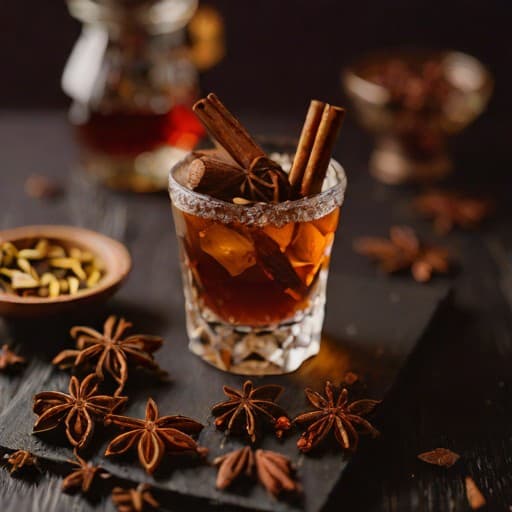
3. Usar como guarnición. Una vaina de anís estrellado entera flotando en un cóctel revuelto, una rama de canela descansando en un hot toddy, algunos clavos enteros presionados en una rueda de cítrico. Las guarniciones de especias liberan aroma con cada sorbo — hueles la especia antes de probar la bebida, lo que prepara tu paladar y añade complejidad sin cambiar el líquido mismo.
4. Usar en bíters. Muchos bíters para cócteles se construyen sobre infusiones de especias enteras — Angostura obtiene su carácter de canela, clavo y pimienta de Jamaica. Hacer tus propios bíters con especias enteras es avanzado pero gratificante. Macera especias en licor de alta graduación (al menos 50% ABV) por 1–2 semanas, cuela, endulza ligeramente y embotella.
Guía Especia por Especia
Cada especia tiene su propia personalidad, maridajes ideales y peculiaridades de infusión. Aquí están las que más importan para cócteles.
Anís Estrellado
El anís estrellado es dramático — visualmente y en sabor. Cada vaina entrega un pronunciado sabor a regaliz-anís que es cálido, dulce y ligeramente medicinal en dosis grandes. Una sola vaina es potente.
- Mejores maridajes: Ron oscuro, bourbon, centeno, tequila añejo, brandy. El anís estrellado ama los licores oscuros con notas de caramelo y vainilla.
- Infusión en jarabe: Añade 3–4 vainas a un lote estándar de jarabe simple (1 taza de agua, 1 taza de azúcar). Deja reposar 20–30 minutos después de retirar del fuego. Prueba a los 20 minutos — el anís estrellado es agresivo y puede dominar rápidamente.
- Infusión en licor: 2 vainas por 750ml de licor. Prueba después de 2–4 horas. Retira las vainas cuando detectes un claro sabor a anís sin que sea abrumador. Cuatro horas es usualmente el máximo.
- Como guarnición: Flota una sola vaina en un cóctel revuelto. Es una de las guarniciones más hermosas del mundo de la coctelería — la estrella de ocho puntas sentada en la superficie de un Old Fashioned o una bebida de ron llama la atención inmediatamente.
- Advertencia: El anís estrellado va de "intrigante" a "estoy bebiendo regaliz líquido" rápidamente. Siempre err del lado de menos tiempo de infusión.
Ramas de Canela
La especia para cócteles más versátil. La calidez y dulzura de la canela combina con casi todos los licores oscuros y la mayoría de estilos de bebidas de otoño e invierno.
- Mejores maridajes: Bourbon, centeno, ron añejo, brandy de manzana, ron oscuro. La canela también es excelente en cócteles calientes — toddies, vino caliente, bebidas de sidra tibia.
- Infusión en jarabe: 2–3 ramas por lote de jarabe simple. Deja reposar 1–2 horas a temperatura ambiente después de disolver el azúcar. La canela necesita más tiempo que el anís estrellado pero es mucho más indulgente — incluso un jarabe de canela ligeramente sobre-infusionado es agradable.
- Infusión en licor: 1–2 ramas por 750ml. Esta es una infusión más larga — 1–2 días, probando diariamente. La canela se extrae lentamente en licores comparado con jarabes. Retira las ramas cuando el licor tenga una calidez notable sin saber a dulce de canela.
- Como guarnición: Una rama de canela en un hot toddy o vino caliente es clásico. Para bebidas frías, una rama corta de canela descansando contra el interior de un vaso rocks añade aroma.
- Ceylon vs. Cassia: La mayoría de "ramas de canela" en el supermercado son en realidad Cassia — corteza más gruesa, sabor más fuerte, ligeramente más áspero. La verdadera canela Ceylon es más ligera, más delicada y más compleja. Para cócteles, cualquiera funciona. Cassia es más audaz; Ceylon es más matizada. Si puedes encontrar Ceylon, úsala para jarabes donde la sutileza se percibe.
Clavos Enteros
Los clavos son poderosos — posiblemente la especia más intensa de esta lista. Un solo clavo contiene suficiente eugenol (el compuesto responsable de su sabor) para dominar una bebida. Úsalos con moderación y respeta su potencia.
- Mejores maridajes: Vino tinto (vino caliente), bourbon, ron oscuro, licores de manzana, cócteles de otoño e invierno.
- Infusión en jarabe: 2–3 clavos por lote. Eso no es un error tipográfico. Deja reposar 10–15 minutos máximo. Prueba temprano. El jarabe de clavo debe añadir calidez y profundidad, no saber como el consultorio de un dentista (el eugenol se usa literalmente en productos dentales).
- Infusión en licor: 2–3 clavos por 750ml. Prueba después de 2 horas. La mayoría de infusiones están listas en 4 horas. Los licores sobre-infusionados con clavo saben medicinales y entumecedores.
- Como guarnición: Presiona 3 clavos enteros en una rueda de cítrico o una cáscara de naranja como guarnición. Esta es una técnica clásica para vino caliente y hot toddies — los clavos liberan su aroma cuando la bebida caliente los calienta, y se ven elegantes clavados en una cáscara de naranja brillante.
- Advertencia: Los clavos son la especia más propensa a arruinar una infusión por sobre-extracción. Cuando una receta dice "2–3 clavos," significa exactamente eso. Más no es mejor. Si tu jarabe de clavo hace que tu lengua se sienta ligeramente entumecida, fuiste demasiado lejos.
Vainas de Cardamomo
El cardamomo es floral, cítrico y ligeramente mentolado — tiene una complejidad que lo distingue de especias más cálidas como canela y clavos. El cardamomo verde es el estándar para cócteles. El cardamomo negro es más ahumado y raramente usado en bebidas.
- Mejores maridajes: Ginebra (especialmente ginebras botánicas), vodka, ron ligero, tequila. El cardamomo tiende un puente entre especia y floral — funciona con licores que tienden hacia lo aromático en lugar de lo pesado.
- Infusión en jarabe: 8–10 vainas de cardamomo verde, ligeramente machacadas con el plano de un cuchillo. Deja reposar 30–45 minutos. El cardamomo es más indulgente que los clavos pero menos indulgente que la canela.
- Infusión en licor: 6–8 vainas machacadas por 750ml. 12–24 horas, probando a las 12. El cardamomo necesita tiempo para liberar su rango completo de compuestos de sabor.
- Como guarnición: Un par de vainas verdes enteras dejadas caer en un cóctel son visualmente interesantes y aromáticas. Son suficientemente pequeñas para ser elegantes en lugar de obstructivas.
Granos de Pimienta Negra
Los granos de pimienta añaden calor y mordisco sin la dulzura que traen otras especias. Están subutilizados en cócteles y merecen más atención.
- Mejores maridajes: Ginebra (el mordisco picante amplifica el enebro), tequila, mezcal, vodka. La pimienta funciona en bebidas que se benefician de un borde afilado y salado.
- Infusión en jarabe: 1 cucharada de granos de pimienta negra enteros por lote. Deja reposar 30–45 minutos. El resultado es un jarabe con un final cálido y picante que es excepcional en gin sours y Margaritas picantes.
- Infusión en licor: 1 cucharada por 750ml. 24–48 horas, probando diariamente. La infusión de pimienta es lenta y constante — el calor se construye gradualmente.
- Como guarnición: Quiebra algunos granos de pimienta sobre la parte superior de un cóctel terminado — de la misma manera que quebrarías pimienta sobre un filete. La pimienta quebrada libera compuestos aromáticos volátiles que hueles en el primer sorbo.
Tostar Especias Antes del Uso
Tostar especias enteras en una sartén seca por 60–90 segundos a fuego medio antes de infusionarlas intensifica y profundiza su sabor. El calor activa compuestos aromáticos volátiles que de otro modo están encerrados dentro de la especia.
Cómo hacerlo: Coloca especias enteras en una sartén seca (sin aceite) a fuego medio. Agita la sartén ocasionalmente. Olerás las especias florecer después de unos 60 segundos — se vuelven notablemente más fragantes. Retira del fuego inmediatamente. No las dejes humear o ennegrecerse, lo que crea sabores amargos y quemados.
Mejores candidatas para tostar: Ramas de canela, clavos enteros, anís estrellado, vainas de cardamomo, bayas de pimienta de Jamaica y semillas de cilantro. Todas se benefician del tostado.
Omite el tostado para: Granos de pimienta (tostar puede hacerlos ásperos) y cualquier especia que uses puramente como guarnición visual.
El tostado es opcional pero recomendado. La diferencia es sutil en un jarabe y más notable en una infusión de licor, donde el sabor de la especia es el evento principal.
Errores Comunes
Sobre-infusionar clavos. Este es el error número uno con especias en cócteles. Los clavos contienen una enorme cantidad de eugenol relativo a su tamaño. Lo que sabe cálido y complejo a los 15 minutos de infusión sabe entumecedor y medicinal a los 45 minutos. Pon un temporizador. Prueba temprano. Retira los clavos en el momento que tengas suficiente sabor.
Usar especias molidas en bebidas. Canela molida encima de un cóctel se ve genial en Instagram por unos tres segundos — luego se aglomera, se hunde y vuelve la bebida arenosa. Si quieres un visual de canela, usa una rama de canela. Si quieres sabor a canela, usa un jarabe infusionado con canela. Las especias molidas pertenecen en productos horneados, no en cristalería.
Infusionar demasiadas especias a la vez. Un jarabe con canela, clavos, anís estrellado, cardamomo, pimienta de Jamaica y jengibre suena emocionante. En la práctica, sabe fangoso — ninguna especia individual puede brillar, y la combinación se vuelve un sabor genérico a "especia" sin carácter. Mantente en 1–2 especias por infusión y deja que cada una sea identificable. Un jarabe de canela-clavo funciona. Un jarabe de canela-clavo-anís-cardamomo-pimienta no.
Olvidar colar completamente. Las especias enteras dejan pequeños fragmentos, especialmente cuando las vainas de cardamomo machacadas desprenden sus semillas o las ramas de canela se descascaran. Cuela tus infusiones a través de un colador de malla fina primero, luego a través de una gasa o filtro de café si quieres un resultado perfectamente limpio. El sedimento en un jarabe o licor no es dañino, pero se ve mal y puede concentrar sabor en la última porción.
Usar especias rancias. Las especias enteras duran más que las molidas — esa es una de sus ventajas — pero no duran para siempre. Una rama de canela que ha estado en tu alacena por tres años ha perdido la mayoría de sus aceites volátiles. Compra especias enteras en una tienda con buena rotación (las tiendas de comestibles étnicos a menudo tienen el stock más fresco y los mejores precios), y huélelas antes de usar. Si una rama de canela no huele a canela, no sabrá a canela en tu bebida.
Referencia Rápida: Tiempos de Infusión
| Especia | Tiempo Reposo Jarabe | Tiempo Infusión Licor | Intensidad | Advertencia Clave |
|---|---|---|---|---|
| Anís estrellado | 20–30 min | 2–4 horas | Alta | Va de sutil a abrumador rápidamente |
| Rama de canela | 1–2 horas | 1–2 días | Media | Indulgente — difícil de sobre-extraer |
| Clavos enteros | 10–15 min | 2–4 horas | Muy alta | Error más común de sobre-infusión |
| Vainas de cardamomo | 30–45 min | 12–24 horas | Media | Machacar vainas para liberar sabor |
| Granos pimienta negra | 30–45 min | 24–48 horas | Baja-media | El calor se construye lentamente; probar diariamente |
La Conclusión
Las especias enteras te dan lo que las especias molidas no pueden — extracción limpia, control preciso y cero arenilla. Una sola rama de canela, un par de clavos, o una vaina de anís estrellado pueden transformar un jarabe simple en algo que hace que tu Old Fashioned sepa como otoño en un vaso. Las técnicas son simples: reposar, probar, colar. El único peligro real es la sobre-infusión, y eso se soluciona poniendo un temporizador y retirando las especias cuando el sabor esté donde lo quieres. Comienza con una especia, aprende sus tiempos, y construye desde ahí.
Encuentra recetas de cócteles con especias en nuestra colección de recetas, o usa el Buscador de Ingredientes para ver qué puedes hacer con lo que tienes. Para más sobre hacer tus propios jarabes e infusiones, ve jarabes saborizados en casa y cuánto duran los jarabes caseros.