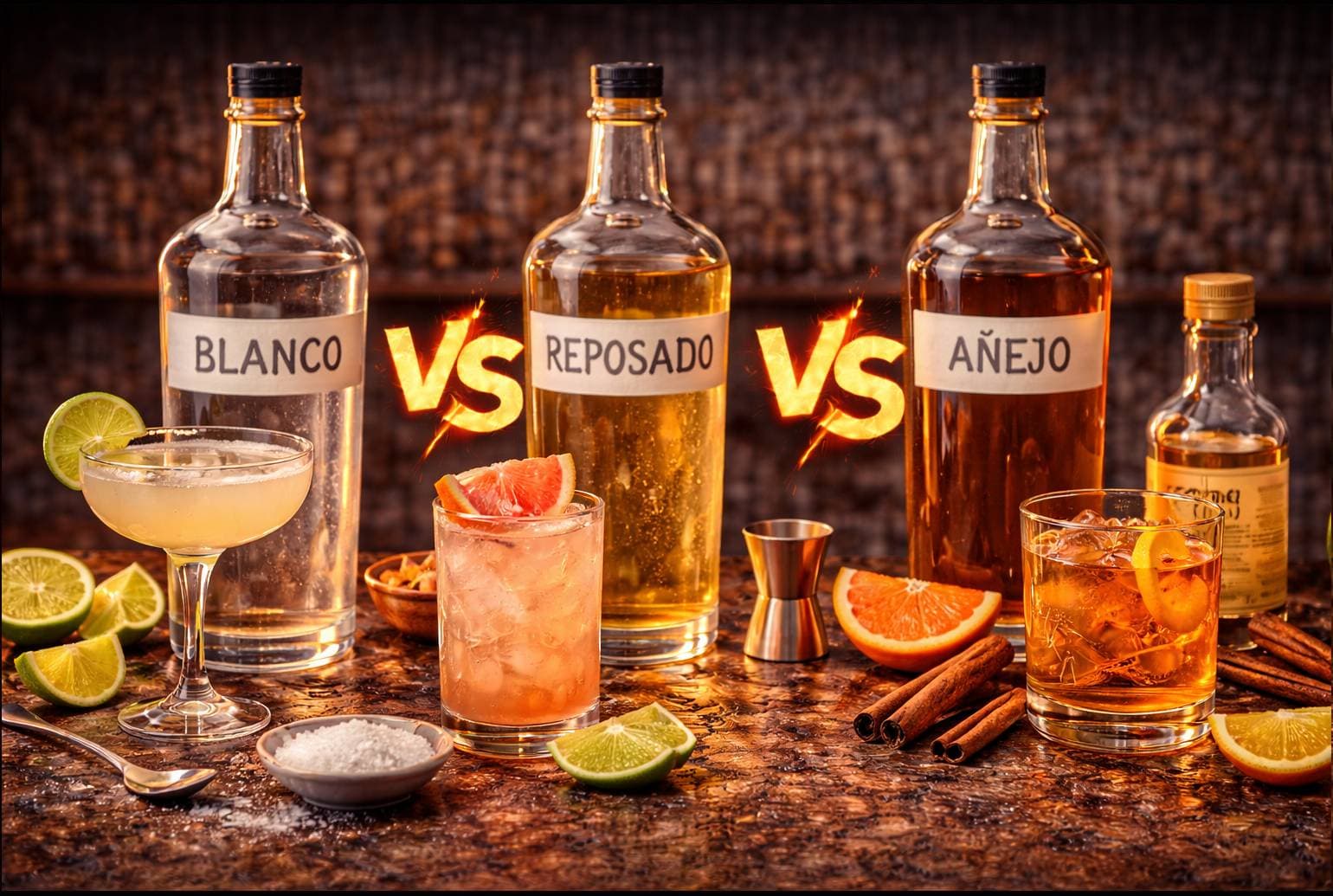
Tequila is the most polarizing spirit in mixology — dismissed as party fuel or revered as complex and age-worthy. The truth depends on which type you're using. Blanco, reposado, and añejo all come from the same agave, but aging determines their flavor and what drinks they suit.
The Aging Difference
Tequila comes in three main categories defined by how long the spirit sits in barrel (or doesn't).
Blanco (Silver) is unaged or aged for less than 2 months in stainless steel or used oak. It goes straight from the still to the bottle. You get the raw, unadulterated flavor of the agave — bright, peppery, herbaceous. Blanco is clear, colorless, and tastes like the plant.
Reposado is aged for 2 to 12 months in oak barrels (typically ex-bourbon barrels). The spirit absorbs color and flavor from the wood, but it's short enough that the oak doesn't dominate the agave character. The result is a balance: you still taste the agave, but with added smoothness, vanilla, and a golden hue. "Reposado" literally means "rested."
Añejo is aged for 1 to 3 years in oak barrels. Longer aging means more wood influence. The spirit darkens to amber or mahogany, picks up rich vanilla, caramel, and oak spice flavors, and loses much of its original peppery agave bite. Drinking an añejo neat feels more like sipping a fine bourbon than tequila — which is the whole point for some people, and the whole problem for others.
There's also extra añejo (3+ years), but that's rare, expensive, and meant for sipping, not cocktailing.
The Flavor Profile
Blanco tastes clean, sharp, and grassy. The flavor is all agave — earthy, slightly peppery, sometimes with a hint of floral or herbal notes depending on the agave variety and terroir. There's no softness from wood aging, so the spirit has an angular, assertive quality. It's the most versatile for cocktails because the flavor is a blank slate that works with other ingredients instead of fighting them.
Reposado tastes smoother, warmer, and more rounded than blanco. The oak aging adds vanilla, toasted oak, and subtle caramel notes. The agave flavor is still present but has taken a back seat to the wood influence. It's approachable neat, and it drinks well in cocktails where you want depth without overpowering the other ingredients.
Añejo tastes like oak and vanilla were the main ingredients and agave was secondary. The lengthy barrel aging has transformed the spirit into something closer to aged rum or bourbon. It's rich, smooth, and complex — excellent for sipping — but in a cocktail it can overshadow more delicate flavors. An añejo Margarita isn't wrong, but you're paying for complexity that gets buried under lime juice and triple sec.
Which Tequila for Which Cocktail
Margarita: Blanco. Always blanco. A Margarita is built on the balance of tequila, lime, and orange liqueur. Blanco's clean, peppery character cuts through the sweetness of the triple sec and the acid of the lime. It's bright, direct, and exactly what the drink needs. A reposado Margarita is softer and more approachable (some people prefer it). An añejo Margarita is wasted — you've paid premium prices for complexity that disappears.
Paloma: Blanco. Same reasoning as the Margarita. The grapefruit soda and lime need a clean, assertive tequila to balance them. Blanco's peppery edge is the ideal foil.
Tequila Sour (tequila, lime, simple syrup, egg white): Either blanco or reposado. Blanco gives you a classic, bright sour that emphasizes the agave. Reposado makes a softer, rounder version. Both work. The egg white adds richness that can accommodate either the sharp edge of blanco or the smoothness of reposado.
Oaxaca Old Fashioned (tequila, mezcal, bitters, sugar, orange peel): This is a spirit-forward stirred drink where blanco is the base, typically with a small amount of mezcal for smoke. Use blanco here — it's strong enough to stand up to the bitters and the mezcal. A reposado would soften the drink in a way the recipe doesn't intend.
Tequila neat or on the rocks: Reposado or añejo. These are the versions meant for sipping. The oak aging creates smoothness and complexity that makes the spirit drinkable and interesting on its own. Blanco is too sharp to sip for most people (though some agave lovers prefer it).
Frozen/blended cocktails (Frozen Margarita, Frozen Daiquiri with tequila): Blanco is the only choice. When you're making a frozen batch cocktail, the drink is diluted by the melted ice in the mixture, sweetened by the triple sec and simple syrup, and flavored by lime or other fruit. A blanco tequila's clean, direct profile cuts through all of that without getting muddy. A reposado or especially an añejo would contribute flavors that get buried or worse — the vanilla and oak notes from barrel aging turn sour or weird when the drink is ice-cold. The bright peppery character of blanco is what survives the freezing and dilution intact. For batch calculations, remember that tequila is typically 40% ABV, so adjust your total batch ABV accordingly. See our guide on batch cocktail math for the calculations.
A Brief Note on Mezcal
Mezcal is often grouped with tequila, but they're a separate category that deserves its own treatment. Tequila is a specific type of mezcal — all tequila is mezcal, but not all mezcal is tequila. Mezcal can be made from dozens of agave varieties; tequila must be made from blue agave. Most mezcals are also smoked during production (the agave is roasted in a pit rather than an oven), which gives them a distinctive smoky character.
For cocktails, mezcal works best in situations where you want that smoke element. A mezcal Negroni gains a smoky, complex character. A mezcal Margarita becomes richer and more interesting. A straight mezcal sour is exceptional. Use mezcal intentionally, though — it's not a drop-in replacement for tequila. The smoke changes the entire character of the drink.
For more on mezcal specifically, see our article: What Is Mezcal and How Is It Different From Tequila?
What to Buy
If you're buying one bottle: Blanco. It's the most versatile. A quality blanco in the $30–50 range works in every tequila cocktail and is pleasant enough to sip if you add ice. Look for 100% agave on the label (not "tequila" which can contain up to 49% other sugars).
If you're buying two bottles: Blanco and reposado. The blanco handles all your shaken cocktails and frozen drinks. The reposado gives you sipping quality and works in stirred drinks where you want more depth.
The proof question: Tequila is typically bottled at 40% ABV, same as most whiskeys. Some bottles go higher (43–46% ABV). Higher proof tequilas hold their flavor better in cocktails because dilution from ice or shaking doesn't wash them out as much. This is especially relevant for batch cocktails.
The Quick Rule
Blanco for fresh, bright, peppy cocktails — anything with lime, anything mixed with bright spirits, anything you're freezing in a batch machine.
Reposado for sipping, stirred cocktails, and drinks where you want the tequila character softened and rounded.
Añejo for sipping neat, not for cocktails (you're wasting it).
When in doubt about a recipe, start with blanco. It's what most tequila cocktails were designed for, and the agave character is what makes tequila special in the first place.
Browse our tequila cocktail recipes, check out frozen batch recipes that use tequila, or use the Ingredient Matcher to find drinks based on tequila you have at home.