Infusing spirits at home is dead simple — put an ingredient in a jar of liquor and wait. The hard part is knowing how long to wait. This guide covers timing, popular infusions, straining, storage, and the mistakes that ruin a perfectly good bottle.
Spirit infusion is one of the easiest ways to expand your home bar without buying more bottles. The concept is as simple as cooking gets: submerge a flavoring ingredient in a spirit, wait for the alcohol to extract its flavors, strain out the solids, and bottle the result. You end up with a custom spirit that tastes like you designed it, because you did. A jalapeño-infused tequila for spicy Margaritas. A vanilla-infused bourbon for richer Old Fashioneds. A rosemary gin that makes your Gin & Tonic smell like a Provencal garden.
The method is forgiving, the equipment is stuff you already own, and the results can rival (or surpass) the flavored spirits you find on store shelves — most of which are made with artificial flavorings and added sugar rather than real ingredients. But there are a few things that matter, and getting the timing wrong is the fastest way to ruin a bottle of perfectly good liquor.
The Basic Method
You need three things: a spirit, a flavoring ingredient, and a clean glass jar with a lid. That is it.
Step 1: Choose your spirit. Higher-proof spirits extract flavor faster and more completely than lower-proof ones. An 80-proof (40% ABV) vodka or bourbon works fine. A 100-proof (50% ABV) rye or overproof rum works faster and extracts more intensity. Avoid going below 80 proof — the lower alcohol content means slower extraction and a higher risk of spoilage with perishable ingredients.
Step 2: Prepare your ingredient. Wash produce thoroughly. Cut fruits into slices or chunks to expose more surface area. Lightly crush herbs and spices to release their oils. For peppers, slice them open — the seeds and membranes contain the most capsaicin, so include or remove them depending on how much heat you want.
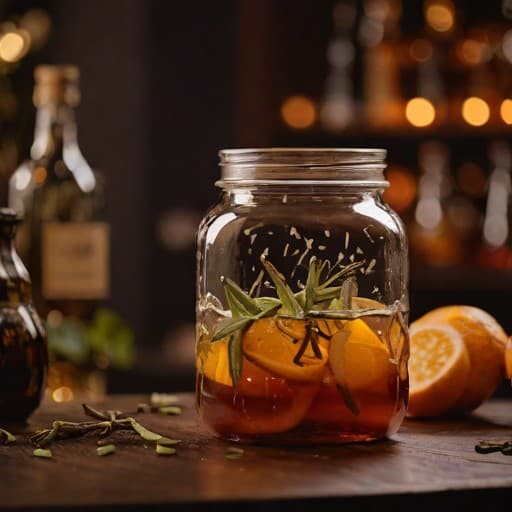
Step 3: Combine in a jar. Use a Mason jar or any clean glass container with a tight-fitting lid. Drop the ingredients in and pour the spirit over them. Make sure everything is submerged — ingredients floating above the liquid line can oxidize or develop off flavors.
Step 4: Wait. This is where the timing guide below becomes critical. Taste the infusion periodically. When it reaches the flavor intensity you want, move to straining.
Step 5: Strain and bottle. Pour the infusion through a fine-mesh strainer to remove the solids. For a cleaner result, follow up with a second strain through a coffee filter or cheesecloth — this catches tiny particles and sediment that would cloud the final product. Transfer to a clean bottle, label it with the contents and date, and store appropriately.
The Timing Guide
Timing is the single most important variable in spirit infusion, and it varies enormously depending on the ingredient. The general principle is: the more delicate the ingredient, the shorter the infusion time. The more robust, the longer.
Hot Peppers: Minutes to Hours
Capsaicin — the compound that makes peppers hot — dissolves readily in alcohol. A single sliced jalapeño in 8 oz of tequila or vodka will produce noticeable heat in as little as 15-30 minutes. In 2-3 hours, it can become intensely spicy. In 24 hours, it may be undrinkable for most people.
Jalapeño tequila is the most popular pepper infusion. Start with 1-2 sliced jalapeños (seeds removed for moderate heat, seeds in for serious heat) per 750 ml of blanco tequila. Taste every 30 minutes starting at the 30-minute mark. Most people land at 1-3 hours depending on their heat tolerance. Strain immediately when it reaches your level — the heat will continue building even after straining if any pepper particulate remains.
Habanero is significantly hotter and needs even less time. A single sliced habanero per 750 ml, tasted every 15 minutes, starting at 15 minutes. Some people find their target in under an hour.
The mistake: Leaving hot peppers in overnight "just to be safe." You will almost certainly overshoot. Pepper infusions go from pleasant to punishing fast, and you cannot remove heat once it is extracted. Start conservative, taste often.
Fresh Herbs: Hours
Fresh herbs like rosemary, basil, thyme, mint, and cilantro infuse relatively quickly because their essential oils are volatile and alcohol-soluble. They also turn bitter and vegetal if left too long — chlorophyll and tannins from the plant matter leach out over extended infusions, creating muddy, unpleasant flavors.
Rosemary gin is a classic. Use 3-4 sprigs of fresh rosemary per 750 ml of a London dry gin like Beefeater or Tanqueray. The rosemary complements the existing botanical profile of the gin. Taste at 2 hours. Most rosemary-gin infusions hit their sweet spot between 3 and 6 hours. Beyond 8 hours, you risk a medicinal, pine-cleaner flavor from over-extraction.
Basil vodka is another winner. A generous handful of fresh basil leaves (about 15-20 leaves) per 750 ml of vodka. Taste at 1 hour. Target 2-4 hours. Basil turns dark and swampy-tasting if left overnight.
The rule for fresh herbs: Taste early, taste often, and err on the side of pulling them out too soon rather than too late. You can always add more herbs and infuse for another round. You cannot undo bitterness.
Fruits: Days
Whole fruits and fruit pieces take longer to infuse because the flavors you want are locked inside cell structures that break down slowly in alcohol. The alcohol needs time to penetrate the fruit, dissolve the sugars and esters, and pull them into solution.
Pineapple rum is one of the most rewarding fruit infusions. Cut a ripe pineapple into chunks (skin removed, core included — the core has concentrated flavor) and submerge in 750 ml of white rum like Plantation 3 Stars or Probitas. Taste at day 3. Most pineapple rum infusions reach peak flavor between 5 and 7 days. The rum takes on a gorgeous golden color and a sweet, tropical aroma that makes incredible Pina Coladas and Daiquiri variations.
Strawberry vodka is fast for a fruit infusion. Hull and quarter a pint of ripe strawberries per 750 ml of vodka. The berries' thin cell walls break down quickly. Taste at day 2. Most are done by day 3-4. The vodka turns a beautiful pink-red.
Citrus peel infusions (orange, lemon, grapefruit) are technically fruit but behave differently. You are infusing the oils from the peel, not the juice. Use a vegetable peeler to remove wide strips of peel, avoiding the bitter white pith. Citrus peels infuse in 1-3 days depending on how much peel you use and how intense you want the result.
The mistake with fruit: Using under-ripe or flavorless fruit. The infusion cannot create flavor that is not there — it can only extract what the fruit already contains. Use the ripest, most fragrant fruit you can find. If it does not smell like anything, it will not taste like anything in the bottle either.
Spices: Days to Weeks
Dried spices are dense and release their compounds slowly. Cinnamon, vanilla, star anise, cardamom, cloves, and black pepper all fall into this category.
Vanilla bourbon is the gateway spice infusion. Split 2 vanilla beans lengthwise (use a sharp knife to expose the seeds inside) and submerge them in 750 ml of bourbon — something solid but not precious, like Buffalo Trace, Wild Turkey 101, or Evan Williams Single Barrel. Taste at day 3. Vanilla bourbon typically reaches its peak between 5 and 10 days. The vanilla adds warmth, sweetness, and depth that makes an exceptional Old Fashioned or Bourbon Sour.
Cinnamon whiskey (the real kind, not Fireball) uses 2-3 cinnamon sticks per 750 ml of rye or bourbon. Taste at day 2. Cinnamon can become overwhelming and introduce an unpleasant astringency if left too long — 3-5 days is usually the right window.
Cardamom-infused gin uses 8-10 cracked green cardamom pods per 750 ml. Lightly crush the pods to open them before adding. Taste at day 3. Target 5-7 days. The floral, slightly sweet cardamom works beautifully with gin's existing botanicals.
The mistake with spices: Not cracking or opening them before infusing. Whole, intact spices have very little surface area exposed to the alcohol. A whole nutmeg will sit in bourbon for a month and barely contribute flavor. Crack it, grate it, or split it open first.
Choosing the Right Base Spirit
The spirit you use as a base matters more than you might think. Different spirits have different flavor profiles, and the infusion ingredient needs to complement — not fight — the base.
Vodka is the blank canvas. Its neutral flavor means the infusion ingredient is the star. Use vodka when you want the purest expression of the infused flavor — strawberry vodka tastes like strawberries, not like strawberries plus something else. This makes vodka the best base for delicate ingredients like cucumber, watermelon, or chamomile.
Blanco tequila has its own agave character that pairs naturally with tropical fruits, peppers, and citrus. Jalapeño tequila works because the vegetal heat of the jalapeño aligns with the vegetal sweetness of the agave. Mango tequila, pineapple tequila, and grapefruit tequila are all excellent pairings.
Bourbon and rye have caramel, vanilla, and spice notes from barrel aging that pair well with warm flavors: vanilla, cinnamon, apple, peach, cherry, coffee, and cocoa. A coffee-infused bourbon makes a killer Espresso Martini variation. An apple-cinnamon bourbon is essentially liquid autumn.
White rum is slightly sweet with tropical fruit and sugarcane character, making it the ideal base for tropical fruit infusions. Pineapple, coconut, banana, and mango all work brilliantly. Spiced rum infusions with whole spices (cinnamon, allspice, vanilla, star anise) let you make a far superior version of commercial spiced rum.
Gin already contains botanical flavors, so you are adding a new note to an existing chord. Infusions that extend the botanical profile (rosemary, lavender, cucumber, elderflower, cardamom) work better than ones that clash with it. Avoid infusing gin with ingredients that compete with juniper — heavy tropical fruits, strong peppers, or smoky flavors tend to create a confused result.
Straining and Storage
Proper straining is the difference between a clean, professional-looking infusion and a cloudy, gritty one.
First pass: Pour through a fine-mesh strainer to catch all solid pieces. Press gently on fruits to extract trapped liquid, but do not mash them — mashing pushes pulp and sediment through the strainer.
Second pass: Line the strainer with a coffee filter or a double layer of cheesecloth and pour the infusion through again. This is slow — coffee filters can take 10-15 minutes to drain a full batch — but the result is a crystal-clear infusion with no sediment.
Storage: Infused spirits that use only dried ingredients (spices, dried fruit, tea) can be stored at room temperature indefinitely, just like any other spirit. The alcohol content is high enough to prevent spoilage. Infusions made with fresh, perishable ingredients (fresh fruit, fresh herbs, dairy) should be refrigerated and consumed within 2-4 weeks (the same principles from storing open bottles apply here). The fresh ingredients can introduce bacteria and enzymes that degrade the infusion over time, even in alcohol.
Labeling: Always label your bottles with the infusion, the base spirit, and the date. A jar of amber liquid in the back of your bar could be vanilla bourbon, cinnamon rye, or regular bourbon, and two months from now you will not remember which. A piece of masking tape and a Sharpie takes five seconds and saves confusion.
Common Mistakes
Leaving the infusion too long. This is the most common error. People set it and forget it, then come back three days later to discover their herb infusion has turned bitter and their pepper infusion has become weapons-grade. Set a reminder on your phone to taste the infusion at regular intervals.
Using a spirit you would not drink on its own. Bottom-shelf spirits have harsh flavors that infusion amplifies rather than masks. If the base spirit tastes like rubbing alcohol, adding vanilla to it will taste like vanilla-scented rubbing alcohol. Use a spirit you would be happy to sip — something mid-shelf and clean. You do not need top-shelf, but you do need decent.
Infusing with too many ingredients at once. A "kitchen sink" infusion with six different fruits and four spices usually tastes muddy and confused. Start with a single ingredient or a simple combination (jalapeño + lime peel, or vanilla + cinnamon). Learn what each ingredient contributes before combining them.
Not tasting along the way. Infusion is not set-it-and-forget-it. It is an active process that requires periodic tasting to catch the sweet spot. Every ingredient has a window where it tastes great and a point past which it turns unpleasant. The only way to find that window is to taste.
Using dried herbs instead of fresh (or vice versa) without adjusting. Dried herbs are more concentrated than fresh — use about one-third the amount. Fresh herbs infuse faster but go bitter sooner. They are not interchangeable without adjusting both quantity and timing.
Five Infusions to Start With
If you have never infused a spirit before, these five are reliable, hard to mess up, and immediately useful in cocktails:
- Jalapeño tequila — 2 sliced jalapeños per 750 ml blanco, 1-3 hours. Use in Margaritas, Palomas, and Ranch Water.
- Vanilla bourbon — 2 split vanilla beans per 750 ml, 5-10 days. Use in Old Fashioneds and Bourbon Sours.
- Pineapple rum — 1 cubed pineapple per 750 ml white rum, 5-7 days. Use in Daiquiris and Pina Coladas.
- Rosemary gin — 4 sprigs per 750 ml, 3-6 hours. Use in Gin & Tonics and Gimlets.
- Cinnamon rye — 3 sticks per 750 ml, 3-5 days. Use in Old Fashioneds and Manhattans.
Each of these can be made with equipment you already have and ingredients available at any grocery store. They take minutes to set up, a few days (or hours) to complete, and they transform simple cocktail recipes into something that tastes like it came from a bar with a wall of house-made ingredients behind it. Because it did — your bar.
Ready to put your infused spirits to work? Browse our cocktail recipes and substitute your infusions into the base spirits, or try our Ingredient Matcher to find recipes that work with what you have on hand.