Gin is the most botanically diverse spirit in the world. Two bottles labeled "gin" can taste completely different — one like pine and juniper, the other like flowers and citrus. That range makes gin interesting but picking the right bottle harder. The divide comes down to one botanical: juniper.
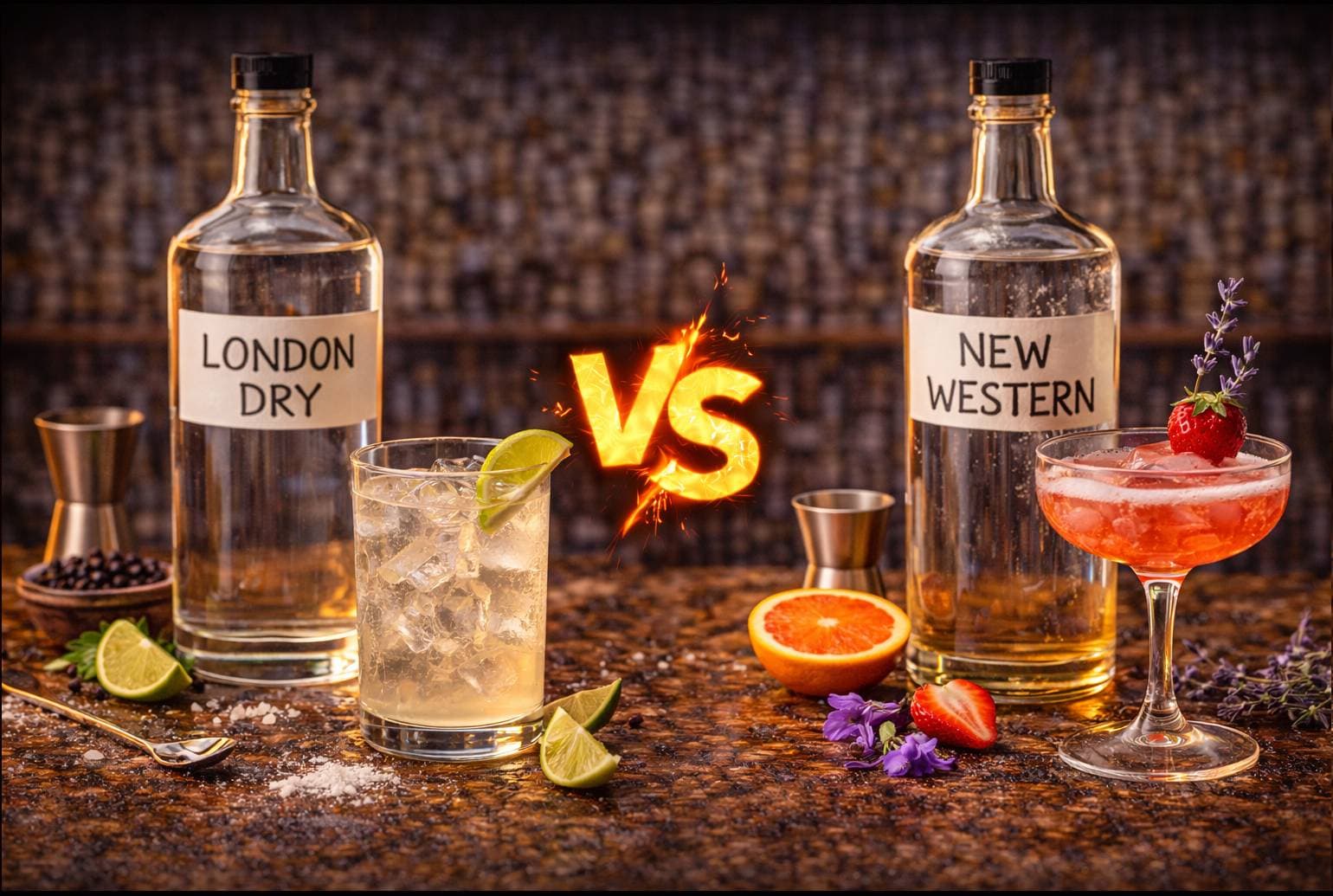
London Dry vs. New Western
These are the two major gin categories, and they're defined by how prominent juniper is in the botanical profile.
London Dry is juniper-forward. Juniper is the dominant botanical, usually contributing 40–60% of the flavor (though there's no legal minimum). The rest of the botanical bill might include coriander, citrus peel, cardamom, angelica, and other botanicals, but they're supporting players. Juniper gives gin its characteristic piney, resinous, slightly woody flavor. London Dry is dry in character (despite the name, it refers to a style, not a place). The juniper sharpness, combined with other botanicals, creates a bracing, assertive spirit.
Classic examples: Beefeater, Tanqueray, Bombay Sapphire, Gordon's.
New Western (or "contemporary" gin) deemphasizes juniper in favor of other botanicals. Juniper is still present and legally required to be present to call it gin, but it's often backgrounded in favor of more prominent citrus, florals, or unusual botanicals like cucumber, heather, or iris root. The result is a softer, more aromatic, less assertively "piney" spirit that emphasizes complexity over classic gin character.
Classic examples: Hendrick's (cucumber-forward), Monkey 47 (complex herbal profile), The Botanist (grassiness and florals).
The Flavor Difference
London Dry tastes like a concentrated shot of evergreen forest. The initial hit is juniper and pine resin. The finish has herbaceous, slightly bitter notes from coriander and other supporting botanicals. There's a dryness that lingers on the tongue. The flavor is bold, clear, and immediately recognizable as "gin." It's the flavor people expect from gin.
New Western tastes softer and more garden-like. The juniper is present but muted, allowing other botanicals to shine. There's often more citrus character, floral notes, herbal sweetness, or unusual flavors that define the specific bottle. A New Western gin might smell like flowers when you open the bottle. The finish is smoother, less dry, and more approachable. The overall effect is more nuanced and less immediately "gin-like" — which is exactly why enthusiasts love it, and why traditionalists sometimes dismiss it.
When London Dry Works Better
Martini: London Dry, no question. A martini is a spirit-forward drink where gin is the star. The juniper character defines the drink. Hendrick's in a martini tastes nothing like a classic gin martini — it's soft, has cucumber notes, and frankly tastes confused in such a simple drink. London Dry's bracing juniper character is what makes a martini work. Try Tanqueray or Beefeater.
Gin & Tonic: This is the classic London Dry showcase. Juniper-forward gin with the bitter quinine from the tonic water — they're made for each other. The piney juniper plays directly against the tonic's bitterness. A New Western gin can work in a G&T, but you're losing the classic interplay. If you want a G&T, start with London Dry.
Gimlet: London Dry. A gimlet is gin, lime, and (traditionally) dry vermouth or sugar. It's simple enough that you taste the gin directly. London Dry's clean juniper character is the foundation the drink is built on. A New Western gimlet would taste more floral and less classically balanced.
Negroni: Traditionally London Dry, though some modern bartenders experiment with New Western. The classic formula depends on juniper-forward gin to balance Campari's bitterness and sweet vermouth. Try London Dry first — it's the traditional choice for a reason.
Sazerac and other spirit-forward cocktails: London Dry. Any drink where the gin is a major component and you're not adding fruit juice or unusual modifiers needs a juniper-forward gin to maintain the classic character.
When New Western Shines
Modern fruit-forward drinks: New Western gin's softer botanical profile works beautifully in drinks with fresh fruit, citrus mixers, or floral liqueurs. A gin drink with strawberry, elderflower, or cucumber naturally steers toward New Western.
Gin Fizzes and Collins drinks: These drinks already have plenty going on — citrus, sugar, soda. A New Western gin's lighter touch doesn't get buried. The softer gin allows the other flavors to come forward.
Gin with unusual modifiers: If you're making a gin drink with ingredients that are themselves unusual (Japanese gin, smoke-washed, herbal), New Western often works better because it's already experimental. The ethos of New Western gin is "what else can gin be?" — it pairs naturally with adventurous cocktails.
Gin Sours with egg white: The silky texture from egg white pairs well with New Western's softer character. The botanicals can be more delicate and still come through.
Sampling and cocktail exploration: If you're tasting gin to understand its nuances, New Western is more interesting. London Dry is more predictable — juniper and supporting botanicals. New Western challenges the juniper formula, so each bottle teaches you something different about what gin can be.
A Note on Navy Strength
Navy Strength gin is a subcategory worth knowing about. These are gins bottled at 57% ABV (the traditional strength required for gin to ignite gunpowder aboard ships). Navy Strength gins, whether London Dry or New Western, are significantly more powerful than standard gins. They hold their flavor better in cocktails with heavy dilution, but they also read hotter and slightly more aggressive.
If you're making a batch of Gin & Tonics or multiple rounds of martinis, Navy Strength isn't necessary — standard 40% ABV is fine. But if you're making a single carefully-stirred martini and you want the gin to punch through the dilution from ice melt, Navy Strength is worth trying. Just know that it will taste noticeably stronger.
What to Buy
If you're buying one bottle: London Dry. It's the foundation. Pick something classic and mid-range: Beefeater, Tanqueray, or Gordon's (around $25–35). These are the bottles that built gin cocktailing. You can't go wrong.
If you're buying two bottles: Add a New Western. Keep your London Dry for classics. Add Hendrick's, Monkey 47, or The Botanist for modern drinks and experiments. This gives you flexibility — you can make a proper martini and also explore what gin can be beyond juniper.
The proof question: Standard gin is bottled at 40% ABV, same as standard whiskey and tequila. Navy Strength is 57% ABV. For batch cocktails, this matters — Navy Strength will contribute more alcohol to the total. Adjust your batch ABV calculations accordingly.
The Quick Rule
London Dry when you want the classic, recognizable character of gin — when juniper should be the hero. Use for martinis, G&Ts, gimlets, and any spirit-forward gin cocktail.
New Western when you want something softer, more nuanced, or more unusual — when the botanical character should be interesting but not dominant. Use for fruit-forward drinks, modern cocktails, and experimentation.
When in doubt, make the drink both ways. That's the whole point of having options.
Browse our gin cocktail recipes to find drinks suited to London Dry or New Western, or use the Ingredient Matcher to discover new gin drinks based on what you have in your home bar.