The Margarita has at least three credible origin stories and none are proven. Here's what we actually know about how America's favorite cocktail came to be.
The Margarita is the most popular cocktail in America. It has been for years, and it probably will be for years to come. But ask where it came from and you'll get a different answer depending on who's talking. There are at least three credible origin stories — plus a handful of less credible ones — and not a single one has been definitively proven. That's not unusual for classic cocktails. What's unusual is how fiercely each camp defends its version. Here's what we actually know.
Story 1: Carlos "Danny" Herrera, Tijuana, 1938
The most frequently cited origin story places the Margarita at Rancho La Gloria, a small restaurant between Tijuana and Rosarito, Mexico. The owner, Carlos "Danny" Herrera, reportedly created the drink for a customer named Marjorie King — a showgirl or actress (accounts vary) who claimed to be allergic to all spirits except tequila but didn't like drinking tequila straight.
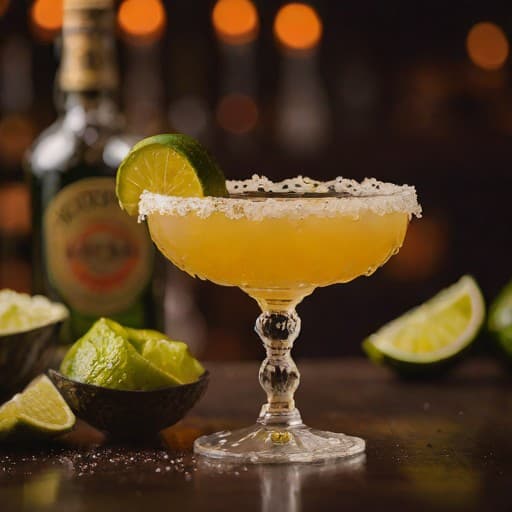
Herrera's solution was elegant: tequila, lime juice, and triple sec, served in a salt-rimmed glass. The salt and citrus made the tequila approachable. He named it after his customer — "Margarita" being the Spanish form of "Marjorie."
It's a good story. Herrera told it consistently for decades, and his family maintained it after his death. The timeline is plausible — tequila was widely available in Baja California in the late 1930s, and the combination of tequila, lime, and salt was already a common way to drink tequila in Mexico. The addition of orange liqueur and the formalization into a cocktail recipe is a small but meaningful step.
The problem: No contemporaneous documentation exists. No menu, no receipt, no newspaper mention from 1938. The earliest third-party accounts date to the 1970s, when the Margarita was already famous.
Story 2: Margarita Sames, Acapulco, 1948
The second major claim comes from Margarita Sames, a wealthy Dallas socialite who hosted lavish parties at her vacation home in Acapulco. According to Sames, she experimented with cocktails at a party in 1948 and landed on a combination of tequila, Cointreau, and lime juice. Her guests — who reportedly included future hotel magnate Tommy Hilton — loved it. The drink spread through her social circle and eventually into the bars they frequented.
Sames was specific about her recipe: equal parts tequila, Cointreau, and lime juice (a 1:1:1 ratio that's significantly more citrus-forward than most modern recipes). She also claimed credit for the salt rim, inspired by the Mexican tradition of drinking tequila with salt and lime.
This story has the advantage of a named, verifiable person who told it publicly for decades. Sames was well-connected in Dallas social circles, and the Hilton family connection provides a plausible distribution channel into hotel bars.
The problem: The Herrera story predates Sames by a decade. And again, no documentation from 1948 exists. The earliest written Margarita recipes appear in cocktail books from the early 1950s, which doesn't cleanly support either story.
Story 3: The Daisy Theory — Evolution, Not Invention
This is the theory most cocktail historians find persuasive, and it's also the least dramatic. "Margarita" is Spanish for "daisy" — and the Daisy was already an established cocktail category by the late 1800s.
A classic Daisy follows a simple template: base spirit + citrus juice + orange liqueur, sometimes with a splash of soda. There were Brandy Daisies, Gin Daisies, Whiskey Daisies. The formula is essentially a sour with orange liqueur replacing plain sugar. Sound familiar?
Under this theory, the Margarita wasn't invented at any single moment by any single person. It's simply the tequila version of a Daisy — a natural evolution that probably happened independently in multiple bars across Mexico and the American Southwest as tequila became more widely available in the 1930s and '40s.
The Daisy theory explains why multiple origin stories exist: several people likely made some version of tequila-lime-orange liqueur around the same time. None of them "invented" it so much as arrived at an obvious combination. The name — Margarita, the Spanish Daisy — may even be a direct translation of the category, not a reference to any specific person.
This is the least romantic origin story, but it's probably the most accurate.
The Frozen Margarita: Dallas, 1971
While the original Margarita's history is murky, the frozen Margarita has a clear, documented origin. In 1971, a Dallas restaurateur named Mariano Martinez was struggling to serve consistent frozen Margaritas at his restaurant, Mariano's Mexican Cuisine. Hand-blending each one took too long, and the results were inconsistent — some too icy, some too slushy.
Martinez's solution was creative: he adapted a soft-serve ice cream machine to dispense pre-mixed frozen Margaritas. The machine kept the mixture at a consistent temperature and texture, producing perfectly slushy drinks on demand. It was a hit.
The original frozen Margarita machine is now in the Smithsonian's National Museum of American History — which tells you something about the drink's cultural impact. Martinez's innovation spawned an entire industry of frozen drink machines. Love them or hate them, those slushy Margaritas at chain restaurants all trace back to a soft-serve machine in a Dallas restaurant.
For what it's worth, making good frozen Margaritas at home or for parties is mostly a question of getting the sugar and alcohol balance right — you need the right Brix and ABV for the mixture to freeze to slush rather than solid ice or unfrozen liquid. Our batch cocktail math guide covers the principles.
Tommy's Margarita: The Modern Classic
The most significant Margarita variation appeared in the 1990s at Tommy's Mexican Restaurant in San Francisco. Julio Bermejo — the son of the restaurant's founders — created what's now known as the Tommy's Margarita: tequila, fresh lime juice, and agave nectar instead of triple sec or Cointreau.
The swap was philosophical as much as practical. Bermejo was (and is) a tequila purist. He argued that orange liqueur — typically made from a neutral grain spirit base — diluted the agave character of the tequila. By replacing it with agave nectar, he kept the sweetness but let the tequila's natural flavor come through unmasked.
The Tommy's Margarita has become the default in many craft cocktail bars, especially those that prioritize spirit-forward drinks. The recipe:
- 2 oz blanco tequila (100% agave — this matters)
- 1 oz fresh lime juice
- 0.5 oz agave nectar
Shake with ice, strain into a rocks glass over fresh ice, salt rim optional. It's cleaner, drier, and more tequila-forward than the triple sec version. Whether it's "better" depends entirely on what you want from a Margarita — the classic version's orange complexity vs. the Tommy's version's agave purity.
The choice of blanco vs. reposado matters here too. Blanco keeps it bright and sharp. Reposado adds vanilla and oak warmth. Both work — they just make different drinks.
Why the Recipe Works
Strip away the history and the Margarita is a textbook sour: spirit + citrus + sweetener. It follows the same structural logic as a Daiquiri (rum + lime + sugar) or a Whiskey Sour (whiskey + lemon + sugar). The ratio balances strong, sour, and sweet.
What makes the Margarita specifically compelling is the orange liqueur as the sweetener. Triple sec or Cointreau doesn't just add sugar — it adds orange aromatics that bridge the gap between the earthy, vegetal flavor of tequila and the sharp acidity of lime. That bridge is what makes the drink taste complete rather than just balanced.
The salt rim isn't decoration either. Salt suppresses bitterness and enhances other flavors — the same reason you salt food. A salted rim makes the tequila taste smoother and the lime taste brighter. It's functional.
And fresh lime juice is non-negotiable. A Margarita made with bottled lime juice tastes fundamentally different — flat, artificial, one-dimensional. The volatile aromatics in fresh juice are what give the drink its spark.
The Margarita's Rise to Dominance
How did one cocktail become America's most ordered drink? Several factors converged:
Tequila availability. Mexican tequila exports to the U.S. grew steadily from the 1950s onward. As tequila became easier to find, Margarita consumption followed.
Frozen machines. Martinez's 1971 invention made Margaritas accessible at scale — fast, consistent, and appealing to people who might not order a "cocktail" but would happily drink a frozen lime slush.
The chain restaurant boom. In the 1980s and '90s, chains like Chili's, Applebee's, and On the Border put frozen Margaritas on every menu in America. Volume-wise, this is probably where the Margarita cemented its dominance.
The craft revival. Starting in the 2000s, the craft cocktail movement rediscovered the Margarita as a serious drink — fresh juice, quality tequila, proper technique. Tommy's Margarita gave bartenders a version they could be proud of. The drink earned credibility at both ends of the market.
Today, the Margarita works everywhere — dive bars, fine dining, backyard parties, resort pools. Few cocktails have that range.
Modern Variations Worth Knowing
The Margarita template is endlessly adaptable. A few variations that have earned their place:
Mezcal Margarita: Swap some or all of the tequila for mezcal. The smoke adds a dimension that plays beautifully with lime and salt. Start with a 1:1 split of tequila and mezcal before going full mezcal.
Spicy Margarita: Muddle fresh jalapeno slices in the shaker, or use a chili-infused tequila. The heat and the citrus acidity amplify each other.
Cadillac Margarita: The classic recipe with a float of Grand Marnier on top instead of (or in addition to) standard triple sec. Richer, more complex, slightly sweeter.
Skinny Margarita: Tequila, fresh lime, a small amount of agave or simple syrup, soda water. Essentially a Tommy's stretched with bubbles. Lower sugar, lower calorie, still tastes good if you use quality tequila.
The Bottom Line
The Margarita probably wasn't invented by any single person in any single moment. It's more likely the natural result of tequila meeting a cocktail template that already existed. But that's what makes it great — it wasn't designed by committee or dreamed up as a marketing exercise. It emerged because the combination of tequila, lime, orange liqueur, and salt just works. The history is murky, the recipe is perfect, and that's enough.
Want to explore the tequila side of the equation? Start with our guide to blanco, reposado, and anejo tequilas, or dig into what makes mezcal different. For the science behind batching Margaritas for a crowd, see batch cocktail math.