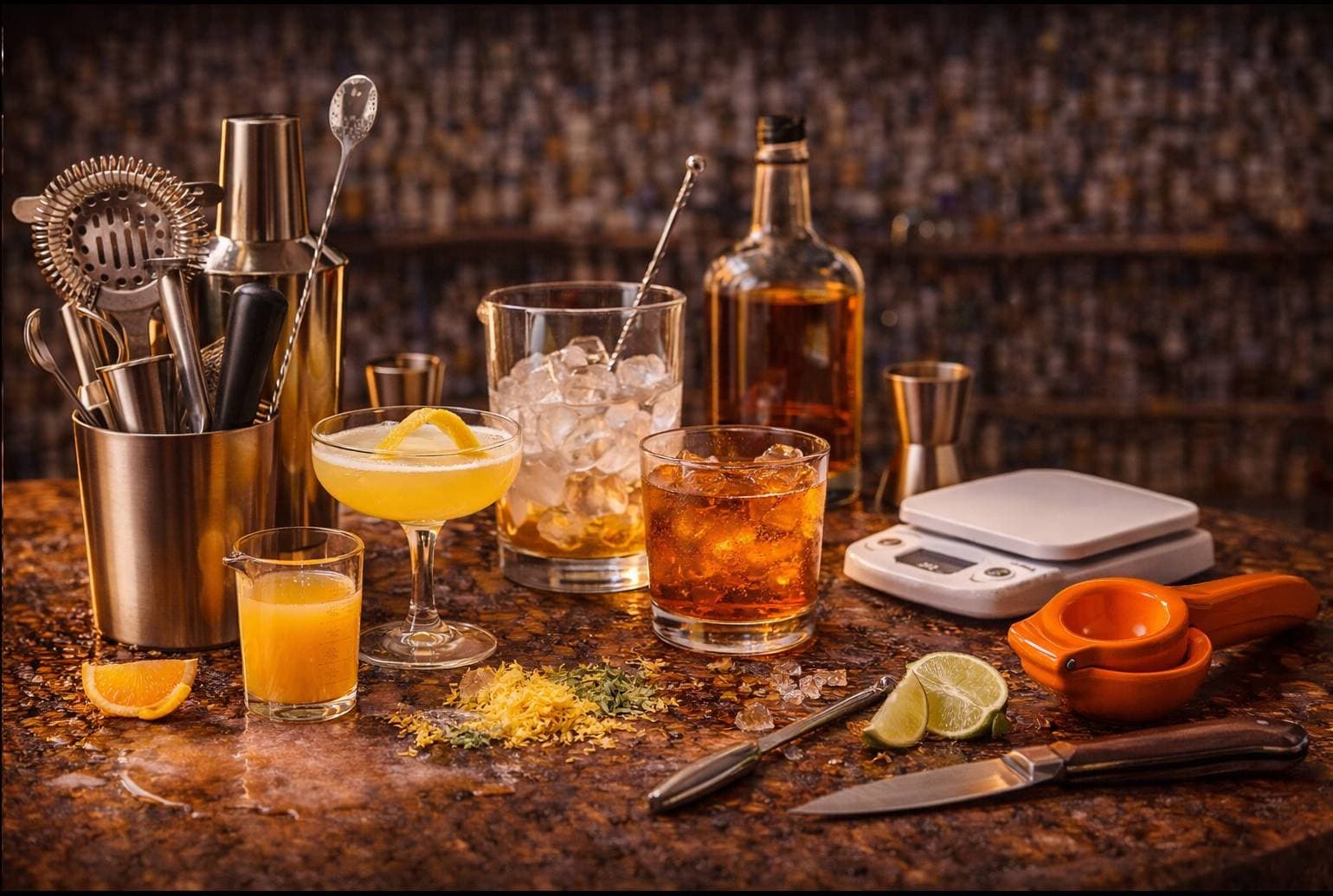
Ogni cocktail girato — Manhattan, Negroni, Martini, Old Fashioned (quando preparato direttamente nel bicchiere, è tecnicamente girato) — è preparato in qualche tipo di recipiente con ghiaccio e un bar spoon. Molti bartender domestici usano un pint glass per questo.
Funziona. Ma un mixing glass adeguato funziona significativamente meglio, e le ragioni non sono solo estetiche.
Cos'è un Mixing Glass
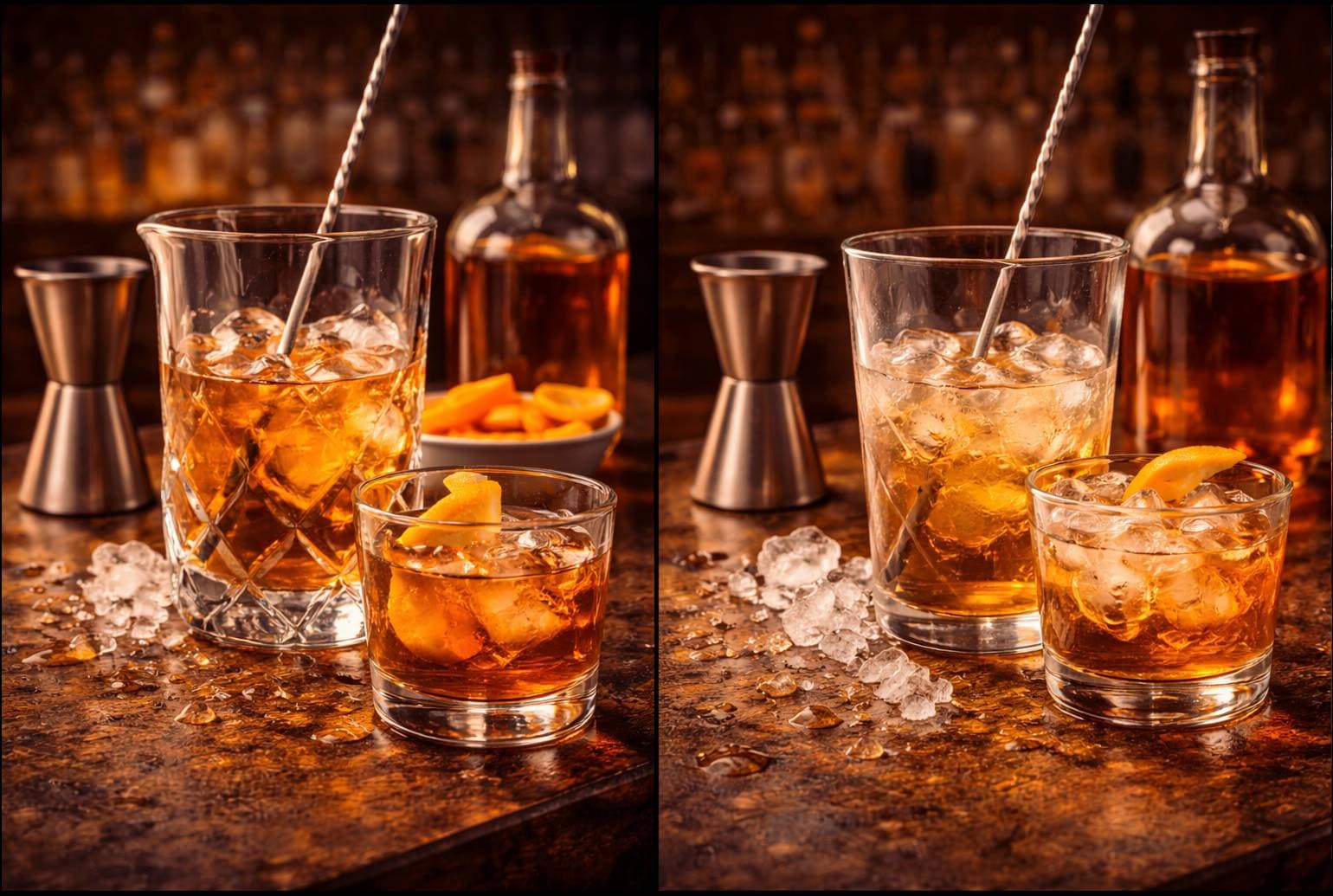
Un mixing glass è un recipiente di vetro dalle pareti spesse progettato specificamente per girare cocktail con il ghiaccio. Lo stile più riconoscibile è il mixing glass Yarai — un vetro di cristallo tagliato a diamante che contiene circa 500–700 ml (17–24 oz). Ha un'apertura ampia per girare facilmente, un beccuccio affusolato per versare in modo pulito e peso sufficiente da non scivolare sul bancone mentre si gira.
Altri stili includono mixing glass lisci senza cuciture (nessun motivo tagliato, solo vetro pesante liscio) e bicchieri stile beaker con linee di misurazione incise sul lato. Condividono tutti le stesse proprietà fondamentali: vetro pesante, apertura ampia, beccuccio versatore, capacità di circa 500 ml.
Perché il Vetro Pesante È Importante
Il singolo più grande vantaggio funzionale di un mixing glass rispetto a un pint glass è la massa termica.
Un mixing glass adeguato ha pareti spesse 3–5mm — sostanzialmente più spesse di un pint glass standard. Quel vetro extra agisce come un buffer termico. Quando aggiungi ghiaccio e distillati, il vetro stesso assorbe parte del freddo prima che la bevanda inizi a raffreddarsi efficacemente. Ma una volta che il vetro è freddo, mantiene quella temperatura meglio del vetro sottile.
Più importante, le pareti spesse isolano contro la tua mano. Un pint glass è abbastanza sottile che tenerlo mentre si gira trasferisce il calore corporeo attraverso il vetro nella bevanda, riscaldandola leggermente. Un mixing glass spesso resiste a questo. Durante 30 secondi di mescolata, la differenza è piccola ma reale — un paio di gradi Fahrenheit — e nei cocktail girati dove la precisione conta, questo si accumula.
Il peso mantiene anche il vetro stabile. Girare con un bar spoon è un movimento circolare continuo che crea una leggera forza centrifuga. Un pint glass leggero può oscillare o girare. Un mixing glass pesante rimane fermo.
Il Beccuccio Versatore Cambia Tutto
Prova a versare un cocktail girato da un pint glass attraverso un julep strainer in un movimento fluido. Il liquido scorre lungo il bordo, gocciola all'esterno, e metà drink finisce sul tuo bancone.
Un mixing glass ha un beccuccio a forma di V che canalizza il liquido in un flusso stretto e controllato. Il julep strainer si posiziona naturalmente contro l'apertura del vetro, e la versata è pulita dall'inizio alla fine. Niente gocciolamento, niente versamento, niente scuotimento delle ultime gocce.
Questo è l'upgrade più immediatamente evidente da un pint glass. La prima volta che versi un Manhattan girato da un mixing glass con beccuccio, ti chiederai perché hai tollerato il disordine del pint glass per così tanto tempo.
Quando un Pint Glass Proprio Non Basta
Per la maggior parte delle situazioni domestiche, un pint glass è funzionale se imperfetto. Ma ci sono casi specifici dove è insufficiente:
Cocktail con delicato equilibrio di distillati. Un Martini, un Vieux Carré, un Bijou — questi sono drink dove l'interazione di due o tre distillati conta enormemente, e il livello di diluizione deve essere preciso. Le pareti più sottili di un pint glass permettono un trasferimento di calore più rapido e dinamiche di diluizione leggermente diverse. Per drink dove la differenza tra "propriamente diluito" e "leggermente sovra-diluito" è la differenza tra eccellente e mediocre, il mixing glass vince.
Quando stai preparando drink per altri. La presentazione conta. Non in modo snob — nel senso che quando porgi a qualcuno un cocktail, la cura che vedono nella preparazione influenza come esperiscono la bevanda. Girare in un bellissimo vetro Yarai di fronte agli ospiti comunica "l'ho fatto con intenzione." Un pint glass dall'armadio della cucina comunica "sto improvvisando."
Quando giri più drink in sequenza. Un mixing glass adeguato contiene liquido per 2–3 cocktail più ghiaccio. Se stai preparando quattro Negroni per una cena, puoi girarli tutti in un lotto. Un pint glass raggiunge il massimo a 1–2 drink prima che ghiaccio e liquido lottino per lo spazio.
Quando un Pint Glass Va Bene
Siamo onesti su quando non importa:
Imparare a girare. Se stai iniziando con la tecnica del bar spoon, esercitati in un pint glass. Impara il movimento, abituati al colino, e risparmia il mixing glass per quando la tecnica è abbastanza naturale da poter godere dell'upgrade.
Fare un drink veloce per te stesso. Stai facendo un Negroni un martedì sera. Il pint glass è già pulito. Nessuno sta guardando. Avrà un buon sapore.
Non fai drink girati spesso. Se il 90% di quello che fai è shakerato (Margaritas, Daiquiris, Whiskey Sours), non hai bisogno di un mixing glass. I drink shakerati si fanno in uno shaker, non in un mixing glass. Investi invece in un buon shaker.
Cosa Cercare Quando Acquisti
Capacità: 500–700 ml (17–24 oz) è l'ideale. Qualsiasi cosa più piccola ti limita a un drink alla volta. Qualsiasi cosa più grande è scomoda.
Beccuccio: Non negoziabile. Un mixing glass senza beccuccio è solo una tazza elegante. Il beccuccio a forma di V dovrebbe essere abbastanza definito da canalizzare il liquido in modo pulito.
Spessore delle pareti: Tienilo in mano. Se sembra leggero o fragile, è troppo sottile. Un mixing glass adeguato ha un peso evidente.
Materiale: Cristallo senza piombo o vetro soda-lime spesso. Il cristallo ha più brillantezza e proprietà termiche leggermente migliori. Il vetro standard è più economico e funziona bene. Entrambi sono un grande upgrade da un pint glass.
Base: Piatta e stabile. Alcuni mixing glass hanno una base appesantita per stabilità extra. Questo è un piacere-da-avere, non un must-have.
Motivo: Completamente preferenza personale. Il motivo tagliato a diamante Yarai è il look classico, ma i design lisci e incisi funzionano identicamente. Compra quello che pensi sembri bello — ci girerai davanti alle persone.
Vedi la nostra pagina Strumenti da Bar per raccomandazioni specifiche sui mixing glass.
Abbinarlo agli Strumenti Giusti
Un mixing glass funziona meglio con i giusti compagni:
Un julep strainer per filtrare i drink girati. La forma a cucchiaio si posiziona naturalmente dentro il mixing glass. Vedi il nostro articolo su colini Hawthorne vs. julep per maggiori informazioni.
Un bar spoon per girare. Il manico lungo è progettato per raggiungere il fondo di un mixing glass. Un cucchiaio da cucina è troppo corto e non produce la rotazione fluida e continua di cui hai bisogno. Vedi il nostro articolo su bar spoon giapponesi vs. americani.
Cubetti di ghiaccio grandi per girare. I cubetti standard del vassoio si sciolgono troppo velocemente in un mixing glass perché ce ne sono troppi con troppa superficie. 5–6 cubetti grandi (1,25–1,5 pollici) ti danno il giusto equilibrio di raffreddamento e diluizione controllata.
La Linea di Fondo
Un mixing glass è lo strumento che fa sentire i cocktail girati intenzionali invece che improvvisati. Le pareti spesse controllano la temperatura, il beccuccio ti dà una versata pulita, e la capacità ti permette di fare più drink contemporaneamente. Non è essenziale — puoi fare buoni drink girati senza uno. Ma è l'upgrade che fa la più grande differenza immediata in come quei drink risultano, e probabilmente sarà il pezzo di attrezzatura da bar di cui sarai più felice di aver comprato.
Cerchi ricette di cocktail girati per inaugurare il tuo nuovo mixing glass? Sfoglia le nostre ricette di cocktail — filtra per Cocktail Classici per Manhattan, Negroni e altri drink girati.