Expressing a citrus peel sprays aromatic oils over your cocktail, changing the aroma and first impression of every sip. Here's the proper technique and when to use it.
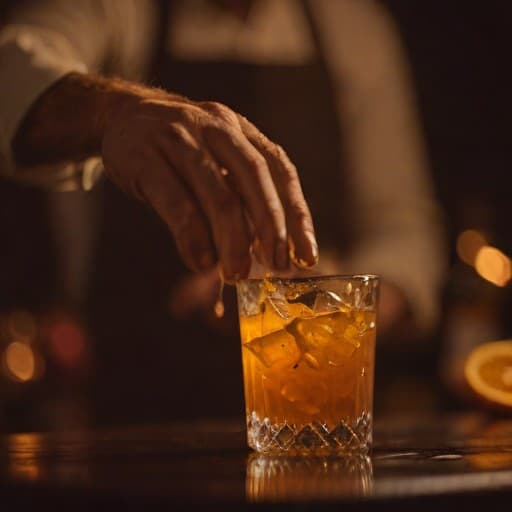
When a recipe says "express an orange peel over the drink," it is asking you to do something specific and important. You are not decorating the glass. You are spraying a fine mist of citrus oils across the surface of the cocktail, fundamentally changing how it smells and tastes. A properly expressed peel is the difference between an Old Fashioned that smells like bourbon and one that smells like bourbon and orange — a small distinction that professionals consider essential. It is one of those garnish techniques that looks simple but does real work.
What Expressing Means
The outer skin of a citrus fruit — the colorful part, called the zest — contains tiny pockets filled with volatile essential oils. When you bend or squeeze a piece of peel, those pockets rupture and spray a fine mist of oil. Those oils are intensely aromatic: limonene in lemon, linalool and myrcene in orange, nootkatone in grapefruit. They are also volatile, meaning they evaporate quickly and reach your nose before you take a sip.
Expressing a peel deposits these oils on the surface of a cocktail. Because oil floats on liquid, the oils sit on top, creating an aromatic layer that hits your nose with every sip. Since flavor perception is roughly 80% aroma (which is why citrus plays such a central role in cocktails), this single gesture significantly changes how the drink tastes — even though you are adding almost zero liquid to the cocktail.
The Technique
Step 1: Cut a proper peel. Use a sharp paring knife or a Y-peeler to cut a piece of peel about the size of your thumb — roughly 2 inches by 1 inch. Include only the colored zest and a thin layer of white pith. Too much pith makes the peel floppy and harder to express. Too little and you won't have enough oil.
Step 2: Hold it skin-side down over the drink. Position the peel about 2–3 inches above the surface of the cocktail, colored side facing the drink. You are aiming the oil spray at the surface.
Step 3: Squeeze and snap. Hold the peel between your thumb and index and middle fingers. Firmly snap or fold the peel in half lengthwise, skin-side out. You should see a fine mist of oil spray from the surface. In good lighting, this mist is visible — it catches the light like a tiny rainstorm. If you are doing it near a lit match or candle, the oils will briefly flash (this is the flamed orange peel technique — a separate skill).
Step 4: Wipe the rim (optional). Run the expressed peel around the rim of the glass to deposit additional oils where your lips will touch.
Step 5: Drop it in or discard. Some recipes say to drop the peel into the drink as a garnish. Others say to discard it. Both approaches are valid. A peel sitting in the drink will continue to release oils (and some bitter compounds from the pith) as the ice melts and the drink sits. Discarding gives you a cleaner drink that does not change over time.
Which Cocktails Benefit Most
Old Fashioned — An expressed orange peel is arguably the most important garnish in cocktails. The orange oil on the surface of an Old Fashioned creates the drink's characteristic aroma and bridges the gap between the whiskey's oak notes and the sweetness of the sugar. Without it, the drink is good. With it, the drink is complete.
Negroni — An expressed orange peel ties together the gin, Campari, and vermouth. The citrus oil adds brightness to a drink that can otherwise lean heavy.
Martini — A lemon twist (expressed lemon peel) is one of two classic Martini garnishes (the other being olives). The lemon oil adds a bright, clean aroma that complements dry gin.
Sazerac — A lemon peel expressed over the surface, then discarded (not dropped in). The lemon oil sits on top and provides the first aromatic impression.
Manhattan — Some bartenders prefer an expressed orange peel over a cherry, especially with rye-heavy Manhattans where the citrus oil adds brightness.
Orange vs. Lemon vs. Grapefruit
Orange peel is warm, sweet, and round. Best with whiskey cocktails, Negronis, and anything where you want aromatic warmth. Orange oils complement dark spirits.
Lemon peel is bright, sharp, and clean. Best with gin cocktails, Martinis, vodka drinks, and anything where you want freshness and lift. Lemon oils complement clear spirits.
Grapefruit peel is bitter, floral, and complex. Less common but excellent with tequila and mezcal cocktails, Palomas, and drinks where you want a more unusual aromatic note.
Lime peel is less commonly expressed because lime oils are more bitter and less aromatic than orange or lemon. Lime is usually used as juice rather than expressed peel, though a lime twist works in some gin drinks.
Common Mistakes
Not expressing firmly enough. A gentle bend does not rupture the oil glands. You need a definitive snap — firm enough that you can hear the peel crackle slightly.
Holding the peel too far from the drink. At 6 inches away, most of the oil mist dissipates before reaching the surface. Two to three inches is ideal.
Using old or dried-out fruit. Fresh citrus has plump, oil-rich skin. A lemon that has been sitting in your fruit bowl for two weeks has dried-out peel with depleted oils. Use fresh fruit.
Cutting peels that are too thick. A thick peel with lots of pith is hard to snap effectively and may drop pith shavings into the drink. You want mostly zest with minimal pith.
Skipping this step. If a recipe says to express a peel, it is not a suggestion. The expressed oils are a fundamental component of the drink's flavor profile. Skipping it is like leaving out the bitters — the drink still works, but it is incomplete.