
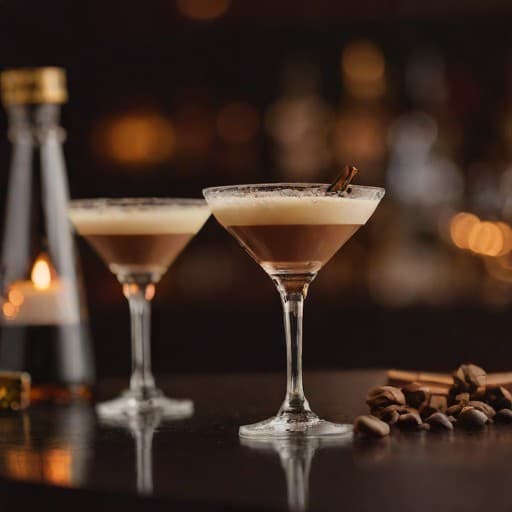
Dessert cocktails that actually replace the sweet course. Cream cocktails, amaro digestifs, fortified wines, and the definitive Espresso Martini breakdown.
A well-made dessert cocktail doesn't accompany dessert — it is dessert. Richer, sweeter, smaller in volume, and satisfying enough to close a meal. Done right, it's the most memorable drink of the night. Done wrong, it's a cloying sugar bomb that makes everyone regret that last bite of tiramisu.
The difference comes down to balance. The best dessert cocktails are indulgent, yes — but they have a backbone of spirit, a thread of bitterness, or a hit of acid that keeps them interesting past the second sip.
The Four Categories
Dessert cocktails aren't one thing. They span a range from rich cream drinks to austere bitter digestifs. Understanding the categories helps you pick the right closer for your meal.
1. Cream cocktails — Rich, sweet, dessert-in-a-glass. Espresso Martini, Brandy Alexander, White Russian. These are the headliners.
2. Amaro-based digestifs — Bittersweet Italian liqueurs served neat or on ice. Not cocktails in the traditional sense, but they fill the same role: something to sip slowly as the evening winds down.
3. Fortified wine cocktails — Port, sherry, and Madeira — either served neat or mixed into flips and cobblers. Underappreciated and deeply satisfying.
4. Spirit-forward sweet drinks — Stinger, Rusty Nail, Vieux Carré. Spirit-led, lightly sweetened, and meant for slow sipping.
Cream Cocktails: The Headliners
These are what most people picture when they hear "dessert cocktail." They're indulgent, photogenic, and crowd-pleasing.
Espresso Martini — The undisputed modern classic (more on this below). Vodka, fresh espresso, coffee liqueur, simple syrup. Shaken hard, served up in a coupe with three coffee beans.
Brandy Alexander — Old-school elegance. 1.5 oz cognac, 1 oz crème de cacao, 1 oz heavy cream. Shake hard with ice, strain into a coupe, grate fresh nutmeg on top. It tastes like a grown-up chocolate milkshake — and the cognac gives it a warmth that prevents it from reading as juvenile.
White Russian — 2 oz vodka, 1 oz Kahlúa, 1 oz heavy cream. Build over ice in a rocks glass. Stir gently — the layering is part of the appeal. It's the most casual of the cream cocktails, and sometimes casual is exactly what you want after a heavy meal.
Grasshopper — 1 oz crème de menthe, 1 oz crème de cacao, 1 oz heavy cream. Shake and strain. Tastes like a thin mint in liquid form. Divisive — people either love it or find it toothpaste-adjacent — but its fans are devoted.
The key with all cream cocktails: serve them small. 3–4 oz in a coupe, not 8 oz in a pint glass. These are meant to be sipped, not chugged. The right glassware makes the difference between feeling like a restaurant experience and feeling like a dorm room experiment.
The Espresso Martini Deep Dive
It's the most requested dessert cocktail in the world right now, and most home versions are mediocre. Here's how to make it properly.
The recipe:
- 2 oz vodka
- 1 oz fresh espresso (cooled slightly — not hot)
- 0.75 oz coffee liqueur (Kahlúa or Mr Black)
- 0.25 oz simple syrup
The technique: Shake hard — harder than you think — for 12–15 seconds. The vigorous shaking emulsifies the coffee oils and creates that signature foam cap. A lazy shake produces a flat, sad-looking drink. The foam is non-negotiable.
Fresh espresso vs. cold brew: Fresh espresso is better. It has more crema — those oils that create the foam — and a brighter, more complex flavor. Cold brew works in a pinch, but concentrate it: use double-strength. Regular cold brew makes a watery, underwhelming drink.
The coffee must be strong. Whatever method you use, the coffee needs to stand up to 2 oz of vodka and 0.75 oz of sweet liqueur. Weak coffee disappears entirely. If you don't have an espresso machine, a Moka pot or AeroPress on a fine grind gets you close enough.
Mr Black vs. Kahlúa: Mr Black is drier, more intensely coffee-forward, and makes a more sophisticated drink. Kahlúa is sweeter and more vanilla-heavy. Either works — just adjust your simple syrup accordingly. With Mr Black, keep the full 0.25 oz syrup. With Kahlúa, you can drop to a barspoon or skip it entirely.
Amaro Digestifs: The Bartender's Choice
Amaro — the broad family of Italian bittersweet liqueurs — was literally invented for this moment. The word digestivo isn't marketing; these were formulated to aid digestion after a meal. Whether that's pharmacologically true is debatable, but they taste like it's true, and that's what matters.
Montenegro — The approachable entry point. Caramel, orange peel, vanilla, gentle bitterness. Serve neat in a small glass or over a single ice cube. It's the amaro you give to the person who says they don't like amaro.
Averna — Darker, more herbal, with cola and licorice notes. Beautiful on the rocks with an orange peel. Slightly more assertive than Montenegro but still crowd-friendly.
Fernet-Branca — The bartender's handshake. Intensely menthol, bitter, and medicinal in the best possible way. This is not for beginners — it's for people who have crossed over to the dark side and can't go back. Serve it as a 1.5 oz shot, neat, ice-cold. You either get it or you don't.
The beauty of amaro as a dessert course is the zero-prep factor. Open a bottle, pour 2 oz into a glass. No shaker, no garnish, no recipe. It's the easiest "cocktail course" you'll ever serve.
Fortified Wine: The Overlooked Option
Port, sherry, and Madeira have been closing meals for centuries — long before anyone shook an Espresso Martini. They're lower in alcohol than spirits, complex, and remarkably food-friendly.
Tawny Port — Nutty, caramel, dried fruit. Serve 3 oz in a small wine glass at slightly below room temperature. It's the most universally appealing fortified wine for dessert — sweet enough to satisfy, complex enough to hold your attention.
Pedro Ximénez Sherry — Thick, almost syrupy, with raisin, fig, and molasses notes. This is basically liquid dessert. Pour 2 oz and sip it like you mean it.
Port Flip — For when you want to turn fortified wine into a proper cocktail. 2 oz ruby port, 1 whole egg, 0.5 oz simple syrup. Dry shake (no ice) for 15 seconds to emulsify the egg, then shake with ice and strain into a coupe. Grate nutmeg on top. It's rich, velvety, and unlike anything else in the cocktail canon.
Spirit-Forward Sweet Sippers
These are for the guest who wants something strong, slightly sweet, and uncomplicated. No cream, no coffee, no egg — just spirit and liqueur.
Stinger — 2 oz cognac, 0.75 oz white crème de menthe. Stir with ice, strain into a coupe. The mint cuts through the richness of the cognac and creates something that's both refreshing and warming. It's an old-money classic that deserves a comeback.
Rusty Nail — 2 oz scotch, 0.75 oz Drambuie. Build over a large ice cube in a rocks glass. The honey-herbal sweetness of Drambuie rounds out the scotch beautifully. Use a blended scotch — this isn't the place for your single malt.
Vieux Carré — 1 oz rye, 1 oz cognac, 1 oz sweet vermouth, a barspoon of Bénédictine, 2 dashes each Peychaud's and Angostura bitters. Stir and strain. It's essentially a Manhattan and a Sidecar that had a very sophisticated child. Complex, layered, and an absolute showstopper to end a dinner.
Serving Dessert Cocktails at a Dinner Party
Here's the move that turns a good dinner party into a great one: announce the dessert cocktails as the dessert course. Don't ask if people want one. Don't offer them alongside cake. Replace dessert entirely.
Clear the dinner plates, pause for a moment, and then bring out two options — one cream-based, one spirit-forward or amaro — in small coupe glasses. Serve them on a tray if you have one. The presentation matters. This is the final impression of the meal.
Make only one or two options. A dessert cocktail "menu" is overkill. An Espresso Martini and a pour of Montenegro covers almost everyone. If you're hosting a larger gathering, check our guide to making cocktails for a party for the logistics of scaling drinks for a crowd.
Volume matters. Keep them at 3–4 oz per serving. A full-sized Brandy Alexander after a three-course dinner is too much. The smaller pour feels intentional and refined — like an amuse-bouche in reverse.
What Doesn't Work
Overly sweet cocktails that taste like melted candy. If the primary flavor is "sugar," it's not a dessert cocktail — it's a mistake. The Chocolate Martini (vodka, chocolate liqueur, chocolate syrup, chocolate shavings) is the poster child. Every ingredient pushes in the same direction with nothing to create tension or interest.
Anything that clashes with a full stomach. A Piña Colada after a heavy meal is a bad idea. Coconut cream on top of pasta and wine is a gastrointestinal gamble nobody should take.
Drinks that are too large. This bears repeating. After dinner, nobody wants 6 oz of anything. Small pours, beautiful glasses, maximum impact.
The best dessert cocktails share one trait: balance. Sweet, yes — but tempered by the burn of spirit, the edge of bitterness, a whisper of acid, or the depth of coffee. That tension is what makes you want another sip instead of pushing the glass away.
The Bottom Line
A dessert cocktail is the exclamation point at the end of a meal. Keep it small, keep it balanced, and serve it with confidence. Whether that's a perfectly foamed Espresso Martini, a quiet pour of amaro, or a velvety Port Flip with fresh nutmeg — the right after-dinner drink doesn't just end the evening. It defines it.
Browse our cocktail recipes for more after-dinner inspiration, or explore our batch cocktail recipes if you're serving dessert drinks at your next dinner party.