A practical timeline for prepping cocktail garnishes before a party -- what holds overnight, what to cut the morning of, and what has to wait until service.*
You've planned the menu, batched the cocktails, and bought 40 lbs of ice. But at 6 PM -- one hour before guests arrive -- you realize you still need to cut 50 lime wedges, slice a dozen citrus wheels, prep mint sprigs, and set up a garnish station. And you haven't showered yet.
Garnish prep is the thing that falls through the cracks. The fix is knowing which garnishes you can prep early and which ones have to wait. That distinction is the difference between a calm setup and a frantic one.
The Core Principle
Some garnishes are resilient. Others degrade fast. The variable is moisture loss and oxidation -- once you cut into a piece of citrus or pick an herb, the clock starts ticking. Your job is to know how fast that clock runs for each garnish type.
Days Ahead: What You Can Prep Early
These garnishes are either shelf-stable or actually improve with time. Do them 2-3 days before your party and check them off the list.
Dehydrated citrus wheels. These are the ultimate make-ahead garnish. Slice lemons, oranges, limes, or grapefruit into uniform 1/4-inch rounds, arrange on a parchment-lined baking sheet, and bake at 200F for 2-3 hours until dry and slightly brittle. Cool completely, then store in an airtight container. They keep for weeks -- you could make these a month ahead and they'd be fine. They look stunning and add a subtle concentrated citrus note. For the full technique, see how to make garnishes that look good.
Cocktail cherries. Brandied cherries, Luxardo maraschinos, or any quality cocktail cherry is already shelf-stable in its jar. No prep needed. Just make sure you have enough -- plan one per drink that calls for them. Pull them out of the jar with a cocktail pick or small fork at service.
Flavored salts and sugars for rimming. Mix your rimming salt or sugar in advance -- combine flaky salt with chili powder for a spicy Margarita rim, or mix sugar with citrus zest for a Sidecar. Store in a small sealed container. Good for weeks.
The Day Before: What Holds Overnight
These garnishes need some care, but they'll hold nicely for 12-24 hours if stored properly.
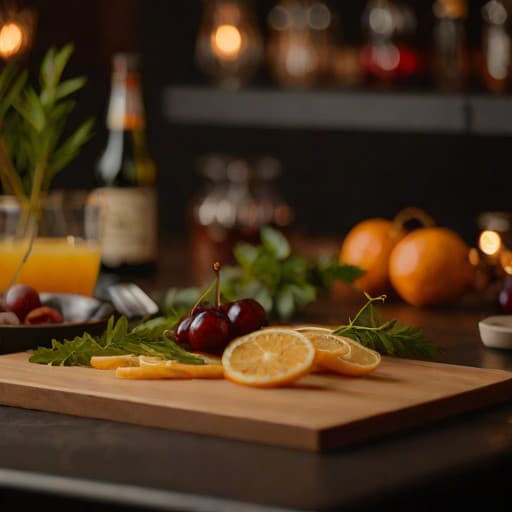
Citrus wheels (fresh). Slice your lemons and oranges into thin, uniform rounds. Layer them in a sealed container with a damp paper towel between each layer. The paper towel prevents them from drying out without making them soggy. Refrigerate. They'll look fresh and vibrant at service the next day.
Expressed citrus peels. Cut your orange or lemon peels -- coins or wide strips -- but don't express them yet. The expression -- the squeeze that releases the essential oils -- should happen at the moment of service. That's when the aromatic oils are at their peak. Store the pre-cut peels in a sealed zip-top bag in the fridge. They'll hold fine for 24 hours. For more on the expression technique, see our guide on expressing a citrus peel.
Herb sprigs (sturdy varieties). Rosemary and thyme are tough and hold well. Trim your sprigs, rinse them, and store them stems-down in a small glass of water -- like a tiny bouquet -- in the fridge. Cover loosely with a plastic bag. They'll stay perky for 2-3 days.
Pineapple chunks and wedges. Cut, store in a sealed container in the fridge. Pineapple holds well for 24 hours without browning or drying out. Good for tiki drinks and cocktail picks.
The Morning Of: What to Cut 6-8 Hours Before Service
These garnishes are fresh enough to look great at party time but won't survive overnight.
Lime wedges. This is the big one -- lime wedges are probably the most common cocktail garnish, and they're also one of the most time-sensitive. Cut them the morning of your party, store them in a sealed container in the fridge, and they'll hold for 6-8 hours. Beyond that, they start drying out at the edges and losing their vibrant green color. For a party of 30, you need roughly 40-50 wedges, which is 10-12 limes cut into quarters or sixths.
Lemon wedges. Same timeline as limes. Cut in the morning, use by evening. Store covered in the fridge.
Orange peels (cut but not expressed). If you didn't cut these the day before, the morning of works fine too. Again -- cut them, bag them, but save the expression for service. The moment you flame an orange peel or express it over a drink should be the moment you serve that drink.
Cucumber slices (thick). Thicker slices -- 1/4 inch or more -- hold up better than thin ones. Cut them in the morning and store in a sealed container with a damp paper towel. They'll hold for 6-8 hours before going soft. Thin ribbon garnishes should wait until closer to service.
At Service Only: What Can't Wait
Some garnishes degrade too quickly to prep in advance. These get done right before guests arrive or during the party itself.
Fresh mint leaves. Mint is fragile. Once picked from the stem, individual leaves start browning within an hour or two. Even on the stem, cut mint bruises easily. Your best move: keep mint sprigs in water in the fridge until you need them, then slap and place right at service. If you're making 30 Mojitos, have your mint ready to go but not prepped -- whole sprigs on a damp towel, picked and slapped as you pour each drink.
Thin cucumber ribbons. Those elegant thin ribbons that go inside a Collins glass? They go limp within an hour. Make them at service with a vegetable peeler. It takes seconds per drink.
Muddled anything. Muddled fruit, muddled herbs, muddled cucumber -- all of these should happen at the moment of service. Muddling breaks cell walls and starts rapid oxidation. A muddled lime that sits for an hour tastes nothing like one that was muddled 30 seconds ago.
Edible flowers. If you're using them, place them right before serving. They wilt quickly once out of refrigeration and bruise easily.
Setting Up the Garnish Station
At party time, you need everything organized and accessible. Fumbling through a produce drawer mid-service is a disaster.
The setup:
- Small bowls or a compartmented container (a muffin tin works in a pinch) for different garnish types
- Citrus wedges in one bowl, wheels in another, herbs in another
- Cocktail picks and/or small skewers within reach
- A small cutting board and sharp paring knife for last-minute cuts
- Damp bar towel for wiping hands and the cutting surface
- A small bowl or container for discards (peels, stems, etc.)
Placement matters. The garnish station should be at your bar area -- within arm's reach of where you're building drinks. Don't put it across the kitchen and expect to walk back and forth 50 times. If you're running a self-serve station, put the garnishes right next to the pitcher or dispenser.
Keep citrus garnishes chilled as long as possible. A small bowl of ice underneath the garnish container, or just keeping the container in the fridge between bursts of service, goes a long way.
Quantity Planning
The rule: 1 garnish per drink. Simple. But the conversion to actual produce takes thought.
Lime wedges: 1 lime = 4-6 wedges (depending on cut). For 50 drinks needing a lime wedge, that's 10-12 limes just for garnish -- on top of whatever you're juicing.
Citrus wheels: 1 medium orange or lemon = 6-8 usable wheels. For 20 garnish wheels, that's 3-4 oranges or lemons.
Herb sprigs: 1 standard grocery store bunch of mint = about 15-20 usable sprigs. For 30 Mojitos, buy 2 bunches. Always buy extra -- some stems will be thin, wilted, or unusable.
Cocktail cherries: 1 jar of Luxardo cherries holds about 40. One jar covers most parties.
Budget an extra 20% across the board. You'll drop some, discard imperfect ones, and underestimate slightly. Better to have a few extra lime wedges than to be cutting limes at 10 PM while guests wait.
The Garnish Prep Timeline
Here's the full timeline in one place. Print this or screenshot it.
2-3 days before:
- Dehydrate citrus wheels (store airtight)
- Mix rimming salts/sugars (store airtight)
Day before:
- Slice fresh citrus wheels (store with damp towels)
- Cut citrus peels for expressing (bag and refrigerate)
- Prep sturdy herb sprigs -- rosemary, thyme (store in water)
- Cut pineapple chunks (store sealed)
Morning of party:
- Cut lime and lemon wedges (store covered, fridge)
- Cut thick cucumber slices (store with damp towel)
- Confirm cherry jar is full, picks are ready
30 minutes before guests arrive:
- Set up garnish station at bar area
- Arrange garnishes in bowls/containers
- Set out cutting board, knife, picks, bar towel
- Pull mint from fridge (keep whole, on damp towel)
At service:
- Express peels per drink
- Slap mint per drink
- Cut thin cucumber ribbons per drink
- Place edible flowers per drink
Common Mistakes
Prepping everything too early. Enthusiasm is great. But lime wedges cut at noon for an 8 PM party will look tired and dried out by the time guests arrive. Follow the timeline above and your garnishes will look as sharp as your drinks.
Not prepping enough. Running out of garnish mid-party is worse than having leftovers. When a guest sees every Margarita before theirs arrive with a perfect lime wedge, and then theirs arrives bare -- they notice. Prep extra.
Forgetting to bring supplies to the bar. You prepped 50 gorgeous lime wedges and left them in the fridge in the kitchen. Your bar is on the patio. Now you're walking back and forth all night. Stage everything at the bar before the party starts.
Skipping the garnish entirely. The difference between a cocktail with a garnish and one without is bigger than most people realize. That expressed orange peel on an Old Fashioned isn't decoration -- it's aromatic oil that changes what the drink tastes like. Even at a busy party, take the three seconds to add the garnish. For more on why this matters, see our full guide on the role of citrus in cocktails.
The Bottom Line
Garnish prep is about timing, not talent. Know what holds and what doesn't, work backward from your party start time, and give yourself the gift of a calm setup instead of a frantic one. Dehydrated wheels and cocktail cherries can happen days ahead. Citrus wheels go the night before. Lime wedges go the morning of. Mint and muddling wait until service.
Do the prep in layers, stage everything at your bar, and keep an extra 20% of everything on hand. Your garnishes will look intentional, your drinks will taste better, and you won't be hacking at limes while your guests are walking through the door.
For the full garnish technique breakdown, read our guide on how to make garnishes that look good. And when you're ready to plan the rest of your party, start with how to plan a cocktail menu for menus, shopping lists, and timing.