
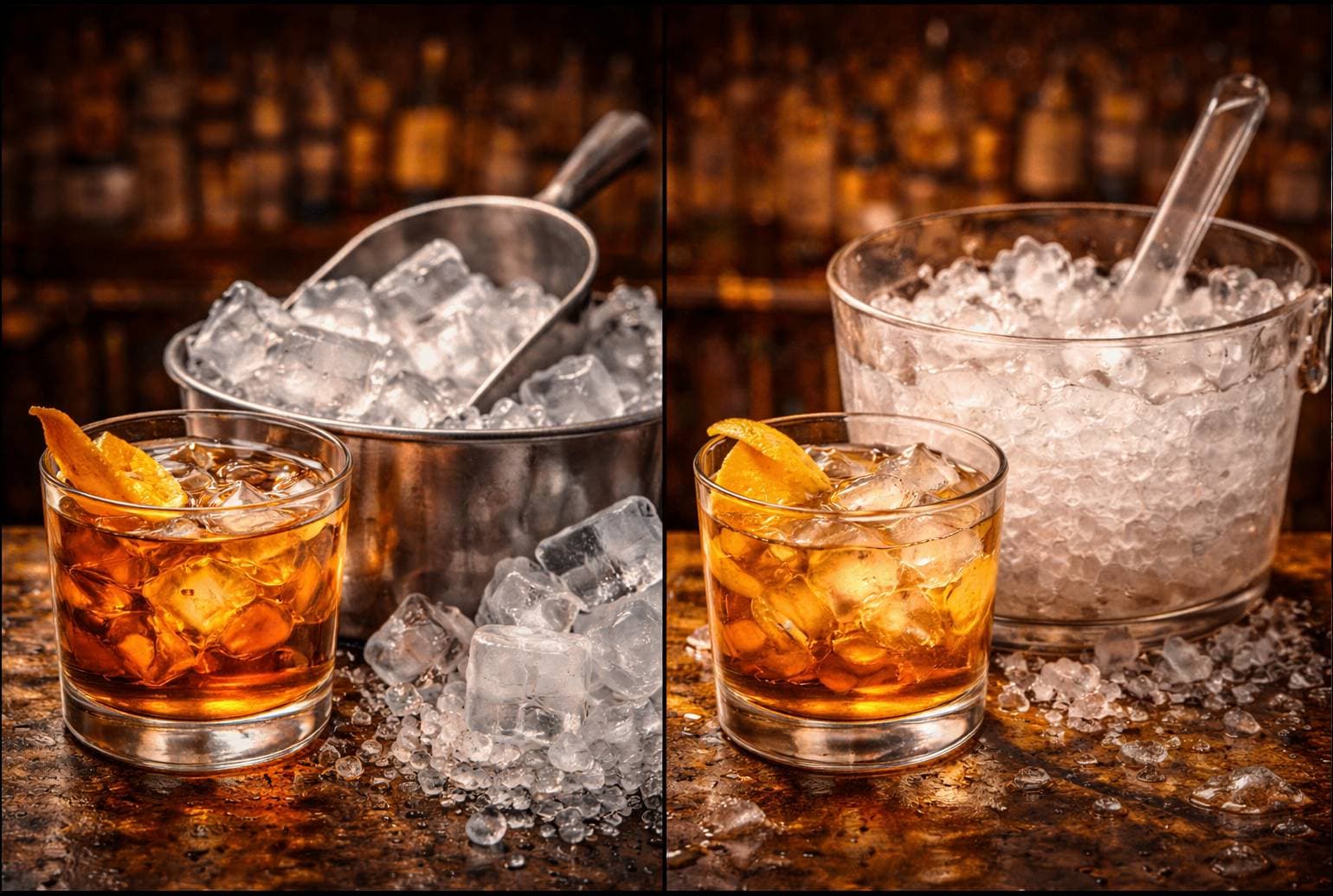
Puoi usare distillati premium, agrumi spremuti freschi e la ricetta perfetta — e comunque preparare un cocktail mediocre a causa del ghiaccio. Il ghiaccio non è solo un meccanismo di raffreddamento. È un ingrediente che controlla il tasso di diluizione, la temperatura, la texture e persino il sapore. Il ghiaccio scadente compromette tutti e quattro questi aspetti.
Cosa Rende il Ghiaccio "Scadente"
La maggior parte delle persone produce ghiaccio riempiendo le vaschette con acqua del rubinetto e mettendole nel congelatore domestico. Quel ghiaccio ha tre problemi:
È opaco. I congelatori domestici congelano l'acqua da tutti i lati simultaneamente, intrappolando aria disciolta e minerali al centro di ogni cubetto. Quelle bolle d'aria e impurità rendono il ghiaccio opaco e strutturalmente debole. Il ghiaccio opaco si crepa e si frantuma più facilmente, il che significa che si scioglie più velocemente e produce una diluizione irregolare.
Assorbe gli odori del congelatore. Il ghiaccio è poroso — specialmente il ghiaccio opaco con la sua rete di bolle d'aria intrappolate. Contenitori aperti di cibo, sacchetti per congelatore non sigillati bene e l'odore generale di un congelatore domestico trasferiscono tutti sapori nel ghiaccio esposto. Il ghiaccio stantio e contaminato dal congelatore è la causa più comune di un sapore "sgradevole" in cocktail altrimenti ben preparati.
Ha la dimensione e forma sbagliate. Le vaschette per ghiaccio standard producono piccoli cubetti con un alto rapporto superficie-volume. Più superficie significa scioglimento più veloce, il che significa più diluizione in meno tempo. Un cubetto da vaschetta in un Old Fashioned si diluisce circa due volte più velocemente di un singolo cubo grande, cambiando fondamentalmente come il drink evolve durante i minuti che passi a sorseggiarlo.
Perché il Tasso di Scioglimento Conta
Il tasso al quale il ghiaccio si scioglie è la variabile nascosta in ogni cocktail servito con ghiaccio. Un drink non è una cosa statica — cambia dal primo sorso all'ultimo man mano che il ghiaccio continua a sciogliersi. La ricetta che un bartender ha progettato presume una certa curva di scioglimento: una quantità specifica di diluizione quando il drink viene versato per la prima volta, un aumento graduale mentre bevi, e un livello accettabile di acquosità quando finisci.
Il ghiaccio grande si scioglie lentamente. Un singolo cubo o sfera da 5 cm in un bicchiere rocks fornisce una diluizione costante e graduale. Il drink inizia deciso e si apre lentamente nell'arco di 10-15 minuti. Questo è ideale per cocktail a base di distillati — Old Fashioned, Negroni, Manhattan — dove vuoi che i sapori evolvano ma non diventino acquosi prima che tu finisca.
Il ghiaccio piccolo si scioglie velocemente. Il ghiaccio tritato o i piccoli cubetti raffreddano un drink rapidamente e lo diluiscono significativamente entro il primo minuto. Questo è intenzionale per certi drink — un Mint Julep o uno Swizzle è progettato per essere ghiacciato e progressivamente più leggero mentre bevi. Ma usare ghiaccio piccolo in un drink progettato per ghiaccio grande lo sovra-diluisce troppo velocemente.
Il ghiaccio sbagliato per il drink è peggio di un ghiaccio leggermente imperfetto della dimensione giusta. Un grande cubo cristallino in un Mojito è sbagliato — vuoi ghiaccio tritato per il raffreddamento rapido e quella texture granulosa. Piccoli cubetti in un Sazerac sono sbagliati — il drink diventa un bicchiere di acqua aromatizzata entro cinque minuti.
Ghiaccio Trasparente vs. Ghiaccio Opaco
Il ghiaccio trasparente non è solo una preferenza estetica — è funzionalmente diverso dal ghiaccio opaco.
Il ghiaccio trasparente è più denso. Senza bolle d'aria intrappolate, ha più massa termica per unità di volume, il che significa che assorbe più calore prima di iniziare a sciogliersi. Un cubo trasparente da 5 cm dura notevolmente più a lungo in un bicchiere rispetto a un cubo opaco da 5 cm, perché non ci sono debolezze strutturali che il liquido caldo possa sfruttare.
Il ghiaccio trasparente ha un profilo aromatico più pulito. Senza minerali disciolti e gas intrappolati nella struttura, il ghiaccio trasparente non ha sapore — che è esattamente quello che vuoi dal ghiaccio. Il ghiaccio opaco può introdurre un sottile sapore minerale o metallico, specialmente in cocktail delicati dove il distillato è protagonista.
Come preparare ghiaccio trasparente a casa: Il metodo più semplice è il congelamento direzionale. Riempi un piccolo frigo portatile isolato (senza coperchio) con acqua e mettilo nel congelatore. L'isolamento costringe l'acqua a congelare dall'alto verso il basso, spingendo aria e impurità verso il fondo. Dopo 24 ore, rimuovi il blocco, taglia via la parte opaca inferiore e taglia la parte trasparente superiore in cubetti con un coltello seghettato. Non è difficile — richiede solo di pianificare in anticipo.
Gli stampi in silicone per cubi grandi (cubi o sfere da 5 cm) sono un'opzione più semplice se non vuoi occuparti di tagliare blocchi di ghiaccio. Non produrranno ghiaccio perfettamente trasparente, ma la dimensione maggiore fornisce comunque un tasso di scioglimento migliore rispetto ai cubetti da vaschetta standard. Per la maggior parte dei bartender domestici, questo è un compromesso ragionevole.
Ghiaccio per Diversi Stili di Cocktail
Drink a base di distillati / on the rocks (Old Fashioned, Negroni, Manhattan on the rocks): Un grande cubo o sfera. Diluizione lenta, evoluzione graduale del sapore. È qui che la qualità del ghiaccio conta di più — un cubo scadente rovina una dose da 15€ di bourbon.
Drink shakerati / stile sour (Margarita, Daiquiri, Whiskey Sour): Cubetti standard nello shaker per la preparazione, poi filtrati in un bicchiere. Il ghiaccio per lo shakerato fa il suo lavoro durante la preparazione e viene scartato. Se serviti con ghiaccio (come una Margarita on the rocks), usa ghiaccio fresco nel bicchiere — non il ghiaccio parzialmente sciolto dello shaker.
Drink tiki e tropicali (Mai Tai, Piña Colada, Zombie): Ghiaccio tritato. Raffreddamento rapido, alta diluizione, texture granulosa. Il drink è progettato per essere consumato velocemente mentre il ghiaccio è ancora compatto. Il ghiaccio tritato è dove entrano in gioco il Lewis bag e il martello — vedi il nostro articolo sui strumenti da bar sottovalutati per maggiori informazioni.
Highball e long drink (Gin & Tonic, Mojito, Paloma): Cubetti standard o ghiaccio a bastoncino Collins (un cilindro alto e stretto che si adatta perfettamente in un bicchiere highball). L'obiettivo è raffreddare senza eccessiva diluizione durante un tempo di consumo più lungo.
Drink congelati da macchina: Nessun ghiaccio aggiunto manualmente. La macchina congela internamente il lotto pre-miscelato. La qualità del ghiaccio non è un fattore — ma il livello Brix sì.
Il Problema degli Odori del Congelatore
Anche se usi ghiaccio della dimensione giusta e lo fai con acqua pulita, un congelatore cattivo può rovinarlo. Il ghiaccio assorbe facilmente gli odori ambientali, e la maggior parte dei congelatori domestici condivide spazio con pesce congelato, scatole di pizza e qualsiasi altra cosa si sia accumulata negli ultimi sei mesi.
Soluzioni:
Conserva il ghiaccio in un contenitore sigillato o in un sacchetto zip-lock una volta congelato. Non lasciare vaschette o stampi scoperti nel congelatore. Se usi un frigo portatile per il congelamento direzionale, avvolgi il blocco di ghiaccio finito in plastica immediatamente dopo il taglio.
Dedica una sezione del tuo congelatore solo al ghiaccio, se possibile. Un piccolo contenitore termico autonomo dentro il congelatore funziona bene.
Usa il ghiaccio entro pochi giorni. Il ghiaccio che resta in un congelatore domestico per settimane assorbe più odore nel tempo. Il ghiaccio fresco ha un sapore migliore.
Se il tuo congelatore ha un cattivo odore, anche il ghiaccio lo avrà. Pulisci il congelatore prima di iniziare a preoccuparti della qualità del ghiaccio — le due cose vanno insieme.
Quanto Ghiaccio Comprare vs. Preparare
Per una festa, preparare abbastanza cubi di ghiaccio trasparenti grandi per 20 persone è impraticabile. Ecco un approccio ragionevole:
Per cocktail a base di distillati (gruppo piccolo, 4-8 persone): Prepara cubi grandi trasparenti in anticipo usando stampi o congelamento direzionale. Ne servono 1-2 per drink, quindi 16 cubi coprono comodamente un'intera serata.
Per cocktail shakerati a una festa: Compra ghiaccio in sacchetti. Il ghiaccio cubettato standard da festa funziona bene per shakeare — viene comunque scartato dopo lo shakerato. Usa sacchetti freschi (controlla la data di produzione sul sacchetto se visibile) e tienili sigillati fino al momento del bisogno.
Per drink congelati da macchina: Non serve ghiaccio per il bicchiere. La macchina gestisce il congelamento. Concentrati su Brix e ABV invece.
Per ghiaccio tritato: Compra ghiaccio in sacchetti e tritalo tu stesso con un Lewis bag e martello, oppure frulla cubetti standard in un frullatore. Il ghiaccio tritato si scioglie velocemente, quindi tritalo proprio prima di servire — non pre-tritare e conservare.
In Conclusione
Il ghiaccio è l'ingrediente più trascurato nei cocktail. Farlo bene non richiede attrezzatura costosa — solo un po' di pianificazione e la dimensione giusta per il drink giusto. Uno stampo per cubi grandi in silicone da 10€, un contenitore di conservazione sigillato e un congelatore pulito miglioreranno i tuoi cocktail più che passare a un distillato più costoso.
Dai un'occhiata alla nostra pagina Strumenti da Bar per raccomandazioni su stampi per ghiaccio e Lewis bag.
Cerchi ricette per testare il tuo ghiaccio migliorato? Sfoglia le nostre ricette di cocktail o prova il nostro Abbinatore di Ingredienti per trovare drink che puoi preparare stasera.